

You’ve probably heard the old gardening wisdom: “Plant Marigolds everywhere to keep bugs away!” or “Basil makes tomatoes taste sweeter!”
It sounds nice. But is it true?
The reality is that Companion Planting—the practice of growing different plants together for mutual benefit—is a mix of brilliant science and total folklore.
If you pair the wrong plants (like Beans and Onions), they can actually chemically attack each other, stunting your harvest before it even begins. This is called Allelopathy.
In this guide, we cut through the “Old Wives’ Tales” to give you the science-backed pairings that actually work to prevent pests, save space, and boost flavor.
Quick Summary: The 3 Ways Plants Actually Help Each Other
Forget “plant friendship.”Plants are ruthless competitors. Companion planting only works if they do one of three things:
- The Bodyguard (Trap Cropping): Plant A attracts a pest away from Plant B (e.g., Nasturtiums luring aphids away from Kale).
- The Nitrogen Fixer: Plant A pulls fertilizer from the air and puts it in the soil for Plant B (e.g., Beans feeding Corn).
- The Shade Provider: Plant A blocks the harsh sun for delicate Plant B (e.g., Tomatoes shading Lettuce).
Myth vs. Science: The “Marigold” Rule
The Myth: “Marigolds repel all garden pests.”
The Science: False. Marigolds do not create a magical forcefield. However, their roots do release a chemical (thiophene) that kills harmful Nematodes in the soil.
- Verdict: Plant them for soil health, not as a bug spray.
The “Do Not Plant” List (Allelopathy)
Some plants are bullies. They release chemicals from their roots to kill their neighbors so they can steal all the water.
- The Walnut Tree: The classic killer. Its roots release Juglone, which kills tomatoes and peppers instantly.
- Fennel: The “loner” of the garden. Fennel inhibits the growth of beans, tomatoes, and kohlrabi. Plant it in a pot, far away from everything else.
- Onions vs. Beans: Never plant these together. Onions release an antibiotic gas that kills the beneficial bacteria on bean roots, starving the bean plant.
The “Power Couples” That Actually Work
Here are the three most scientifically proven pairings for your vegetable garden.
1. The “Caprese Salad” (Tomatoes + Basil)
- Why it works: It’s not just about flavor. Basil produces strong volatile oils that mask the scent of tomatoes. This confuses the Tomato Hornworm moth, making it harder for her to find your plants to lay eggs.
- The Bonus: When the basil flowers, it attracts pollinators that then visit the tomato blossoms, increasing your fruit set.
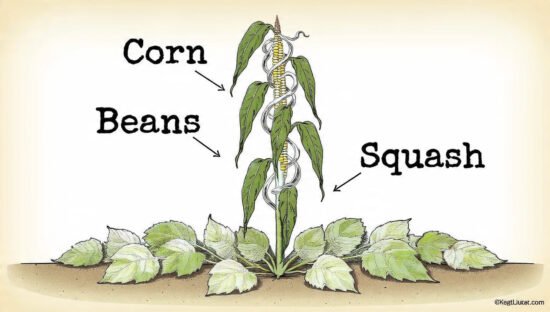
2. The “Three Sisters” (Corn + Beans + Squash)
- Why it works: This is ancient Native American engineering. (You can read the full history in the Cornell University Three Sisters Guide).
- The Corn acts as a trellis for the beans to climb.
- The Beans pull nitrogen from the air to fertilize the soil for the corn.
- The Squash grows low with huge prickly leaves, shading the soil to stop weeds.
3. The “Trap Crop” (Nasturtiums + Brassicas)
- Why it works: Aphids love Nasturtiums even more than they love your Kale and Cabbage. By planting a ring of Nasturtiums around your garden bed, the aphids will swarm the flowers and leave your vegetables alone.
- Pro Tip: When the Nasturtiums are covered in bugs, pull them out and compost them. You just trapped the enemy!
The Ultimate Companion Planting Cheat Sheet
| Plant | Best Friends (Plant Near) | Enemies (Keep Away) | Why? |
| Tomatoes | Basil, Carrots, Marigolds | Corn, Potatoes, Fennel | Basil masks pests; Corn attracts tomato worms. |
| Peppers | Onions, Spinach, Basil | Beans, Fennel | Onions repel aphids. |
| Cucumbers | Beans, Corn, Peas | Potatoes, Sage | Beans add nitrogen for hungry cukes. |
| Onions/Garlic | Carrots, Tomatoes, Peppers | BEANS, PEAS | Onions stunt the growth of all legumes. |
| Lettuce | Carrots, Radishes, Strawberries | Broccoli (Brassicas) | Lettuce loves the shade of taller plants. |
Summary
Companion planting isn’t magic; it’s engineering. By placing the right plants together, you can reduce pesticides and get a bigger harvest for free.
- Plant Basil with Tomatoes to hide them from worms.
- Keep Onions away from Beans to prevent chemical warfare.
- Use Nasturtiums as a sacrificial trap for aphids.
Ready to start planting? Before you dig, make sure your soil is ready. Read our guide on How to Build Healthy Soil from Scratch.
Companion Plant Selection Enhances Garden Performance
In the video below, you’ll see how selecting specific companion plants—such as basil with tomatoes, alyssum with lettuce, and dill near brassicas—can directly support the steps we discuss in the above article. These plant pairings not only help improve pollination but can also reduce pest presence naturally. This technique matters because it gives you a practical, science-based way to increase your garden’s productivity without relying on synthetic pesticides or guesswork.
2. Planting Diverse Partners Encourages a Healthy Garden Ecosystem
Another valuable takeaway is how including a variety of companion plants contributes to an ecosystem that supports beneficial insects and improves overall plant health. As demonstrated in the video, companion plants like chamomile or cosmos attract pollinators and predatory insects that help keep harmful pests in check. This reinforces the sustainable strategy we emphasize in the above article—creating a balanced, biologically active garden system rather than seeking quick fixes that don’t stand up to real-world conditions.
Thank you again to Next Level Gardening for this great information and for sharing such practical insight. Be sure to visit their channel for more helpful content—we love to support our neighbors and fellow learners.
People Also Ask (FAQ)
Q: Does planting basil really make tomatoes taste better?
A: The science is mixed. While many gardeners swear by it, studies show the main benefit is actually yield (more tomatoes) due to better pollination and pest protection, rather than a chemical change in flavor.
Q: Can I plant everything in one raised bed?
A: Yes, but pay attention to height. Plant your tall crops (Tomatoes, Corn) on the North side of the bed so they don’t shade out your short crops (Peppers, Carrots) as the sun moves across the sky.
Q: What is a “Trap Crop”?
A: A trap crop is a “sacrificial” plant you grow specifically to be eaten by bugs. It keeps the pests occupied so they don’t eat your main vegetables. Nasturtiums and Radishes are excellent trap crops.
Leave a Reply