Disclosure: This post contains affiliate links. If you purchase through our links, we may earn an affiliate commission at no extra cost to you. As an Amazon Associate, we earn from qualifying purchases.
In organic Integrated Pest Management (IPM), the most effective pest control strategy is not finding a better spray—it is preventing the insect from ever touching your plants in the first place. For cool-season brassicas, delicate greens, and young cucurbit seedlings, floating row covers and ultra-fine insect netting represent the gold standard of chemical-free crop protection.
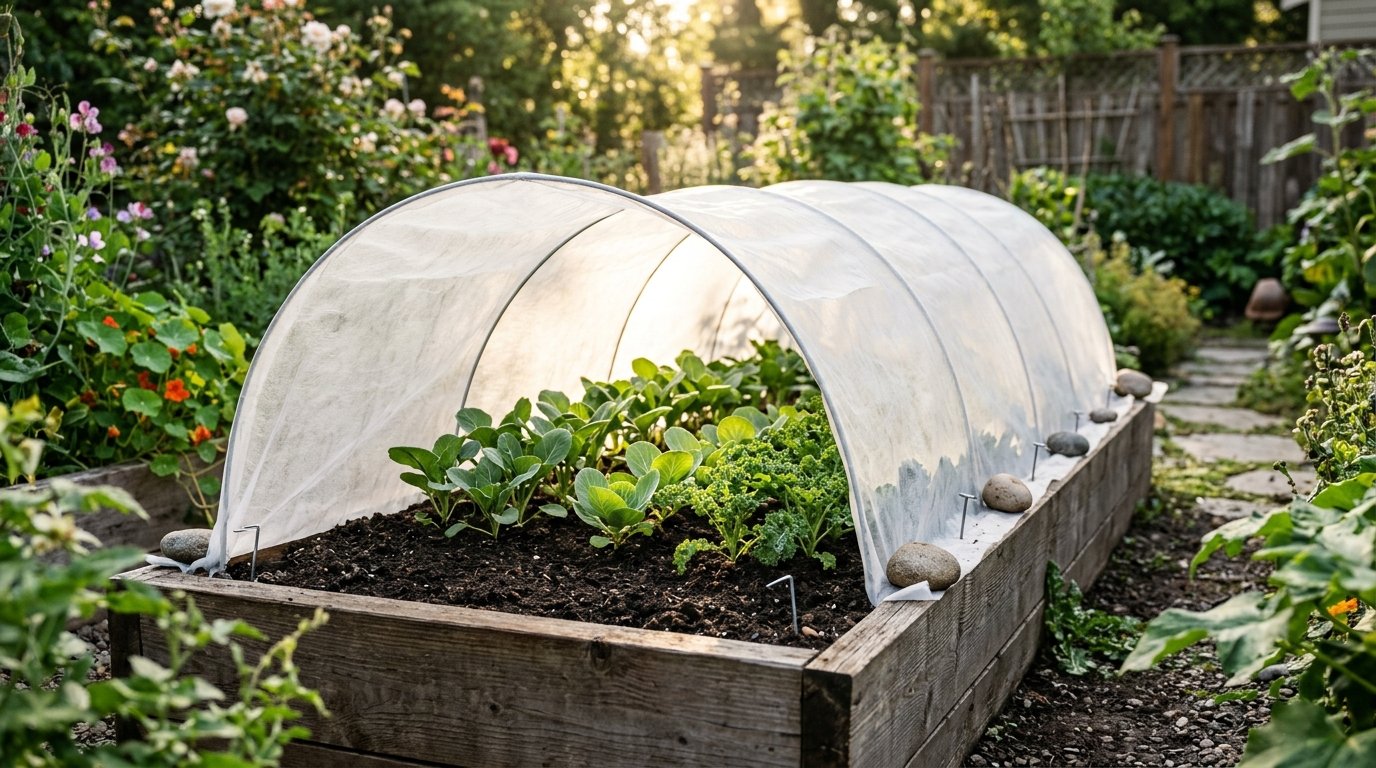
By draping lightweight, breathable, translucent agricultural fabric over garden beds, you create an impenetrable physical fortress. Sunlight, rain, and airflow pass freely through the mesh, while destructive pests like flea beetles, imported cabbage white butterflies, cucumber beetles, and aphids are completely locked out. In this guide—part of our complete framework in The Complete Guide to Organic Garden Pest Control—we explore fabric weights, installation techniques, and pollination timing.
Choosing the Right Fabric: Spunbond vs. Ultra-Fine Netting
Selecting the proper material depends on your climate and target pest:
- Lightweight Spunbond Polypropylene (0.5 oz/sq yd): Floats directly on top of leafy crops without wire hoops. Transmits 85% to 90% of sunlight while providing 2°F to 4°F of frost protection. Ideal for spring greens and early transplants.
- Ultra-Fine Monofilament Insect Netting (0.8mm Mesh): Does not trap heat, making it the perfect choice for summer insect protection. Allows 100% ventilation while excluding even the tiniest 1mm flea beetles and thrips.
Heavy-Duty Floating Row Cover Fabric
For spring frost protection and blocking destructive moths, beetles, and birds, install breathable spunbond floating row cover cloth over raised beds.
Check Price on Amazon: Floating Row Covers for Garden Pests →
Ultra-Fine Insect Barrier Netting (Summer Mesh)
During hot summer months when spunbond fabric traps too much heat, switch to high-ventilation 0.8mm ultra-fine mesh netting to block flea beetles and thrips.
Soil Pest Note: While floating row covers create an impenetrable aerial fortress against winged pests, subterranean pests like root-aphid-farming ants can still tunnel underneath. Pair your physical barriers with our plant-safe garden ant control methods and our foundational guide to organic ant eradication.
Step-by-Step Installation: 4 Golden Rules
- Install Immediately at Planting: Pests like flea beetles and cabbage root flies detect seedlings via plant scent within hours of transplanting. Install your row covers the exact day seeds are sown or seedlings are bedded out.
- Use Support Hoops for Tender Foliage: While lettuce and onions can support floating fabric, upright brassicas and tomatoes should be supported with flexible wire or PVC hoops so leaves do not touch the netting (which allows insects to lay eggs through the mesh).
- Seal the Perimeter 100%: A single open gap will turn your row cover into an insect greenhouse. Anchor all edges securely using garden fabric staples, river stones, or moist soil mounds.
- Manage Pollination Requirements: Self-pollinating crops (broccoli, cabbage, kale, lettuce, carrots, onions) can remain covered from seed to harvest. Insect-pollinated crops (squash, pumpkins, melons, cucumbers) require covers to be removed once female blossoms appear to allow honeybee pollination.
Barrier Netting Comparison Matrix
| Barrier Type | Light Transmission | Heat Trapping | Target Pests Excluded |
|---|---|---|---|
| Spunbond Row Cover (0.5 oz) | 85–90% | Moderate (+2°F to 4°F) | Cabbage moths, squash bugs, birds, frost |
| Ultra-Fine Netting (0.8mm) | 90–95% | None (High airflow) | Flea beetles, thrips, aphids, leafminers |
| Standard Bird Netting (1/2 inch) | 98% | Zero | Birds and rodents only (Insects pass freely) |
| Shade Cloth (30–50%) | 50–70% | Cooling effect | Heat stress & sunscald; partial insect block |
Download the Free Organic Pest Prevention Checklist & Spray Chart
Get instant access to our printable organic dilution cheat sheets, companion planting matrix, and seasonal pest calendar used by certified organic growers.
Frequently Asked Questions
Can you water through floating row covers?
Yes! Both spunbonded polypropylene row covers and monofilament mesh netting are permeable to water. Overhead hose watering and natural rainfall pass directly through the fabric into your soil without damaging plants.
How long do floating row covers last?
High-quality UV-stabilized row covers last 2 to 4 full growing seasons if handled carefully. Store dry fabrics in sealed bins over winter to prevent rodent chewing.
Written by Jennifer Reynolds
Certified Master Gardener • Sustainable Agriculture Specialist
Jennifer has over 15 years of hands-on experience in organic horticulture, permaculture soil biology, and non-toxic integrated pest management (IPM). Every recipe and garden strategy published on Organic Gardening Advise is field-tested in real raised beds to verify safety, dilution accuracy, and effectiveness. Learn more on our About Page.
Leave a Reply