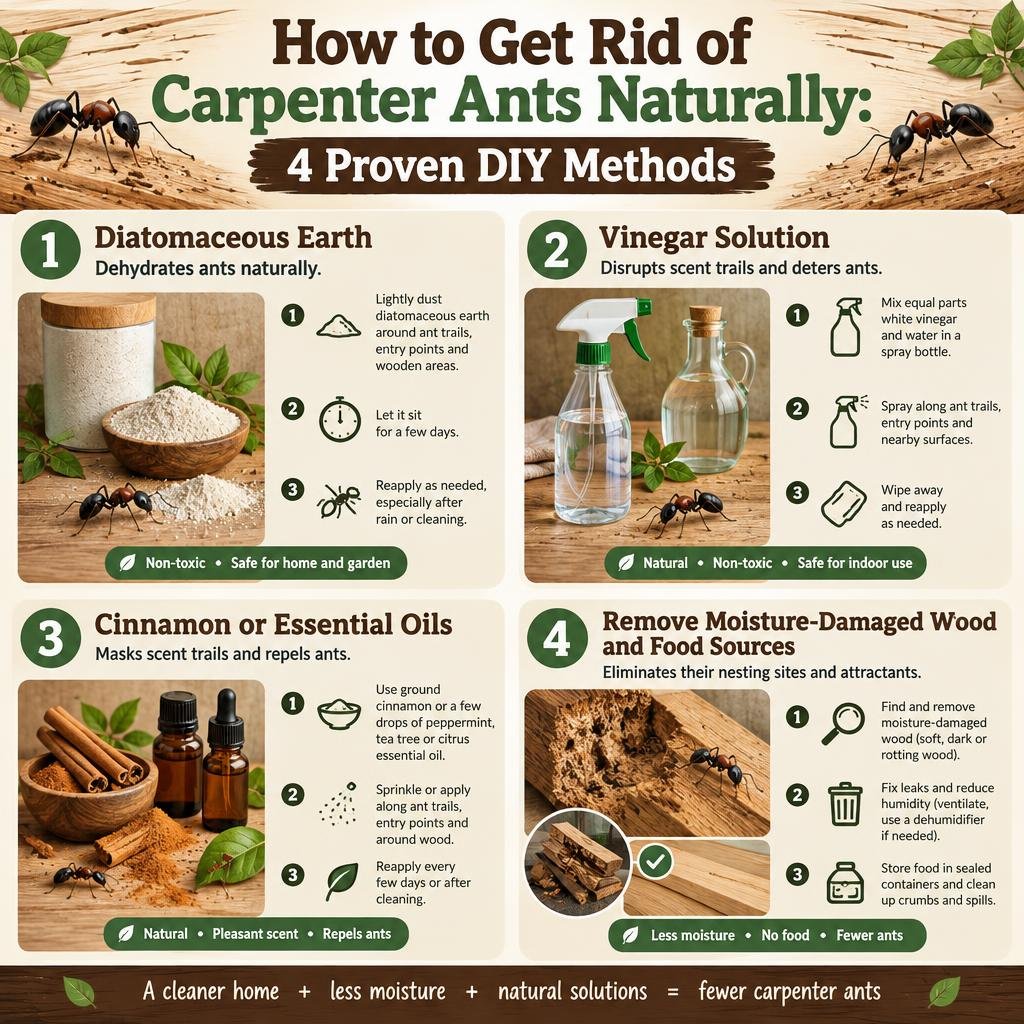
Discovering large black ants crawling near your baseboards, wooden window sills, or garden timber can cause immediate panic. Unlike common nuisance ants that simply scavenge for dropped crumbs, carpenter ants excavate smooth tunnels through wood to build extensive nesting galleries, threatening the structural integrity of your home and outdoor garden structures.
While exterminators often recommend drilling into walls and pumping synthetic neurotoxins throughout your living space, you can eliminate an active infestation using targeted organic methods. By exploiting their biological feeding habits and grooming instincts, you can wipe out both satellite and parent colonies naturally.
Looking for general home remedies for smaller sugar or pavement ants? Check out our complete master guide on proven natural ant killer methods.
How to Identify Carpenter Ants vs. Termites
Carpenter Ants vs. Termites: Quick Visual Comparison
Because treating termites requires different structural interventions, use this visual identification table to accurately identify the pest in seconds:
| Physical Feature | Carpenter Ants | Subterranean Termites |
|---|---|---|
| Waist (Pedicel) | Distinct, narrow pinched waist | Broad, thick waist (no pinch) |
| Antennae | Elbowed / bent at a 90° angle | Straight, bead-like antennae |
| Wings (Swarmers) | Front wings longer than rear wings | All 4 wings equal in length & shape |
| Wood Damage | Smooth, sandpapered galleries; produces sawdust (frass) | Mud tubes; ragged galleries packed with soil & fecal matter |
| Diet | Do NOT eat wood; feed on proteins & honeydew | Consume cellulose (eat wood continuously) |
Before applying treatments, confirm you are dealing with carpenter ants rather than termites. Carpenter ants do not eat wood; they merely hollow it out for nesting space.
| Feature | Carpenter Ant | Termite |
|---|---|---|
| Body Shape | Pinched, narrow waist with bent (elbowed) antennae | Thick, uniform waist with straight antennae |
| Color | Dark black, reddish-black, or solid red (1/4″ to 1/2″ long) | Pale, creamy white to light brown |
| Debris Left Behind | Piles of coarse sawdust mixed with insect parts (called frass) | Mud tubes and tiny hexagonal fecal pellets |
1. The Protein-Based Boric Acid Bait (The Nest Destroyer)
The single biggest reason DIY treatments fail on carpenter ants is using liquid sugar water. While carpenter ants take sugars in late summer, their developing larvae and reproductive queens crave protein and fats during active colony expansion.
Boric acid is a naturally occurring mineral compound that acts as a slow stomach toxin and abrasive desiccant. When mixed into fatty foods, foraging workers deliver the toxin directly to the queen inside the heart of the wood.
The Protein Bait Formula:
- 2 tablespoons smooth peanut butter or canned tuna oil
- 1 tablespoon powdered confectioner’s sugar (as an aroma booster)
- 1/2 teaspoon pure Boric Acid powder (or Borax)
Application: Mix thoroughly until uniform. Dab small, pea-sized amounts onto masking tape or inside cut sections of plastic drinking straws. Place them near kick-out holes where you find sawdust piles. If you prefer liquid setups, review our step-by-step ratios in our guide on how to make borax ant killer baits.
⚠️ Safety Note: Keep boric acid baits away from accessible areas if you have pets. For households with curious dogs and cats, consult our guide on 100% pet-safe ant killer alternatives.
📋 Free Checklist: The Organic Home & Garden Pest Audit
Carpenter ants typically originate from damp wood, tree stumps, and mulch beds before invading homes. Download our free printable inspection checklist to locate hidden nests and secure your property:
2. Diatomaceous Earth Wall Void Injection
If you can hear faint rustling sounds inside a wall cavity (a telltale sign of an active carpenter ant satellite gallery), chemical sprays will only cause the ants to scatter and create new auxiliary nests elsewhere in the house.
Instead, use Food-Grade Diatomaceous Earth (DE). Using a precision bulb duster with a narrow brass nozzle, puff dry DE directly through tiny crevices, gaps around electrical outlets, or small access holes drilled into the affected framing. The micro-abrasive silica scratches their exoskeletons, dehydrating the nesting gallery without introducing fumes into your home.
3. Cedarwood Oil Barrier Spray
Cedarwood oil is one of the most effective organic deterrents against wood-destroying insects. The aromatic hydrocarbons in natural cedar disrupt an insect’s pheromone receptors and trigger fatal respiratory responses upon direct contact.
Mix 1 ounce of pure cedarwood essential oil with 1 quart of warm water and 1 teaspoon of liquid castile soap. Spray heavily along exterior window casings, deck posts, foundation sills, and around firewood storage racks to halt trailing foragers in their tracks.
4. Eradicate Outdoor “Parent” Nests Around the Garden
Carpenter ants rarely begin indoors. In nearly every infestation, the indoor ants belong to a “satellite” nest that originated from an outdoor “parent” nest located within 100 yards of your house.
Inspect your landscape for these high-risk outdoor harboring spots:
- Rotting tree stumps and dead tree limbs
- Aged wooden raised bed corners and landscape ties
- Firewood stacks sitting directly on wet soil
- Thick layers of damp wood chip mulch touching home foundations
When you locate outdoor nests, treat them immediately using biological soil drenches or boiling soap water. Read our complete guide on eliminating outdoor ant colonies in the garden without harming crops.
The Seasonal Baiting Secret: Protein vs. Sweet Cycles
The single most common reason commercial and DIY ant baits fail against carpenter ants is nutritional mismatch. Carpenter ants shift their dietary requirements dramatically based on the colony’s reproductive calendar:
- Spring & Early Summer (The Protein Demands): As the queen begins heavy egg-laying and newly hatched larvae develop, the colony requires immense amounts of amino acids and protein. If you put out sweet sugar bait in April or May, worker ants will completely ignore it! Mix boric acid with canned tuna juice, wet cat food, or peanut butter during spring.
- Midsummer to Autumn (The Carbohydrate Energy Surge): Once the brood matures and worker ants must forage aggressively over long distances, they crave pure carbohydrates for energy. Switch to liquid boric acid sugar syrups, honey baits, or diluted maple syrup from July through September.
Why Baiting Fails: 3 Critical Mistakes to Avoid
If your natural carpenter ant treatments are not working, you are likely encountering one of these three failure modes:
- Using Too High a Boric Acid Concentration: Boric acid must be diluted to between 2% and 5%. If you make the bait too strong, worker ants die within minutes outside the nest, never delivering the poison to the queen.
- Spraying Repellents Near Bait Stations: Never spray vinegar, mint, or essential oils within 5 feet of bait stations. Repellent scents cause ants to avoid the area and ignore your bait entirely.
- Ignoring the Moisture Source: Carpenter ants require wood with moisture content above 15% to excavate galleries easily. Repairing roof leaks, damp subflooring, and clearing wet firewood from exterior walls is the only permanent long-term cure.
Frequently Asked Questions
Do carpenter ants sleep or forage at night?
Carpenter ants are predominantly nocturnal. Foraging peaks between 10:00 PM and 2:00 AM. If you are having trouble locating their trails, inspect baseboards and exterior foundations at night using a flashlight with a red beam (which does not disturb them).
Will vinegar kill carpenter ants?
A 50/50 mix of white vinegar and water will kill foraging carpenter ants on contact and erase their scent highways. However, vinegar does not penetrate wood galleries and will not eliminate the queen inside the nest.
Written by Jennifer Reynolds
Certified Master Gardener • Sustainable Agriculture Specialist
Jennifer has over 15 years of hands-on experience in organic horticulture, permaculture soil biology, and non-toxic integrated pest management (IPM). Every recipe and garden strategy published on Organic Gardening Advise is field-tested in real raised beds to verify safety, dilution accuracy, and effectiveness. Learn more on our About Page.
Leave a Reply