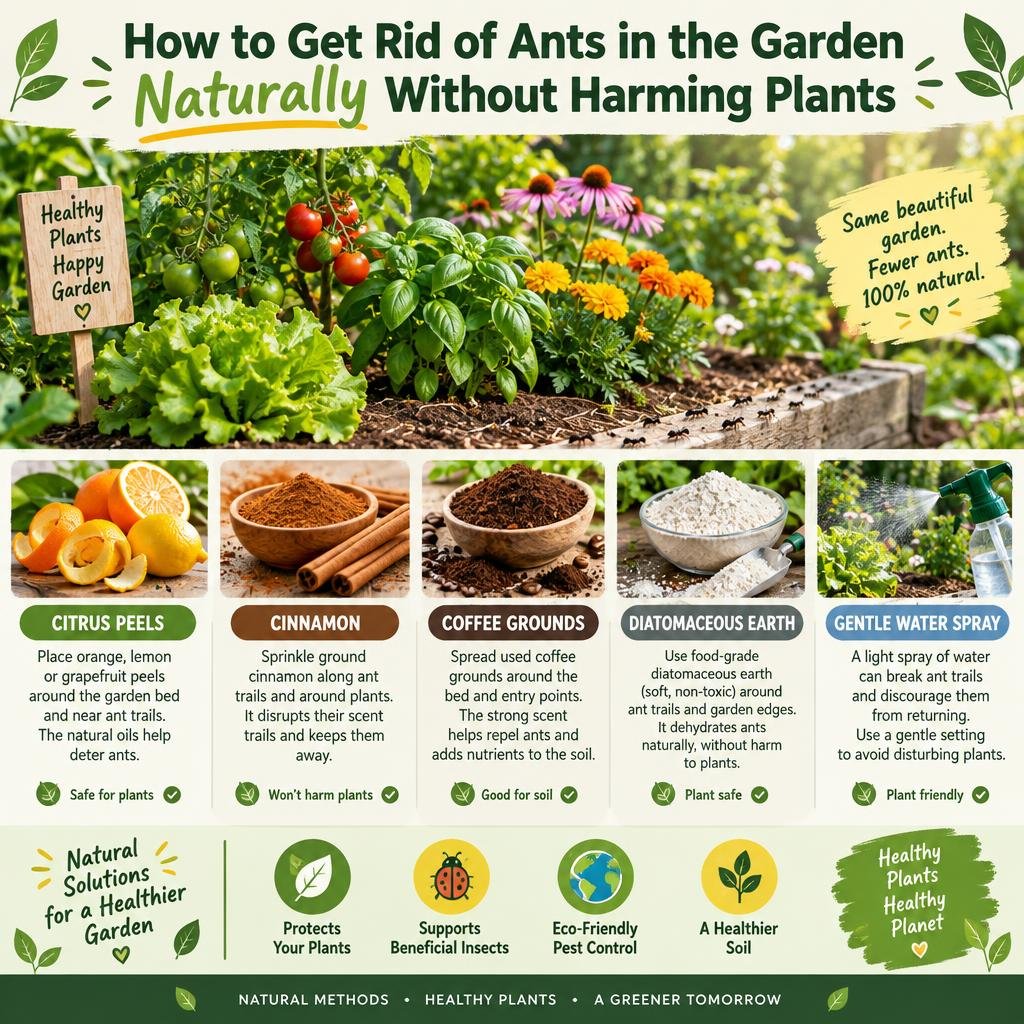
Few sights are more frustrating to an organic grower than discovering an expansive ant colony excavating tunnels through your raised garden beds, drying out delicate seedling roots, or farming sap-sucking pests on your heirloom tomatoes. While synthetic chemical drenches promise quick results, spraying them into organic soil risks killing beneficial mycorrhizal fungi, earthworms, and contaminating your homegrown produce.
To safely reclaim your garden beds, you need a natural garden ant killer strategy that targets the nest without burning plant root systems or leaving chemical residues in your soil.
Looking for general indoor pest solutions or kitchen recipes? Check out our complete master guide on proven natural ant killer solutions.
Plant-Safe Garden Ant Control Comparison Matrix
Never treat garden soil like a kitchen floor. This matrix details the safety, speed, and soil impact of common natural remedies:
| Remedy | Plant & Root Safety | Soil Biology Impact | Best Target Use |
|---|---|---|---|
| Boiling Water Drench | ⚠️ Kills roots on contact | Safe (Leaves zero residue) | Open lawns, pathways, & empty raised beds |
| Citrus D-Limonene Drench | 100% Safe when diluted | Nourishes beneficial microbes | Around vegetable crowns & tomato bases |
| Beneficial Nematodes | 100% Plant & Pet Safe | Enhances living soil food web | Active garden soil & compost mounds |
| Food-Grade Diatomaceous Earth | 100% Non-toxic to roots | Neutral mineral silica | Dry perimeter barrier along bed edges |
| Vinegar & Table Salt | ⛔ LETHAL TO CROPS | Ruins soil structure & drops pH | Never use in active garden beds |
Why Are Ants in Your Garden? The Aphid Connection
Before treating the soil, look closely at the stems and undersides of your plant leaves. In over 80% of garden infestations, ants are not there to eat your vegetables—they are there to farm aphids, scale, or mealybugs.
Ants crave the sugary excretions (honeydew) produced by these sap-sucking insects. In return, ants aggressively protect aphids from natural predators like ladybugs and lacewings. If you break the aphid population, the ant colony will often abandon your garden bed entirely.
The 2-in-1 Foliar Soap Spray:
- 1 quart clean water
- 1 tablespoon pure liquid Castile soap (such as Dr. Bronner’s peppermint)
- 1 teaspoon cold-pressed organic neem oil
Spray leaves thoroughly in early morning or late evening. This smothers aphids and eliminates the sweet honeydew food source that draws ants upward.
1. Beneficial Nematodes (The Biological Queen Killer)
For persistent underground colonies inside raised beds, beneficial nematodes (specifically Steinernema carpocapsae) are the ultimate organic weapon. Nematodes are microscopic, naturally occurring roundworms that live in healthy soil.
When applied to moist garden soil, these microscopic predators seek out ant larvae, pupae, and queens inside underground galleries. They infect the pests with natural bacteria, wiping out the colony from the inside out while leaving earthworms, plants, pets, and humans completely unharmed.
How to Apply:
- Water your garden beds thoroughly before application (nematodes need moisture to swim through soil pores).
- Mix nematode powder into a watering can filled with dechlorinated water according to package directions.
- Drench the soil around the ant nest in the evening to protect the nematodes from intense UV sunlight.
2. Citrus Peel & Cayenne Mound Drench
Citrus peels contain d-limonene, a natural solvent that dissolves the waxy protective coating on an insect’s exoskeleton, causing rapid dehydration. Combined with capsicum from hot peppers, this drench repels and kills ants without altering soil pH like vinegar does.
The Organic Recipe:
- Peels from 4 to 6 oranges, lemons, or grapefruits
- 1 tablespoon cayenne pepper powder
- 1 gallon water
Instructions: Simmer the peels and cayenne in water for 15 minutes. Allow the mixture to cool completely to room temperature, strain out solids, and slowly pour the liquid directly into the central entrance of the ant mound.
⚠️ Garden Warning: Never pour boiling water directly into garden beds near living plants. Boiling water cooks roots and kills beneficial soil microbes. Save boiling water strictly for driveway cracks, patio pavers, and gravel paths.
📋 Free Checklist: The Organic Home & Garden Pest Audit
Protect your harvest and home foundation all season long. Download our free printable audit checklist to identify pest vulnerabilities and organic remedies:
3. Raised Bed Protected Bait Stations
If you prefer using homemade borax baits outdoors, you must protect the bait from rain, pets, and garden birds. Never pour open liquid baits into the soil where plants can absorb excessive boron.
Construct a weatherproof bait container using an inverted plastic container with 1/8-inch holes punched around the base. Place a saturated sugar and borax cotton ball inside. You can find our exact mixing ratios in our detailed guide on how to make borax ant killer baits.
If you have outdoor dogs or free-range chickens roaming your garden beds, use food-grade diatomaceous earth or review our guide to safe non-toxic ant remedies around animals.
4. Food-Grade Diatomaceous Earth Ring Barriers
To protect valuable fruit trees, berry bushes, or newly transplanted brassicas from crawling columns, create a mechanical perimeter using Food-Grade Diatomaceous Earth (DE).
Dust a 2-inch wide barrier ring around the base of vulnerable plant stems. When worker ants attempt to crawl over the powder, the microscopic fossilized diatoms lacerate their waxy outer cuticle, causing rapid dehydration.
Pro-Tip: Apply DE strictly on dry soil and avoid dusting open blossoms where beneficial honeybees and pollinators forage. Reapply after heavy rain or overhead irrigation.
The Boiling Water Mound Drench: Volume & Depth Physics
Boiling water is the fastest mechanical mound destroyer in organic gardening, but most gardeners use too little water. An established garden ant nest extends 10 to 18 inches below the surface with complex branching chambers.
The 3-Gallon Protocol: Pouring a single kettle (1/2 gallon) will only scorch the top 2 inches, killing surface workers while leaving the queen and brood completely untouched. Within 48 hours, the colony will simply rebuild their mound 6 inches away. To achieve 100% mortality:
- Bring at least 2 to 3 gallons of water to a rolling boil in a large stockpot. Add 2 tablespoons of liquid castile soap to break surface tension.
- Drive a wooden dowel or garden broom handle 10 inches down into the center of the mound to create an open drainage funnel straight into the queen’s chamber.
- Slowly pour the boiling water directly down the central shaft. The castile soap allows the scalding water to penetrate deep subterranean galleries instantly, collapsing the nest structure.
Frequently Asked Questions
Are ants bad for garden soil?
In moderation, ants are beneficial: their tunneling aerates compact soil and cycles organic nutrients. However, when populations explode, their tunnel chambers dry out delicate root systems, and their habit of protecting destructive aphids harms plant health.
Does coffee ground fertilizer deter garden ants?
Used coffee grounds will not kill an ant colony. However, scattering dried acidic coffee grounds around plant bases masks scout scent trails and discourages ants from crossing specific beds, while adding valuable organic matter to your soil.
Written by Jennifer Reynolds
Certified Master Gardener • Sustainable Agriculture Specialist
Jennifer has over 15 years of hands-on experience in organic horticulture, permaculture soil biology, and non-toxic integrated pest management (IPM). Every recipe and garden strategy published on Organic Gardening Advise is field-tested in real raised beds to verify safety, dilution accuracy, and effectiveness. Learn more on our About Page.
Leave a Reply