Disclosure: This post contains affiliate links. If you purchase through our links, we may earn an affiliate commission at no extra cost to you. As an Amazon Associate, we earn from qualifying purchases.
Fire ants are among the most aggressive and frustrating pests a gardener can face. One minute you’re weeding your raised beds, and the next you’re dealing with a painful, stinging swarm. While commercial chemical pesticides promise a quick fix, they often flood your soil with synthetic toxins that harm beneficial earthworms, pollinators, and your overall ecosystem.
If you want to eliminate aggressive fire ants without poisoning your lawn, you need targeted organic solutions that break down the colony and target the queen.
Why Standard Ant Remedies Fail on Fire Ants
Most general household ant solutions—like a light sprinkle of cinnamon or a quick spray of vinegar—only deter surface scouts. Fire ant colonies are deeply nested, highly structured networks housing a queen who can lay thousands of eggs a day.
To truly eradicate a fire ant mound naturally, your approach must achieve two things:
- Break down the waxy outer layer/exoskeleton of the worker ants on contact.
- Penetrate deep into the underground chambers to neutralize the queen before she relocates the colony.
Natural Fire Ant Control: Quick Comparison Matrix
Fire ants (Solenopsis invicta) build complex subterranean colonies up to 4 feet deep. To eradicate them without synthetic chemicals, choose the organic method that matches your specific infestation:
| Organic Method | Speed of Kill | Target Zone | Queen Eradication Rate | Soil & Lawn Safety |
|---|---|---|---|---|
| Citrus D-Limonene + Castile Drench | Minutes to 24 Hours | Active Mounds | 90–95% Mortality | 100% Soil-Safe (Eco-friendly) |
| Organic Spinosad Bait | 2 to 5 Days | Yard-Wide Broadcast | 95–98% (Carried to Queen) | 100% Safe (OMRI Listed) |
| Scalding Water Drench (3 Gallons) | Instant Contact | Walkways & Open Beds | 60–75% (Depth Dependent) | ⚠️ Scorches Turf & Plant Roots |
| Food-Grade Diatomaceous Earth | 24 to 48 Hours | Garden Edges & Raised Beds | Surface Barrier Only | 100% Non-Toxic Silica |
| Vinegar, Baking Soda, or Grits | ⛔ Ineffective | N/A | 0% (Queen Relocates) | Damages Soil pH; Fails Colony |
1. The Citrus & Soap Mound Drench (The Most Effective DIY Method)
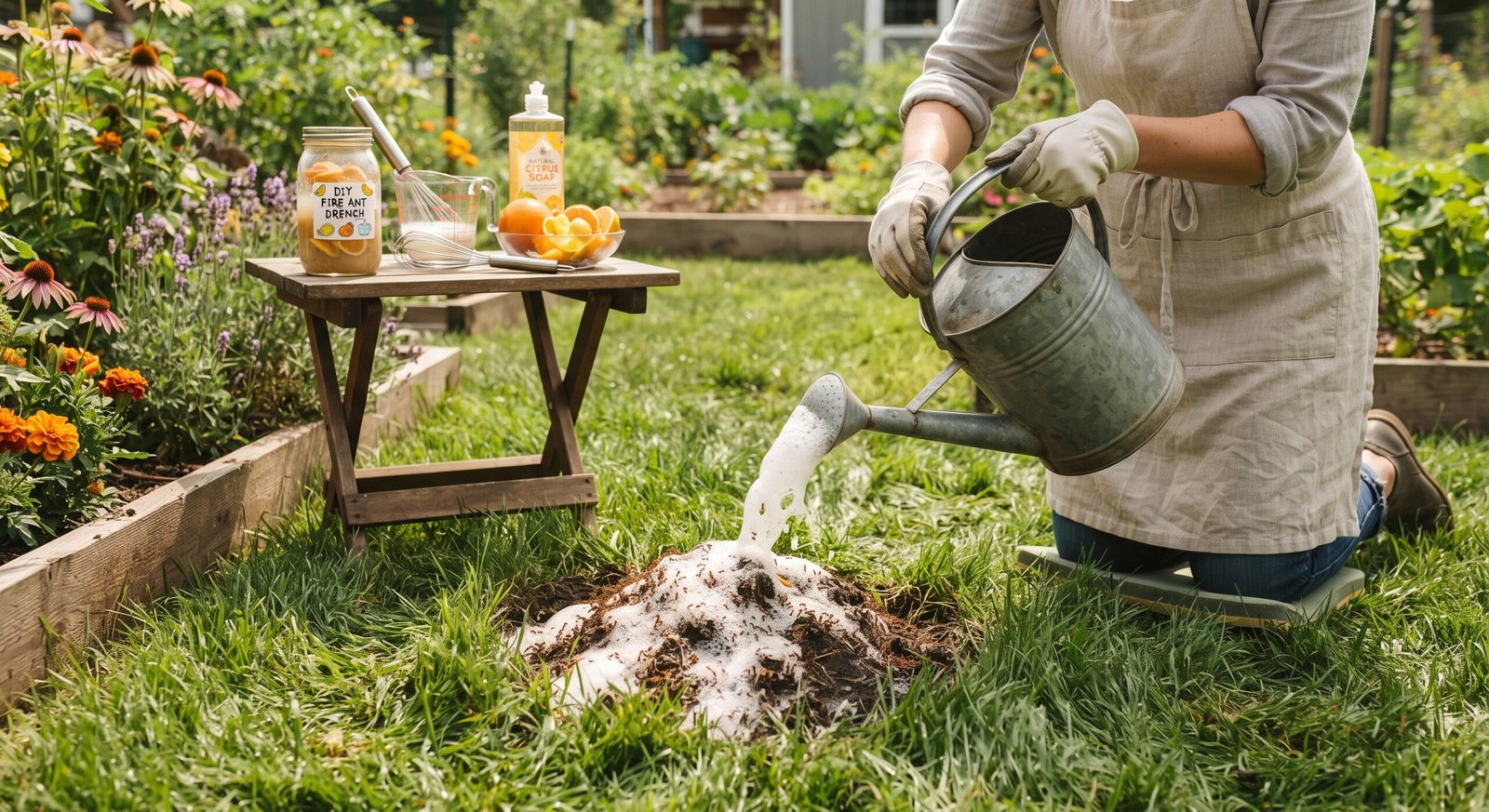
One of the most potent natural weapons against fire ant mounds is orange oil combined with liquid liquid castile soap. Unlike essential oils, industrial-grade orange oil contains d-limonene, which instantly dissolves the waxy protective coating on an ant’s exoskeleton.
The Recipe:
- 1 Gallon of water (preferably non-chlorinated or rainwater)
- 3 Ounces of orange oil (true orange oil, not light essential oil)
- 2 to 3 Ounces of liquid blue Dawn liquid castile soap (acts as a surfactant to bind the oil to the water and coat the ants)
🌱 Master Gardener Ingredient Note
Avoid using synthetic dish detergents like Dawn or Palmolive in your garden beds. Dish soaps contain synthetic sulfates and artificial fragrances that kill beneficial mycorrhizal fungi and scorch tender roots. Pure vegetable-based castile soap emulsifies orange oil perfectly while leaving zero toxic residues:
How to Apply It:
- Do Not Disturb the Mound First: Resist the urge to kick or poke the mound before pouring. Disturbing them causes the workers to scatter and move the queen to safety.
- Mix Thoroughly: Combine the water, orange oil, and liquid castile soap in a bucket or garden sprayer, mixing vigorously.
- Drench the Center: Pour the mixture slowly and steadily starting from the outer perimeter of the mound and working your way directly into the center crater.
- Note on Plants: Because orange oil acts as a natural bio-herbicide at high concentrations, avoid drenching desirable plant roots or turf grass directly adjacent to the mound.
2. Diatomaceous Earth (DE) for Perimeter and Surface Defense
If you are dealing with scattered foragers or want to establish a dry physical barrier around your garden beds, food-grade Diatomaceous Earth is your best ally.
- How it Works: DE consists of fossilized aquatic organisms ground into a fine powder. When ants walk across it, the microscopic razor-sharp edges scratch their waxy exoskeletons, causing rapid dehydration.
- Application Tip: Always apply food-grade DE when the ground and grass are completely dry. Reapply after any rainfall or heavy morning dew, as moisture neutralizes its desiccant properties.
🌱 Recommended Fire Ant Barrier Tool
To create an impenetrable barrier around raised beds, hose bibs, and patio edges, use 100% food-grade amorphous silica with a directional bulb duster for an ultra-fine, invisible coating:
3. Boiling Water and Soap (The Quick Strike)
For isolated mounds away from delicate plant roots, a massive influx of thermal energy can drastically reduce a colony’s numbers.
- The Method: Boil 2 to 3 gallons of water and mix in a tablespoon of liquid liquid castile soap. Carefully carry it to the mound and pour it rapidly into the center hole.
- The Catch: While this instantly eliminates thousands of worker ants, it often fails to reach the deepest chambers of large, mature colonies, meaning the queen may survive. Use this as a fast first response or combine it with subsequent oil drenches.
The Extension-Tested “Two-Step Method” for Severe Infestations
If you have more than 3 to 5 fire ant mounds across your lawn or acreage, treating mounds individually is like playing whack-a-mole. Agricultural extensions (including Texas A&M and Clemson University IPM programs) recommend the proven Two-Step Organic Method:
- Step 1: Broadcast an OMRI-Listed Spinosad Bait (Yard-Wide): In early morning or late afternoon when the grass is dry and temperatures are between 70°F and 85°F, broadcast organic spinosad granules lightly across your entire lawn. Foraging worker ants eagerly carry the bait deep into the mound and feed the queen, killing her within 3 to 7 days.
- Step 2: Drench High-Priority Mounds: Several days after broadcasting bait, drench any lingering problem mounds near high-traffic areas, vegetable gardens, or dog runs with your Citrus D-Limonene Castile Drench to finish off the colony instantly.
Why DIY Fire Ant Treatments Fail: 4 Critical Mistakes
If natural treatments haven’t worked for you in the past, one of these four fundamental mistakes is almost certainly why:
- Disturbing the Mound Before Drenching: If you kick, shovel, or poke a fire ant mound before pouring your drench, guard ants sound a chemical alarm. Within 30 seconds, nursery workers scurry the queen down secondary lateral escape tunnels 3 feet away! Always approach quietly and pour from outside the perimeter inward.
- Pouring Too Small a Liquid Volume: An established fire ant mound extends 12 to 24 inches beneath the surface with dozens of branching galleries. Pouring 1 quart or a single tea kettle only kills surface workers while leaving the queen safe below. Always use at least 2 to 3 full gallons of drench per mound.
- Drenching at Midday or in Freezing Cold: Fire ants regulate their brood temperature constantly. During midday heat or winter chills, the entire colony retreats deep underground. The best time to drench is morning between 8:00 AM and 10:30 AM, when the queen and nursery brood are resting in the warm upper chambers right under the sun-warmed mound crust.
- Falling for the “Grits” or “Cornmeal” Myth: A persistent folk myth claims fire ants will eat dry grits, which supposedly expand inside their stomachs and make them explode. In reality, adult ants have a narrow pharyngeal sieve and cannot consume solid food—they only ingest liquids! Grits simply feed the ants or rot in your soil.
Long-Term Prevention: Keep Your Yard Pest-Resistant
Eradicating individual mounds is only half the battle. To stop fire ants from moving back into your landscape, focus on foundational yard maintenance:
- Manage Soil Moisture: Fire ants love damp, disturbed earth. Avoid overwatering your lawn and ensure proper drainage away from foundations.
- Seal Entry Points: Block cracks in walkways and exterior walls where scouting queens seek shelter.
For a complete blueprint on safeguarding your entire property organically, explore the Complete Home Defense Bundle
, featuring step-by-step seasonal calendars, natural defense zone maps, and DIY pest elimination guides to keep your property naturally protected year-round.
While multi-purpose baiting and perimeter barriers work wonders for everyday household ants, aggressive imported red fire ants require a completely different tactical approach.
Because surface sprays often only target foraging workers while leaving the queen safe deep underground, you need a method that penetrates the entire nest structure [cite: 7-day home checklist; defense zone map; home pest defense seasonal calendar; pest recipe; shopping list; ant elimination guide; cockroach elimination guide; household bed bug elimination guide; household spider control guide; household mice & rat guide].
Related Resources
- 7 Best Natural Ant Killers: DIY Recipes That Destroy the Colony
- How to Make Borax Ant Killer: DIY Liquid & Solid Bait Recipes
- How to Get Rid of Ants in the Garden Naturally
Written by Jennifer Reynolds
Certified Master Gardener • Sustainable Agriculture Specialist
Jennifer has over 15 years of hands-on experience in organic horticulture, permaculture soil biology, and non-toxic integrated pest management (IPM). Every recipe and garden strategy published on Organic Gardening Advise is field-tested in real raised beds to verify safety, dilution accuracy, and effectiveness. Learn more on our About Page.
Leave a Reply