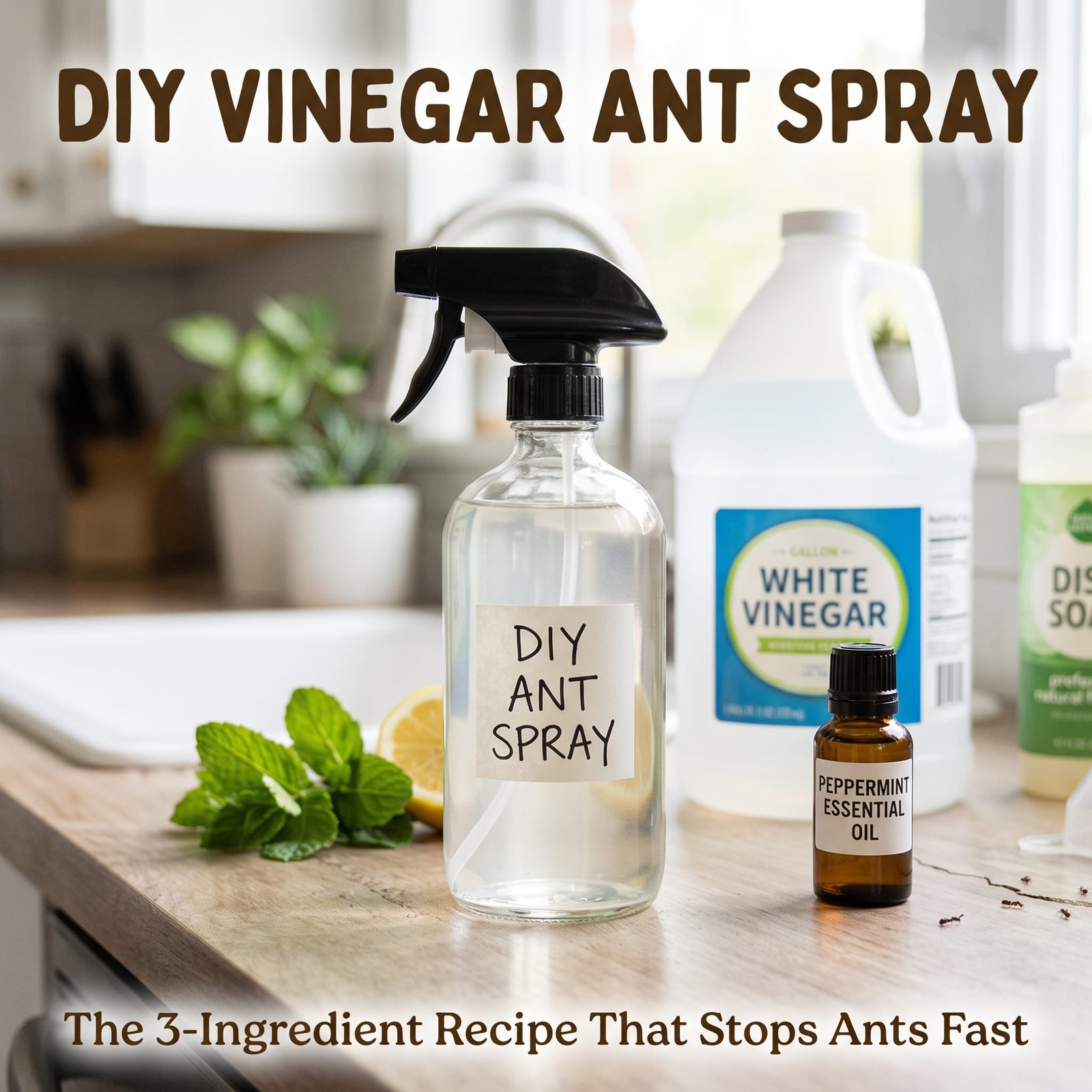
Few things are more frustrating than walking into your kitchen and discovering an unbroken line of ants marching across your countertop. While synthetic pesticide sprays leave toxic residue on food preparation surfaces, a simple DIY vinegar ant spray stops indoor invasions instantly—without endangering children or pets.
However, simply spritzing vinegar onto a few ants will not solve the issue permanently. To make vinegar truly effective, you must understand how it disrupts pheromone communication, how to fortify it with natural surfactants, and which household surfaces you must never spray.
Why Vinegar Works on Ants (The Science)
Ants do not navigate by eyesight alone. Scout ants lay down an invisible chemical highway made of hydrocarbon pheromones. When an ant finds sugar or moisture, it runs back to the nest leaving a scented track that thousands of worker ants follow.
- Pheromone Trail Neutralization: The acetic acid in distilled white vinegar chemically breaks down these pheromone markers, cutting the invisible trail and blinding the colony’s foraging route.
- Respiratory Disruption: Ants breathe through tiny body openings called spiracles. When paired with dish soap, acidic vinegar penetrates the protective waxy layer of an ant’s exoskeleton and neutralizes individual scouts on contact.
📌 Important Reminder: Vinegar spray eliminates scent trails and scout ants, but it does not destroy underground queens. To eliminate the entire nest, pair this spray with our proven natural ant killer baits and recipes.
The Ultimate 3-Ingredient Vinegar Ant Spray Recipe
While plain diluted vinegar disrupts scent trails, adding dish soap and salt turns a basic deterrent into an effective contact spray.
Ingredients & Ratios:
- 1 cup (8 oz) Distilled white vinegar (5% acidity)
- 1 cup (8 oz) Warm clean water
- 1 teaspoon Liquid castile soap or biodegradable dish soap
- Optional booster: 1 tablespoon table salt (helps dehydrate surface barriers)
- Optional scent mask: 10 drops peppermint or citrus essential oil (keep away from cats)
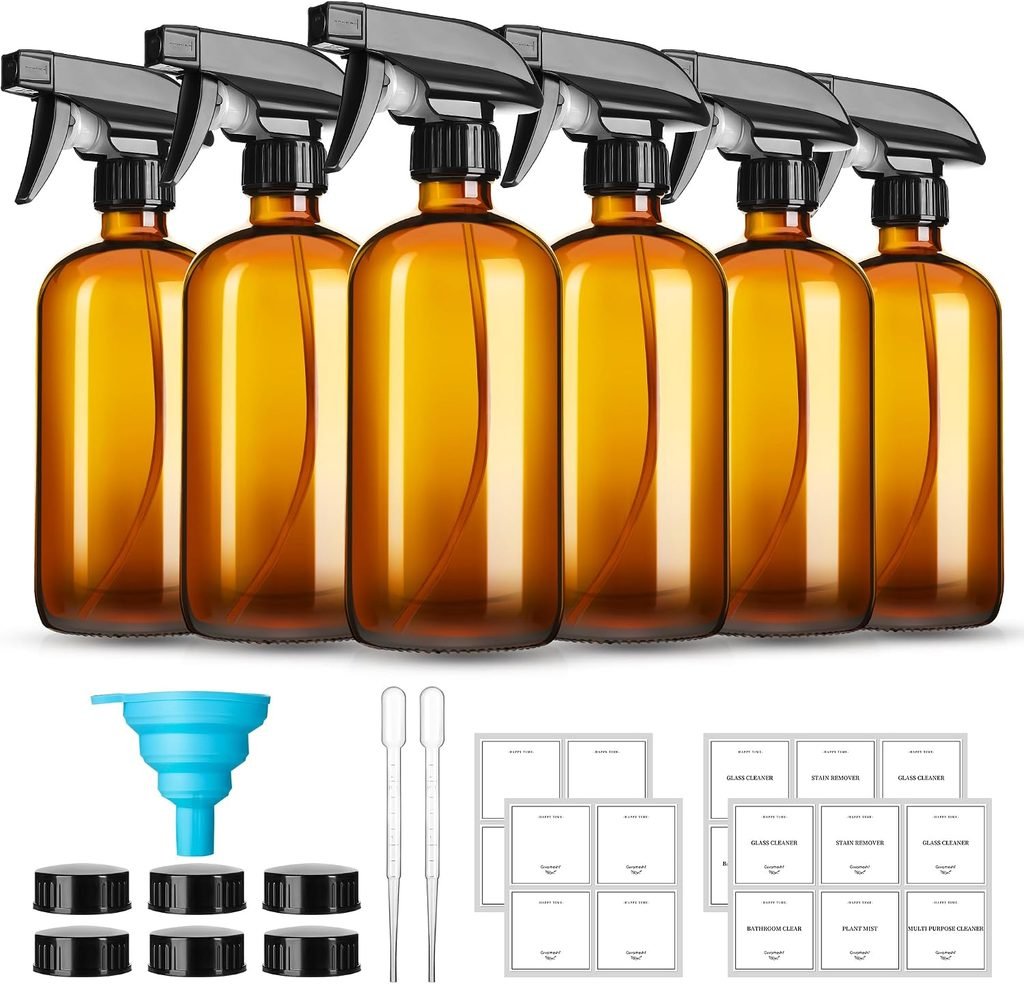
Mixing Instructions:
- Pour warm water into a clean spray bottle and dissolve the salt completely.
- Add the white vinegar.
- Add the dish soap last (adding soap last prevents excessive foaming).
- Gently invert the bottle back and forth to combine without whipping bubbles into the nozzle.
The 2-Step Application Routine (Spray + Wipe)
Most homeowners spray ants and walk away, only to find fresh scouts returning hours later. To eliminate trails permanently, follow this two-step routine:
- Step 1: Spray & Dwell: Coat the active ants and the line behind them thoroughly. Allow the vinegar spray to sit on the surface for 60 to 90 seconds. This allows the acetic acid to break down the microscopic pheromones.
- Step 2: Wipe Clean: Use a clean microfiber cloth or paper towel to wipe up the dead ants and residue. You must physically wipe the trail; letting the spray evaporate can leave behind trace pheromone proteins that new scouts can detect.
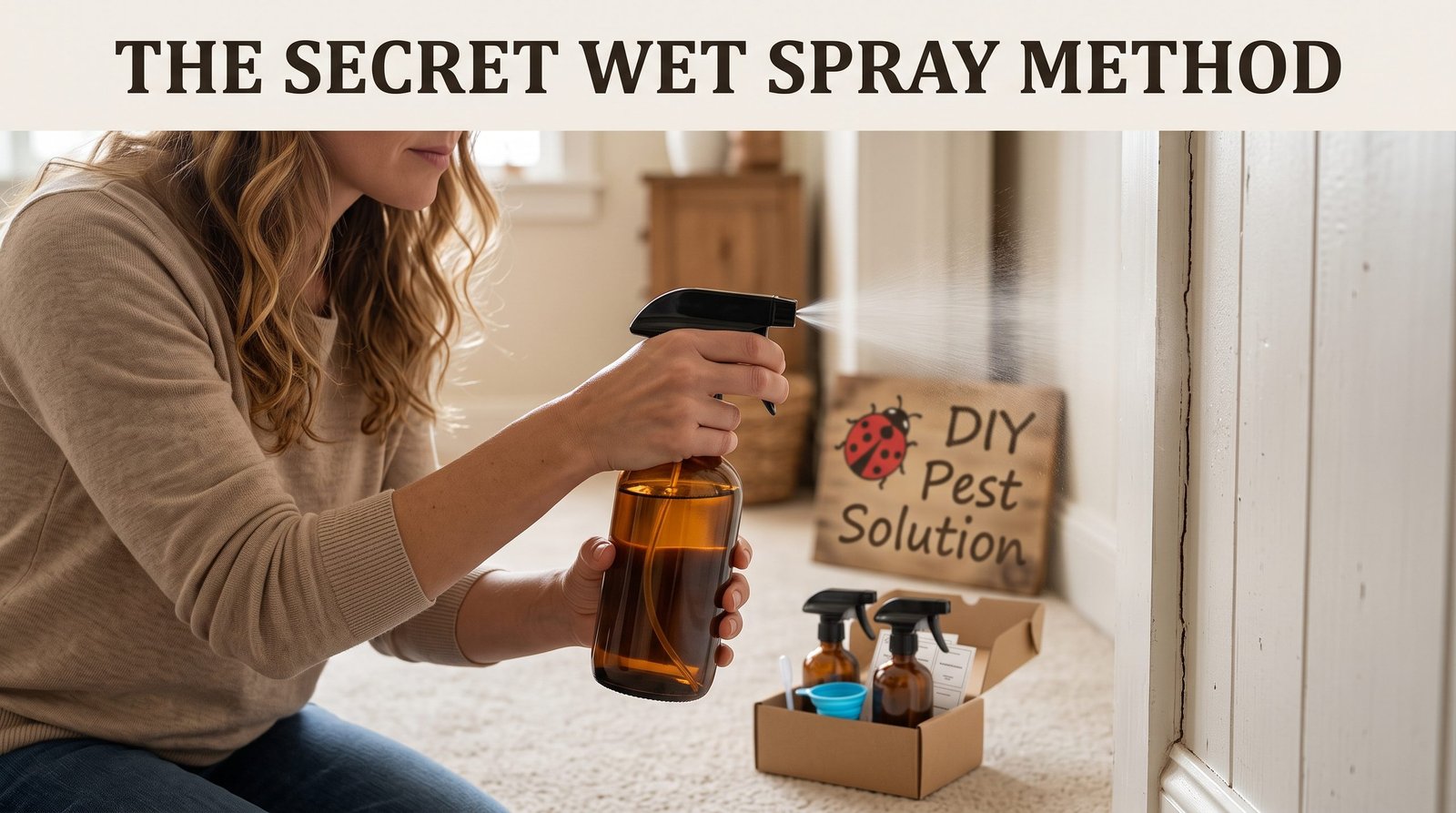
- Step 3: Perimeter Defense: Lightly mist the entry threshold (door seams, window trim, back of backsplash) and allow it to air-dry as a deterrent barrier.
📋 Free Checklist: Keep Pests Out of Your Home & Garden Naturally
Pair your DIY sprays with long-term home defense. Grab our free printable checklist to audit your perimeter, seal access cracks, and keep pests out organically:
Surface Safety Warning: Where NOT to Spray Vinegar
While vinegar is completely natural, its low pH (around 2.5) means it can damage certain delicate household finishes:
| Surface Material | Safe with Vinegar? | Safe Alternative |
|---|---|---|
| Glazed Ceramic, Glass, Porcelain | ✅ 100% Safe | Vinegar spray works as both an ant killer and streak-free cleaner. |
| Laminate & Formica | ✅ 100% Safe | Safe for everyday wipe-downs. |
| Granite & Marble (Natural Stone) | ❌ NEVER USE | Acid etches calcite and dulls stone shine permanently. Use warm water with castile soap or our pet-safe baking soda bait instead. |
| Unsealed Hardwood | ⚠️ Caution | Acid can break down wax coatings or penetrate raw grain. Spot test first or use a damp soapy cloth. |
Hate the Smell? Make Citrus-Infused Vinegar
If the sharp tang of white vinegar bothers you, infuse it with leftover orange or lemon peels. Citrus peels contain d-limonene, a natural plant oil that is toxic to ants and provides a fresh scent:
- Pack clean, dry orange or grapefruit peels into a glass mason jar.
- Submerge the peels entirely in distilled white vinegar and seal the lid.
- Store the jar in a dark cabinet for 1 to 2 weeks.
- Strain out the peels and pour the infused citrus vinegar into your spray bottle diluted 1:1 with water.
Frequently Asked Questions
Does vinegar kill the entire ant colony?
No. Vinegar kills foraging scout ants on contact and erases scent trails, but worker ants cannot carry liquid vinegar back to feed the queen. To eliminate the nest, place slow-acting borax ant killer bait traps along active trails.
Can I use Apple Cider Vinegar (ACV) instead of white vinegar?
Yes, ACV has similar acidity. However, plain distilled white vinegar is preferable because it is less expensive, leaves no sticky residue, and does not carry fruit sugars that could inadvertently attract pests.
Can I spray vinegar directly on garden plants?
Do not spray vinegar directly onto plant foliage or healthy soil. At high concentrations, vinegar acts as a non-selective herbicide that wilts leaves and alters soil pH. For outdoor beds, check out our guide on how to kill garden ants without harming plants.
Written by Jennifer Reynolds
Certified Master Gardener • Sustainable Agriculture Specialist
Jennifer has over 15 years of hands-on experience in organic horticulture, permaculture soil biology, and non-toxic integrated pest management (IPM). Every recipe and garden strategy published on Organic Gardening Advise is field-tested in real raised beds to verify safety, dilution accuracy, and effectiveness. Learn more on our About Page.
Leave a Reply