Disclosure: This post contains affiliate links. If you purchase through our links, we may earn an affiliate commission at no extra cost to you. As an Amazon Associate, we earn from qualifying purchases.
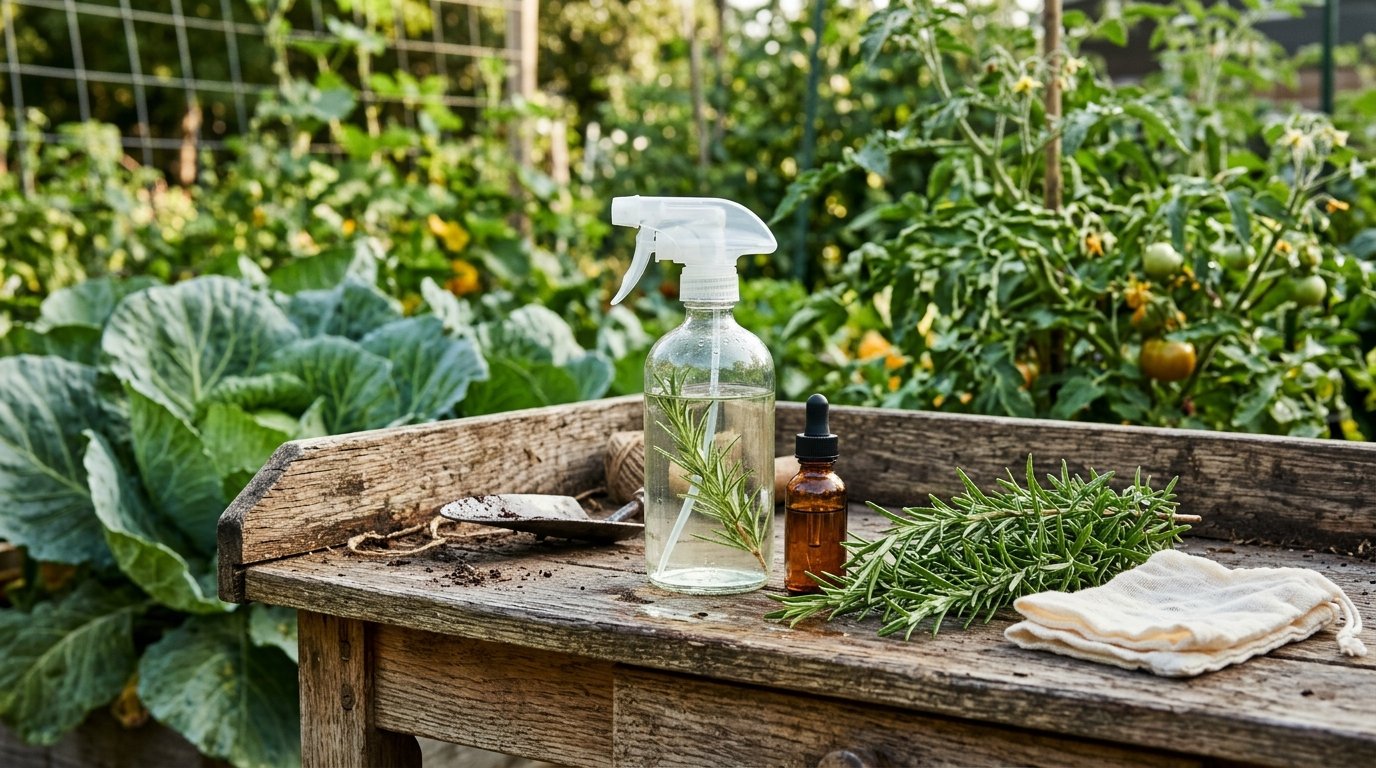
Over millions of years of evolutionary pressure, aromatic Mediterranean culinary herbs developed complex chemical defenses to protect their foliage against foraging insects. Among these botanical marvels, rosemary (Salvia rosmarinus) stands out as an organic powerhouse. Rich in volatile monoterpenes—including 1,8-cineole (eucalyptol), camphor, and alpha-pinene—pure rosemary essential oil disrupts insect octopaminergic neuroreceptors, masking the host plant’s scent and driving away destructive garden pests.
When combined with organic castile soap and strained botanical infusions, rosemary spray acts as a broad-spectrum natural repellent against cabbage loopers, aphids, spider mites, squash bugs, and cucumber beetles without leaving synthetic pesticide residues on your homegrown vegetables. In this field guide—part of our complete framework in The Complete Guide to Organic Garden Pest Control—we share our master field-tested recipe.
The Science of Botanical Repellents: How Rosemary Terpenes Work
Insects locate vegetable plants primarily through specialized olfactory receptors on their antennae, which lock onto specific chemical volatile blends emitted by brassicas, nightshades, and cucurbits. Rosemary’s intense monoterpenes confuse these sensory organs:
- Olfactory Masking: The pungent aroma of 1,8-cineole overpowers the plant’s natural scent plume. Foraging cabbage white butterflies and squash bugs fly right past your garden bed without realizing food is present!
- Anti-Feedant Action: When soft-bodied nymphs encounter rosemary oil residues on foliage, sensory chemoreceptors on their mouthparts register a strong deterrent signal, halting feeding immediately.
- Contact Smothering: When combined with pure liquid castile soap, the spray dissolves insect epicuticular waxes, providing immediate contact knockdown of soft-bodied aphids and mites.
100% Pure Organic Rosemary Essential Oil
For DIY garden sprays, use pure therapeutic-grade rosemary essential oil (Rosmarinus officinalis) with high natural cineole content rather than synthetic fragrance oils.
Natural Castile Soap Emulsifier & Surfactant
Because essential oils do not mix with water, always use Dr. Bronner’s Pure Liquid Castile Soap to emulsify the rosemary oil into a stable, non-burning foliar spray.
Check Price on Amazon: Dr. Bronner’s Pure Liquid Castile Soap →
The Master Rosemary Botanical Garden Spray Recipe
Follow this exact formula to create a 32-ounce trigger spray bottle of botanical repellent:
- 1 Quart of warm water (approx. 80°F to 90°F helps oils emulsify)
- 15 to 20 Drops of pure rosemary essential oil
- 1 Teaspoon of Dr. Bronner’s Pure Liquid Castile Soap (unscented or peppermint)
- Optional Garlic Booster: Steep 3 crushed garlic cloves in 1 cup of boiling water for 2 hours. Strain the garlic pulp using an ultra-fine cheesecloth strainer bag and add the infused garlic liquid to the spray bottle.
Ultra-Fine Garden Spray Strainer Bag
When infusing fresh garlic or hot chili into botanical sprays, strain the liquid through a reusable ultra-fine nut milk cheesecloth bag to prevent clogging your spray nozzle.
Botanical Essential Oil Spray Comparison Matrix
| Essential Oil | Primary Terpenes | Key Target Pests | Application Frequency |
|---|---|---|---|
| Rosemary Oil | 1,8-Cineole, Camphor | Aphids, Loopers, Squash Bugs, Mites | Every 5–7 Days |
| Peppermint Oil | Menthol, Menthone | Ants, Flea Beetles, Rodents, Spiders | Every 3–5 Days |
| Thyme Oil | Thymol, Carvacrol | Fungus Gnats, Whiteflies, Bacterial Blights | Weekly |
| Clove / Eugenol | Eugenol | Broad contact insecticide & weed knockdown | Spot treatment only |
Download the Free Organic Pest Prevention Checklist & Spray Chart
Get instant access to our printable organic dilution cheat sheets, companion planting matrix, and seasonal pest calendar used by certified organic growers.
Frequently Asked Questions
Can rosemary essential oil spray burn plant leaves?
If used at the recommended dilution of 15 to 20 drops per quart with castile soap emulsifier, it is completely safe for vegetables. However, never spray in direct midday sunlight or on water-stressed seedlings.
Will the rosemary spray affect the taste of my vegetables?
No. Terpenes evaporate cleanly from plant foliage within 24 to 48 hours. A simple rinse with fresh water before eating completely removes any remaining herbal scent.
Written by Jennifer Reynolds
Certified Master Gardener • Sustainable Agriculture Specialist
Jennifer has over 15 years of hands-on experience in organic horticulture, permaculture soil biology, and non-toxic integrated pest management (IPM). Every recipe and garden strategy published on Organic Gardening Advise is field-tested in real raised beds to verify safety, dilution accuracy, and effectiveness. Learn more on our About Page.
Leave a Reply