Disclosure: This post contains affiliate links. If you purchase through our links, we may earn an affiliate commission at no extra cost to you. As an Amazon Associate, we earn from qualifying purchases.
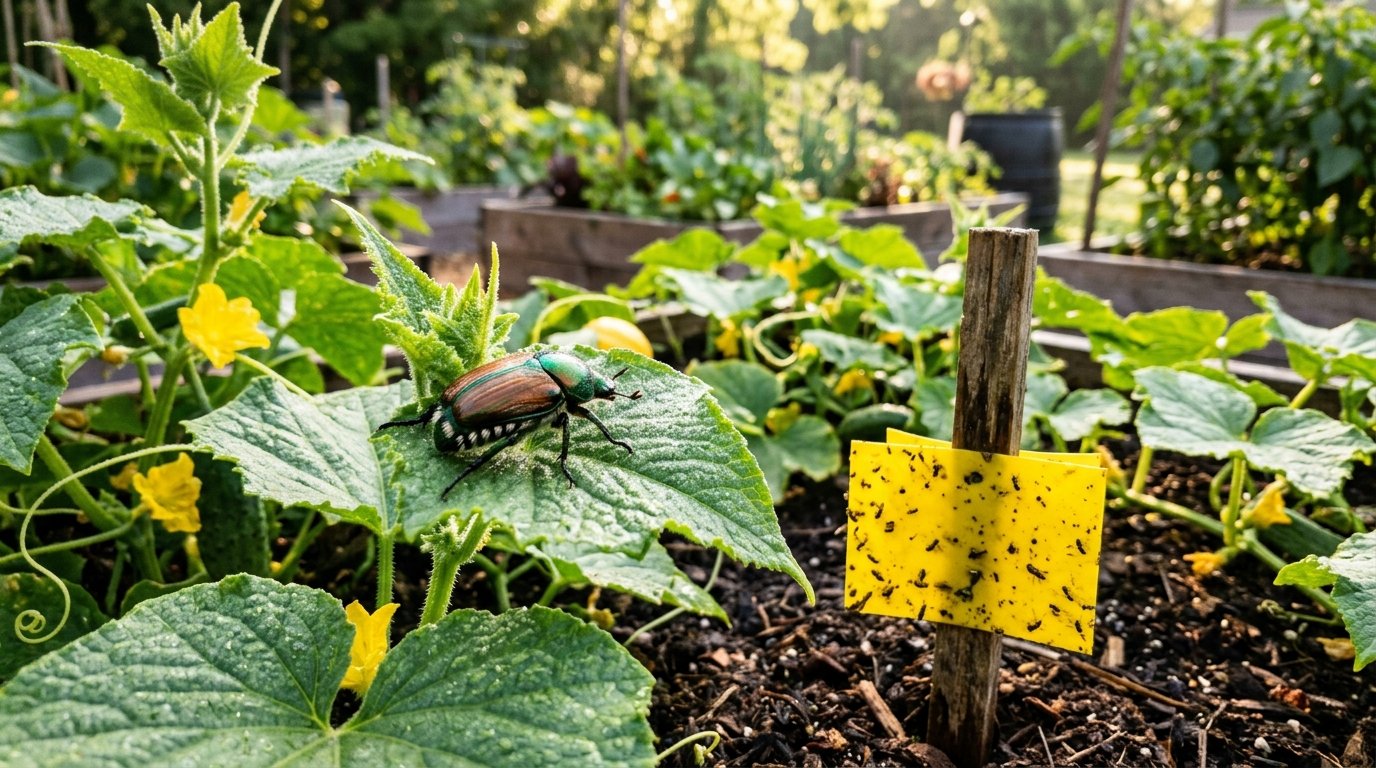
You step into your kitchen garden on a warm sunny morning to check on your tender young eggplant transplants, radishes, or kale seedlings, only to find the leaves riddled with hundreds of tiny, circular, pinprick punctures. The foliage looks as though someone fired a miniature shotgun through the leaf canopy. The microscopic culprits behind this classic “shot-hole” damage are flea beetles (family Chrysomelidae).
Barely 1/16 to 1/8 inch long with powerful enlarged hind legs that allow them to spring into the air like fleas when disturbed, these chewing pests can completely defoliate and kill vulnerable transplants in 48 hours. In this master field guide—part of our complete framework in The Complete Guide to Organic Garden Pest Control and our Plant-Safe Garden Soil Guide—we share proven organic strategies to eradicate flea beetles permanently.
Flea Beetle Control Comparison Matrix
| Method | Target Stage | Speed | Best Application |
|---|---|---|---|
| Surround WP Kaolin Clay | Adult Beetles | Immediate Barrier | Eggplants, tomatoes, brassicas |
| Food-Grade Diatomaceous Earth | Crawling Adults | 24–48 Hours | Dry soil line & seedling bases |
| Ultra-Fine Mesh Netting | Migrating Adults | 100% Exclusion | Installed at planting over hoops |
| Radish / Mustard Trap Crops | Adults & Egg-layers | Continuous | Diverting pests away from cash crops |
| Pet-Safe Indoor Boundaries | N/A | Preventative | Baseboards (See our Pet-Safe Pest Guide) |
Method #1: Surround WP Kaolin Clay Particle Barrier
The organic commercial standard for halting flea beetles without toxic synthetic chemicals is Surround WP Kaolin Clay. Kaolin is an all-natural, purified aluminosilicate mineral powder that is mixed with water and sprayed onto plant foliage.
When the spray dries, it leaves a tactile white mineral film over leaves and stems. When flea beetles land on treated leaves, microscopic clay particles attach to their sensory receptors and tarsal pads (feet). The film physically prevents them from feeding, irritates their mouthparts, and disguises the visual appearance of the plant.
Organic Mineral Barrier Spray: Surround WP Kaolin Clay
For non-toxic pest protection that stops flea beetles, Japanese beetles, and cucumber beetles from chewing leaves, spray OMRI-listed Surround WP Kaolin Clay.
Method #2: Ultra-Fine Garden Mesh Netting
Because flea beetles overwinter in surrounding sod and migrate into garden beds the moment daytime temperatures reach 68°F, physical exclusion is 100% effective. Standard bird netting or coarse insect mesh has holes too large (flea beetles slip right through 2mm openings). You must use 0.8mm ultra-fine garden mesh.
Ultra-Fine 0.8mm Garden Barrier Netting
To physically block flea beetles, thrips, and aphids from ever landing on young seedlings, install breathable ultra-fine insect netting over flexible hoops.
Method #3: Food-Grade Diatomaceous Earth at the Stem Base
When newly hatched flea beetles emerge from soil pupation, dusting a 1-inch ring of certified food-grade amorphous silica around the base of vulnerable seedlings provides lethal mechanical desiccation. For application details, follow our Diatomaceous Earth Master Guide.
Certified Food-Grade Diatomaceous Earth with Duster
Apply an ultra-fine, invisible silica barrier around plant stems using pure food-grade DE and a precision directional bulb duster.
Download the Free Organic Pest Prevention Checklist & Spray Chart
Get instant access to our printable organic dilution cheat sheets, companion planting matrix, and seasonal pest calendar used by certified organic growers.
Frequently Asked Questions
Can plants recover from flea beetle shot-hole damage?
Yes. Vigorous, established plants with more than 6 to 8 true leaves can withstand up to 20% foliage loss. However, young seedlings with only cotyledons or 2 true leaves can be killed within 48 hours. Protect transplants immediately upon planting.
Does neem oil kill flea beetles?
Neem oil acts as an anti-feedant and growth regulator. While it repels flea beetles and reduces egg viability, combining neem with kaolin clay or physical row covers delivers significantly faster crop protection.
Written by Jennifer Reynolds
Certified Master Gardener • Sustainable Agriculture Specialist
Jennifer has over 15 years of hands-on experience in organic horticulture, permaculture soil biology, and non-toxic integrated pest management (IPM). Every recipe and garden strategy published on Organic Gardening Advise is field-tested in real raised beds to verify safety, dilution accuracy, and effectiveness. Learn more on our About Page.
Leave a Reply