Disclosure: This post contains affiliate links. If you purchase through our links, we may earn an affiliate commission at no extra cost to you. As an Amazon Associate, we earn from qualifying purchases.
As November deep freezes arrive and the garden transitions into winter, most gardeners hang up their trowels and surrender their beds to snow and ice. Yet, hardy cool-season crops—such as spinach, kale, mache, winter lettuces, carrots, and leeks—can continue producing sweet, crisp harvests straight through December, January, and February if provided with simple microclimate protection.
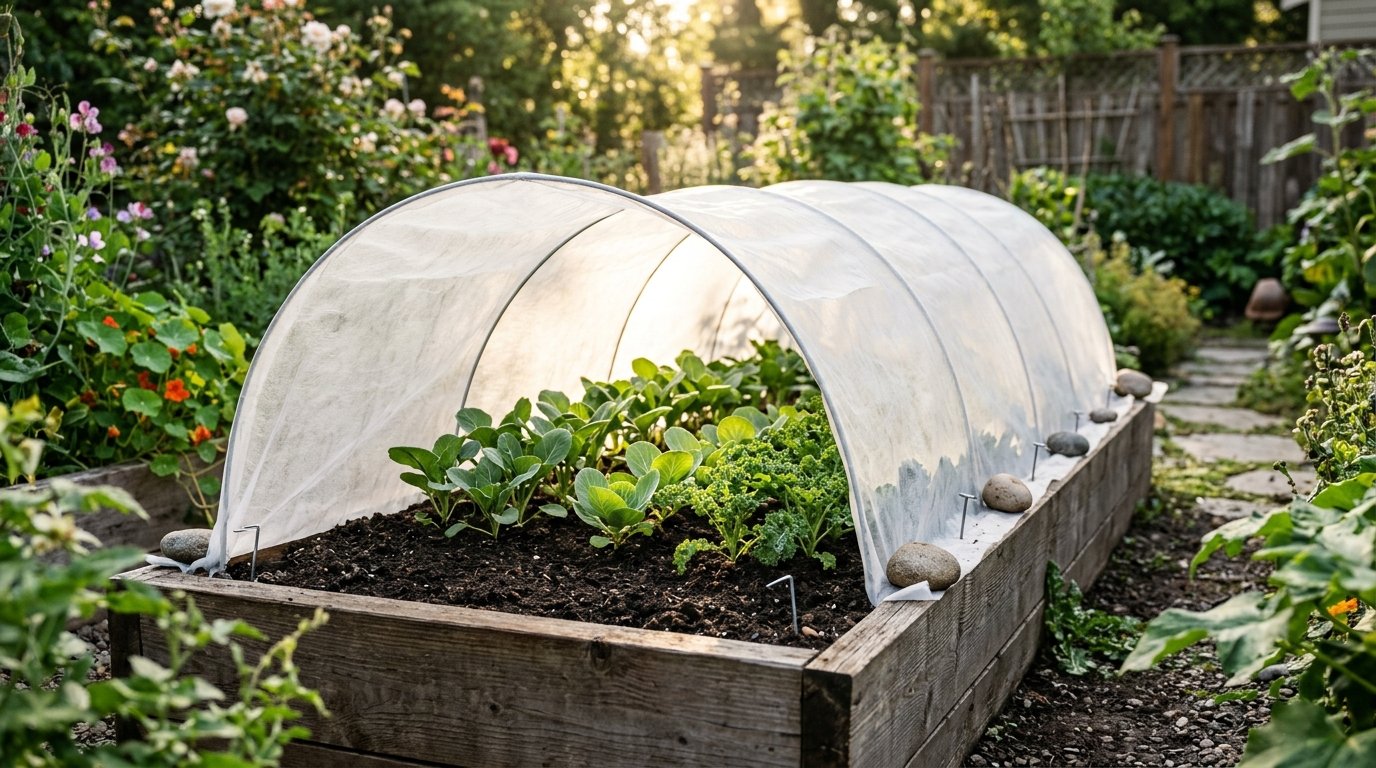
However, winter gardening comes with a major catch: tender winter greens become the only green, nutritious vegetation in the entire landscape, making them an irresistible beacon for starving winter wildlife—including cottontail rabbits, meadow voles, field mice, and late-season nocturnal cutworms. Cold frames, garden cloches, and low tunnels solve both problems simultaneously: they trap solar warmth to create a sub-tropical greenhouse effect while forming an impenetrable physical barrier against winter pests. In this season extension guide—part of our barrier framework in Floating Row Covers Master Guide and our animal defense manual in Keeping Rodents Out of Raised Beds—we explore how to build, ventilate, and manage winter garden enclosures.
Cold Frame vs. Cloche vs. Low Tunnel Comparison
| Enclosure Type | Construction Material | Temperature Boost | Pest Exclusion Level | Best For |
|---|---|---|---|---|
| Traditional Cold Frame | Wood box with angled glass window sash or polycarbonate | 10°F–20°F warmer than ambient | 100% (Blocks rabbits, deer, voles, birds) | Winter salads, spinach, overwintering potted perennials |
| Garden Cloches (Bell Jars) | Glass bell jars, recycled 1-gallon water jugs | 5–10°F warmer | Targeted individual plant protection | Protecting prize brassicas, tender herbs, autumn cabbage |
| Low Tunnel with Row Covers | Bent electrical conduit/PVC hoops + heavy spunbond fabric | 4–8°F warmer | Excludes insects, rabbits, cutworms, deer | Entire raised beds of root vegetables, kale, leeks |
1. The Anatomy of an Ideal Pest-Proof Cold Frame
A cold frame is essentially a bottomless wooden box with a transparent lid that sits directly over garden soil. For optimal solar thermal gain in the Northern Hemisphere, build your cold frame with a south-facing slope (12 inches tall at the front, 18 inches tall at the back). This 30-degree angle captures the maximum amount of low winter sunlight.
To make the cold frame 100% rodent-proof, line the bottom soil edge with a 4-inch apron of 1/4-inch galvanized hardware cloth buried in the soil. This prevents burrowing voles and mice from tunneling under the wooden frame into your tender spinach beds.
2. Venting Protocol: Preventing High-Humidity Fungal Rot
The number one mistake beginners make with winter cold frames is failing to ventilate. On a clear, sunny 40°F winter day, solar radiation can rapidly heat the interior of a sealed cold frame to over 85°F. This intense heat paired with 100% relative humidity creates the ideal breeding environment for Botrytis (gray mold) and powdery mildew.
Prop the cold frame lid open 1 to 2 inches on sunny mornings whenever ambient temperatures exceed 40°F. Close the lid tightly by 3:00 PM to trap the stored daytime warmth before the sun sets.
Heavy-Duty Spunbond Floating Row Cover Blanket
Drape over low tunnel hoops or inside cold frames on sub-zero nights for an extra layer of thermal and insect exclusion.
Ultra-Fine 0.8mm Garden Mesh Netting
Install under row covers to physically exclude winter cutworms, cabbage moths, and creeping rodents from vegetable beds.
Surround WP Kaolin Clay Mineral Protectant
Spray late fall brassicas before enclosing in cold frames to add an extra tactile deterrent against hiding winter pests.
3. DIY Recycled Gallon Jug Cloches
For gardeners on a budget, clean 1-gallon translucent plastic milk or water jugs make outstanding individual cloches. Cut the bottom off the jug with utility scissors and press the cut edge 2 inches deep into the soil around individual seedlings. Leave the screw cap off to provide continuous natural ventilation while physically barring cutworms and rabbits from reaching the foliage.
Download the Free Organic Pest Prevention Checklist & Spray Chart
Get instant access to our printable organic dilution cheat sheets, companion planting matrix, and seasonal pest calendar used by certified organic growers.
Frequently Asked Questions
Do I need to water plants inside a cold frame during winter?
Very rarely. Because winter temperatures are cool and humidity is naturally trapped inside the frame, water evaporation is minimal. Check soil moisture every 2 to 3 weeks; water lightly only if the top 2 inches of soil feel completely dry.
Can a cold frame protect plants during sub-zero ($< 0^{\circ} ext{F}$) polar vortexes?
Yes, with a thermal blanket. When extreme Arctic cold fronts drop temperatures below 0°F, throw an old wool blanket or heavy insulated tarp over the glass lid at night, removing it early the next morning so sunlight can penetrate.
Written by Jennifer Reynolds
Certified Master Gardener • Sustainable Agriculture Specialist
Jennifer has over 15 years of hands-on experience in organic horticulture, permaculture soil biology, and non-toxic integrated pest management (IPM). Every recipe and garden strategy published on Organic Gardening Advise is field-tested in real raised beds and container gardens to verify safety, dilution accuracy, and effectiveness. Learn more on our About Page.
Leave a Reply