Disclosure: This post contains affiliate links. If you purchase through our links, we may earn an affiliate commission at no extra cost to you. As an Amazon Associate, we earn from qualifying purchases.
Growing indoor herbs and microgreens on sunny winter windowsills or beneath grow lights is one of the most rewarding ways to maintain year-round harvests. Fresh sweet basil, flat-leaf parsley, pungent cilantro, and tender broccoli microgreens brighten winter cooking when outdoor garden beds are frozen solid. But within the warm, still air of your home, indoor herbs create a five-star luxury buffet for one of the most prolific horticultural destroyers on Earth: aphids.
Outdoor plants enjoy natural pest balancing through wind, driving rain, and beneficial predatory insects such as ladybugs, lacewings, and parasitic hoverfly larvae. Indoors, however, a single pregnant female aphid (which reproduces through parthenogenesis—giving live birth without mating) can explode into an army of hundreds of sap-sucking nymphs within seven to ten days. Because these herbs and microgreens are destined for raw culinary consumption in salads and sauces, applying toxic synthetic insecticides is entirely out of the question.
In this comprehensive guide, Certified Master Gardener Jennifer Reynolds breaks down the exact botanical, mechanical, and cultural protocols to eliminate aphids from your indoor herb garden and tender microgreen flats without contaminating your kitchen with harmful chemicals.
Free Organic Pest Prevention Checklist & Spray Chart
Download our printable quick-reference spray schedule and kitchen-cabinet organic remedy guide to protect your garden all season long.
🔒 100% Privacy. Instant PDF Download. No spam ever.
Why Indoor Herbs and Microgreens Are Vulnerable to Aphid Outbreaks
Aphids typically enter the home through three subtle pathways: brought indoors on potted outdoor herbs moved inside before the first frost, hitchhiking on grocery produce, or drifting through window screens and door frames during mild autumn afternoons. Once inside, indoor conditions favor explosive aphid reproduction:
- Elevated Constant Temperatures: Indoors maintained between 68°F and 74°F mimic prime early summer breeding conditions.
- Zero Predatory Pressure: There are no ladybird beetles, syrphid fly larvae, or braconid wasps inside your kitchen to check the population.
- Tender Cellular Structure: Succulent herb shoots and fragile microgreen stems have thin cuticles that sap-sucking mouthparts pierce effortlessly.
- Excess Nitrogen Fertilization: Well-meaning indoor gardeners frequently over-fertilize indoor herbs with concentrated synthetic liquid plant food, causing soft, surge vegetative growth loaded with amino acids that aphids crave.
Identifying the Culprits: Green Peach Aphids vs. Melon Aphids
While hundreds of aphid species exist, indoor herb containers are predominantly attacked by the Green Peach Aphid (Myzus persicae) and the Melon/Cotton Aphid (Aphis gossypii). Look for these visual warning signs:
- Stunted, Curled New Growth: Aphids congregate at the growing shoot tips, apical buds, and undersides of leaves, draining sap and injecting toxic saliva that causes cupping and wrinkling.
- Sticky Honeydew Residue: As aphids ingest plant sap, they excrete a sticky, clear sugar syrup across foliage, counters, and soil surfaces.
- White Molted Exoskeletons: Aphids shed their skins as they grow, leaving behind tiny white specks that look like dandruff clinging to leaf surfaces.
- Sooty Mold Development: Left untreated, fungal spores colonize honeydew deposits, creating an unsightly black coating that halts photosynthesis.
Step 1: The Mechanical Kitchen Sink Dislodgement
Before mixing any organic foliar spray, the most effective first response is pure mechanical dislodgement. Aphids have delicate, soft bodies and tiny, fragile stylets. Dislodging them from foliage breaks their feeding mechanism and fatally damages many nymphs.
Take your potted basil, parsley, or thyme directly to the kitchen sink. Adjust your faucet sprayer to lukewarm water (never cold, which shocks tropical herbs, and never hot, which wilts tender foliage). Support the potting soil with one hand or place plastic wrap tightly around the pot rim to prevent soil wash-out. Incline the plant sideways and deliver a firm, pulsing water jet directly against the underside of every leaf and around terminal nodes. For microgreen trays where soil cannot be inverted, use a fine mist trigger spray set to direct jet to blast aphids away from seedling stems.
Step 2: Safe Pure Castile Soap Spray for Culinary Herbs
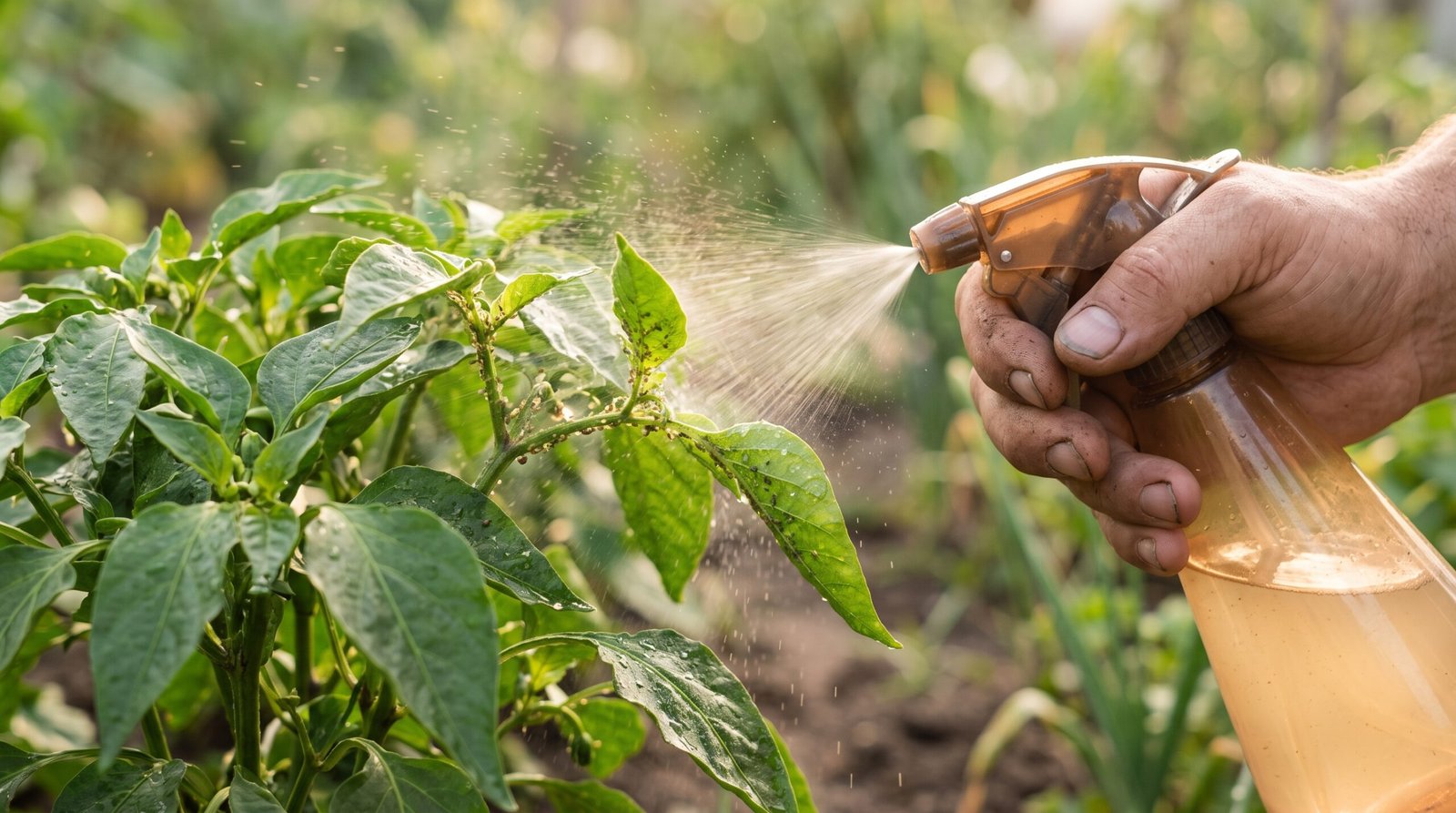
For persistent aphids that survive water rinsing, pure organic potassium-fatty-acid soap provides a lethal non-toxic contact kill. Castile soap dissolves the protective waxy epicuticle layer of the aphid’s soft body, causing fatal dehydration within minutes without leaving systemic residues in your edible herbs.
| Ingredient | Measurement per Quart | Purpose |
|---|---|---|
| Pure Liquid Castile Soap (Unscented or Peppermint) | 1 Teaspoon (5 ml) | Dissolves aphid waxy cuticle; peppermint provides natural insect repulsion. |
| Lukewarm Filtered Water | 1 Quart (32 oz) | Carrier fluid; free from harsh municipal chlorine/chloramines. |
| Cold-Pressed Neem Oil (Optional for non-microgreens) | 1/2 Teaspoon (2.5 ml) | Azadirachtin insect growth regulator (do not spray directly on microgreens within 5 days of harvest). |
For high-grade organic castile soap, we recommend using Dr. Bronner’s Pure Liquid Castile Soap on Amazon →. For targeted application, mix your solution in a dedicated Glass Spray Bottle on Amazon → to avoid plastic chemical leaching.
Application Rules for Indoor Herbs:
- Spray thoroughly in the early morning or evening when grow lights are turned off to prevent light-amplified foliar scorch.
- Ensure complete coverage on the undersides of leaves, leaf axils, and soil margins.
- Allow the soap spray to dwell on foliage for two hours, then gently mist with pure distilled water to rinse off residual soap film before turning intense grow lights back on.
- Repeat every 3 to 4 days for two full weeks to catch newly hatched nymphs.
Special Protocol: Protecting Fragile Microgreens
Microgreens present a unique challenge because their lifecycle is only 10 to 18 days long and their fragile stems cannot tolerate heavy horticultural oils. If aphids attack your microgreen trays (common with brassicas, radish, and pea shoots), follow this rapid containment protocol:
- Early Harvest: If microgreens are at 75% maturity, harvest the entire tray immediately with sterile kitchen shears, discarding the root mat. Submerge harvested greens in a cold vinegar-water bath (1 tbsp apple cider vinegar per gallon of water) for 3 minutes to float away any adhering aphids, rinse thoroughly, and spin dry in a salad spinner.
- Yellow Sticky Card Traps: Hang miniature Yellow Sticky Traps on Amazon → 2 inches above the microgreen canopy. Winged adult aphids are intensely attracted to yellow wavelengths and get ensnared before depositing offspring.
- Food-Grade Diatomaceous Earth: Dust dry soil perimeters between seedling rows with Food-Grade Diatomaceous Earth with Powder Duster on Amazon →. The microscopic silica particles lacerate crawling aphids without contaminating edible plant tissue.
Preventing Reinfestation: Cultural Best Practices
Long-term aphid immunity for indoor herb gardens requires proper environmental management:
- Install an Oscillating Fan: Aphids are weak flyers that despise moving air. A gentle oscillating fan running 12 hours a day prevents winged aphids from landing and strengthens herb stem tissue.
- Reduce Nitrogen Feeding: Switch to half-strength organic liquid kelp or worm casting tea. High nitrogen creates soft foliage that acts as an aphid magnet.
- Inspect New Plant Additions: Quarantine any new potted plant brought from a nursery or grocery store in an isolated room for 14 days before introducing it to your herb garden.
Tired of Pests Moving from Your Garden Into Your Home?
Get Jennifer Reynolds’ complete 6-part digital blueprint: The Complete Home Defense Bundle. Includes field-tested eradication protocols for ants, cockroaches, bed bugs, spiders, and rodents, plus a 16-page non-toxic recipe book.
Conclusion
You don’t need synthetic chemicals to enjoy pest-free indoor herbs and microgreens. By combining mechanical water dislodgement, gentle peppermint Castile soap contact sprays, sticky card monitoring, and strict quarantine practices, you can easily eradicate aphids while keeping your culinary harvests safe, pure, and delicious.
Leave a Reply