Disclosure: This post contains affiliate links. If you purchase through our links, we may earn an affiliate commission at no extra cost to you. As an Amazon Associate, we earn from qualifying purchases.
If you have ever grown zucchini, yellow summer squash, or pumpkins, you know the heartbreak of walking into your garden to find vigorous, blossom-covered vines suddenly speckled with black necrotic dots and wilting into dry, crisp husks. The culprits behind this rapid destruction are squash bugs (Anasa tristis) and their close cousins, brown marmorated stink bugs.
Equipped with sharp piercing-sucking mouthparts, these true bugs inject toxic salivary secretions into plant leaves and stems while extracting sap. This toxic saliva causes Anasa wilt, a condition that mimics severe drought stress even in moist soil. Because adult squash bugs have tough, armored chitinous exoskeletons that deflect light sprays, chemical insecticides are largely ineffective and end up poisoning the honeybees pollinating your squash blossoms. In this field guide—part of our complete framework in The Complete Guide to Organic Garden Pest Control—we reveal proven, chemical-free methods to eradicate squash bugs at every life stage.
The 3 Key Life Stages: Spotting Eggs, Nymphs, and Adults
Because adult squash bugs are so resilient, timing your intervention during the egg and young nymph stages is the secret to 100% organic control:
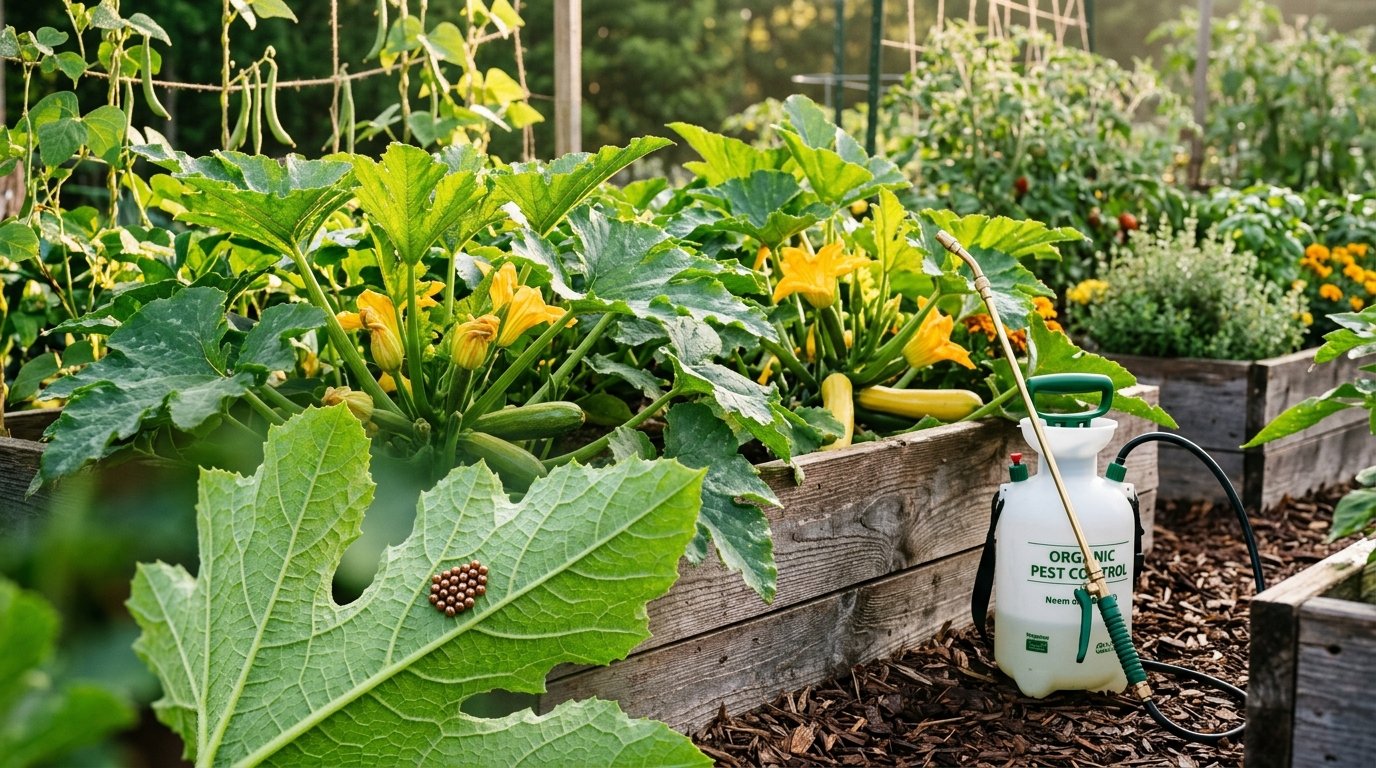
- Bronze Egg Clusters (Day 1–10): Female squash bugs lay clusters of 12 to 25 elliptical, shiny bronze-to-copper colored eggs neatly arranged in the V-shaped angle where two major leaf veins meet on the underside of leaves. Finding and destroying these egg clusters stops dozens of future bugs before they hatch!
- Spider-Like Nymphs (Day 11–35): Newly hatched nymphs possess pale green abdomens with crimson heads and legs, darkening to pale gray as they grow. Nymphs feed communally in dense clusters near the base of the plant. Unlike adults, young nymphs have delicate cuticles that are highly vulnerable to organic contact sprays.
- Armored Adults (Overwintering): Adults are flat-backed, dark gray-brown shield bugs about 5/8 inch long with orange-and-brown stripes along their abdominal margins. They give off a pungent, foul odor when disturbed or crushed.
Organic Method #1: The Duct Tape Egg-Scraping Trick
The single most effective mechanical method in organic squash bug control is scouting and rolling. Because female squash bugs glue their bronze eggs firmly to leaf undersides, trying to pick them off with your fingers can tear delicate leaves.
The Pro Trick: Wrap a strip of heavy-duty duct tape around your hand with the sticky side facing outward. Flip over your squash and pumpkin leaves twice a week. When you spot a bronze egg cluster, press the tape firmly against the eggs and peel it away. The eggs will lift off cleanly without harming the leaf! Fold the tape over and discard it in household trash.
Essential Garden Spray Equipment
When young nymphs hatch and crawl along plant stems, spraying them with organic insecticidal soap or neem oil requires complete underside coverage. We use the 1-Gallon Lawn & Garden Pump Pressure Sprayer with an adjustable brass extension wand.
Organic Method #2: The Overnight Shingle Board Trap
Squash bugs are nocturnal shelter-seekers. During cool summer nights, adults and large nymphs seek out flat, dry hiding spots to escape dew and predators. You can exploit this behavior with a simple board trap:
- Lay flat pieces of cardboard, cedar shingles, or wooden boards directly on the soil between your squash mounds.
- Head into your garden at 6:30 AM before the sun warms the soil.
- Quickly flip the boards over. You will find dozens of squash bugs clinging to the underside of the wood!
- Immediately scrape them into a bucket of water mixed with 2 tablespoons of liquid castile soap (from our DIY castile soap recipe) to drown them instantly.
Early Season Pest Monitoring & Trapping
To catch cucumber beetles and winged pests that migrate into your squash patch alongside squash bugs, install weather-resistant Yellow Sticky Traps on wooden stakes around the perimeter of your garden beds.
Essential Physical Barrier: Floating Row Covers
Install lightweight, permeable floating row covers over young squash and pumpkin seedlings at planting time. Creates an impenetrable mechanical barrier that prevents adult squash bugs from landing and laying bronze egg clusters.
Organic Method #3: Trap Cropping with Blue Hubbard Squash
Squash bugs exhibit an irresistible preference for Blue Hubbard winter squash over all other cucurbits. By planting 2 or 3 Blue Hubbard vines around the outer perimeter of your garden two weeks before planting your main zucchini and cucumbers, you create a dedicated trap crop.
Over 80% of arriving squash bugs will congregate on the Blue Hubbard trap plants. Once the bugs gather on the trap crop, treat that specific sacrificial vine heavily with organic pyrethrin or hand-vacuum the clusters, leaving your main zucchini and pumpkin patch completely pest-free!
Organic Nymph Control: 100% Cold-Pressed Pure Neem Oil
When young squash bug nymphs hatch and congregate at plant bases, spray them with pure cold-pressed neem oil mixed with castile soap. Azadirachtin disrupts nymph molting and stops feeding without synthetic chemicals.
Squash Bug Control Matrix
| Method | Target Stage | Speed | Effectiveness |
|---|---|---|---|
| Duct Tape Egg Scraping | Eggs | Immediate | 95%+ Prevention |
| Morning Board Traps | Adults & Nymphs | Daily | High removal rate |
| Organic Castile / Neem Spray | Young Nymphs | 24 Hours | High on soft cuticles |
| Blue Hubbard Trap Crops | Adults | Season-long | Diverts 80%+ of pests |
| End-of-Season Sanitation | Overwintering Adults | Spring prep | Breaks yearly cycle |
Frequently Asked Questions
Can squash plants recover from squash bug feeding?
Young seedlings rarely survive severe squash bug feeding due to toxic saliva. However, mature, vigorous vines can recover if you eliminate the nymphs and eggs promptly. Prune heavily damaged leaves and water deeply with an organic liquid seaweed fertilizer to stimulate new vegetative growth.
Where do squash bugs hide during the winter?
Adult squash bugs overwinter under dead squash vines, leaf piles, firewood stacks, and under raised bed wooden frames. Cleaning up all garden debris in late autumn eliminates their winter shelter and drastically reduces spring populations.
Written by Jennifer Reynolds
Certified Master Gardener • Sustainable Agriculture Specialist
Jennifer has over 15 years of hands-on experience in organic horticulture, permaculture soil biology, and non-toxic integrated pest management (IPM). Every recipe and garden strategy published on Organic Gardening Advise is field-tested in real raised beds to verify safety, dilution accuracy, and effectiveness. Learn more on our About Page.
Leave a Reply