Disclosure: This post contains affiliate links. If you purchase through our links, we may earn an affiliate commission at no extra cost to you. As an Amazon Associate, we earn from qualifying purchases.
During the scorching, dry heat of midsummer, vegetable gardens face a stealthy predator so small it is nearly invisible to the naked eye: spider mites (specifically the two-spotted spider mite, Tetranychus urticae). While caterpillars and beetles chew visible holes in leaves, spider mites pierce individual plant cells and suck out chlorophyll, leaving foliage looking bronze, dusty, and speckled with tiny yellow pinprick dots known as stippling.
As the infestation explodes, spider mites spin fine, silky webbing across leaf undersides, flower clusters, and growing tips. Under ideal conditions (temperatures above 85°F and low relative humidity), a spider mite population can multiply tenfold in just five days. Broad-spectrum synthetic miticides often cause worse outbreaks by killing natural predatory mites. In this organic protocol—part of our complete series in The Complete Guide to Organic Garden Pest Control—we outline how to eliminate spider mites safely and restore plant health.
The 3-Step Organic Spider Mite Eradication Protocol
Step 1: The High-Pressure Cold Water Blast
Spider mites thrive in hot, dry, dusty environments and have an intense biological aversion to moisture. The quickest mechanical knockdown is a sharp blast of cold water directed at the undersides of leaves in the early morning.
High-pressure water physically dislodges adult mites, washes away protective webbing, and drowns thousands of newly hatched nymphs. Repeat this spray every 48 hours for one week to disrupt their breeding cycle.
Precision Garden Spray Equipment
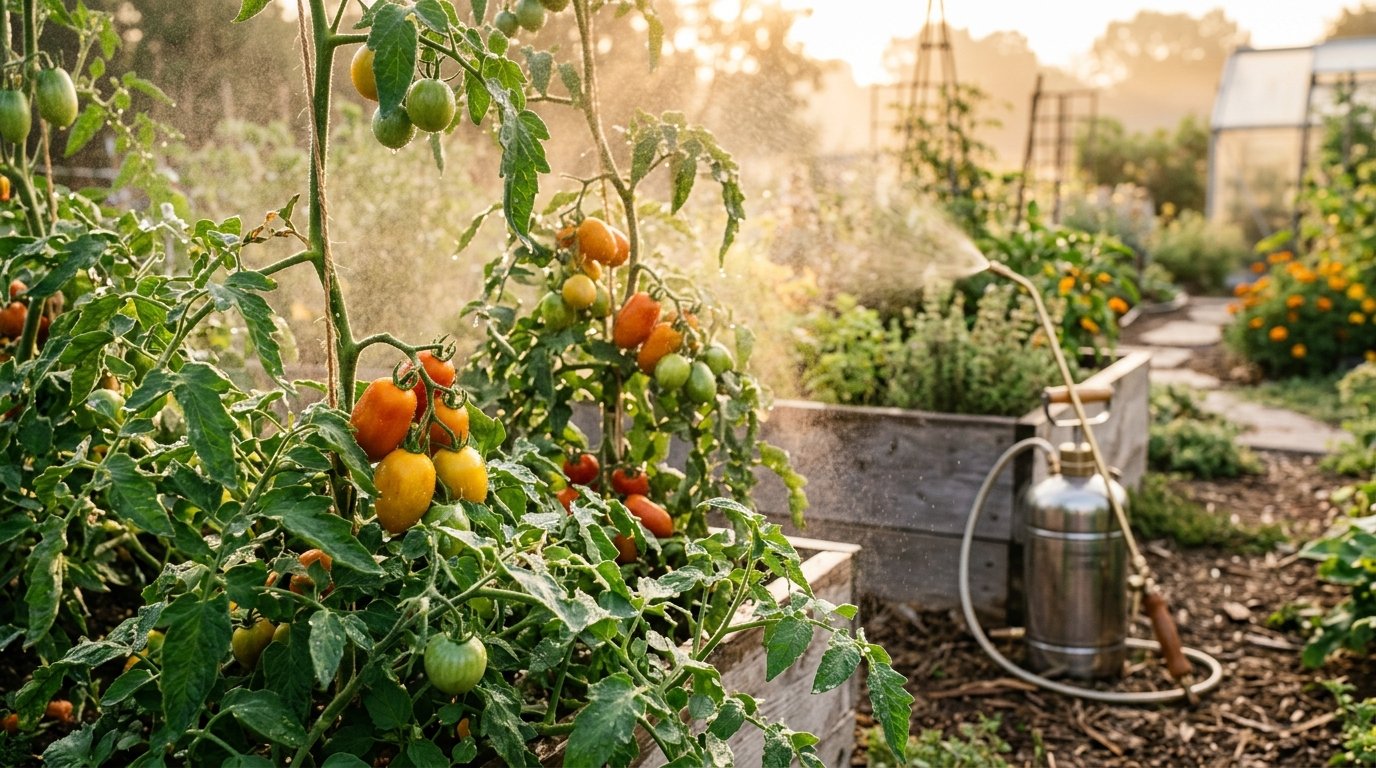
To deliver a fine, pressurized mist of organic insecticidal soap or pure cold-pressed neem solution under dense tomato and cucumber foliage, we use the 1-Gallon Lawn & Garden Pump Pressure Sprayer with an adjustable brass cone nozzle.
Step 2: DIY Castile Soap & Rosemary Oil Spray
Spider mites are soft-bodied arachnids whose respiratory pores (spiracles) and waxy cuticles are easily compromised by natural fatty acids. Essential rosemary oil is also a scientifically proven natural acaricide that paralyzes spider mite nervous systems.
The Recipe: In your 1-gallon sprayer, combine 1 gallon of tepid water, 2 tablespoons of liquid peppermint castile soap (from our castile soap recipe), and 15 drops of pure rosemary essential oil. Spray thoroughly in late afternoon when the sun is low to prevent leaf scald.
Recommended Organic Contact Soap: Dr. Bronner’s Peppermint Castile Soap
The pure potassium fatty acids in Dr. Bronner’s liquid castile soap dissolve the delicate waxy protective coatings and respiratory spiracles of spider mites on contact, while natural peppermint oil deters reinfestation.
Step 3: Introduce Predatory Mites (Phytoseiulus persimilis)
For greenhouse growers and serious raised bed gardeners, the most permanent organic solution is releasing beneficial predatory mites. A single Phytoseiulus persimilis adult consumes up to 20 pest mite eggs per day and actively searches through dense webbing where chemical sprays cannot reach!
Natural Botanical Miticide: Pure Organic Rosemary Essential Oil
University agricultural trials demonstrate that pure rosemary essential oil acts as a powerful botanical miticide that paralyzes two-spotted spider mites on tomatoes and vegetables without burning foliage when properly diluted.
Frequently Asked Questions
Why do spider mites multiply so fast in hot weather?
At 80°F (27°C), spider mites take only 5 to 7 days to develop from an egg into a reproducing adult. High temperatures accelerate their metabolism and dry out the atmosphere, creating the ideal arid microclimate for reproduction.
Can I save a plant heavily covered in spider mite webbing?
If webbing completely encloses the growing tips and foliage has turned brown and brittle, prune out the worst-affected branches immediately. Bag the clippings and dispose of them in the trash before applying your organic soap wash to the remaining healthy foliage.
Written by Jennifer Reynolds
Certified Master Gardener • Sustainable Agriculture Specialist
Jennifer has over 15 years of hands-on experience in organic horticulture, permaculture soil biology, and non-toxic integrated pest management (IPM). Every recipe and garden strategy published on Organic Gardening Advise is field-tested in real raised beds to verify safety, dilution accuracy, and effectiveness. Learn more on our About Page.
Leave a Reply