🌱 Master Gardener Recommendation
Never use synthetic dish detergents like Dawn or Palmolive on garden crops, as they strip the leaf’s protective cuticle. Stick strictly to genuine plant-oil based castile soap:
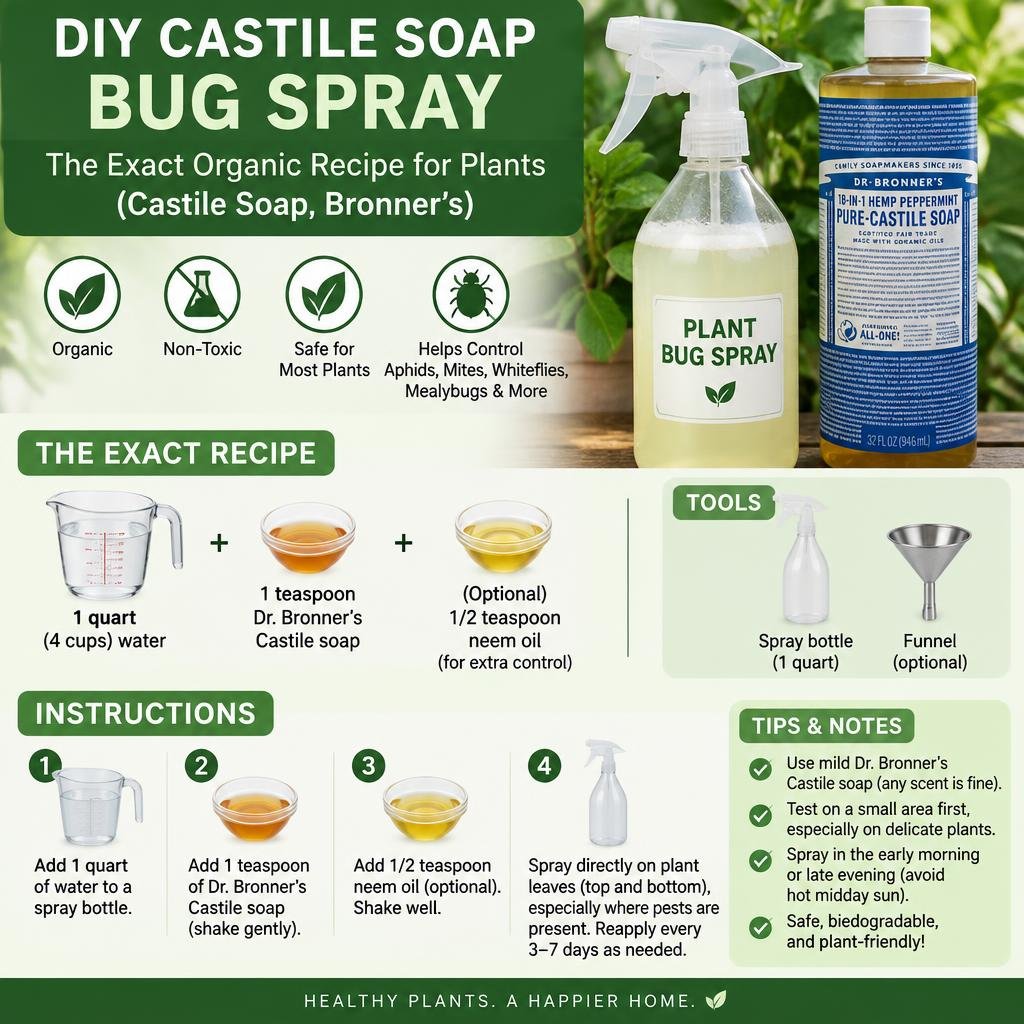
The Master Castile Soap Dilution Ratios
| Spray Batch Size | Pure Liquid Castile Soap | Water (Lukewarm / Soft) |
|---|---|---|
| 1-Quart Hand Sprayer (32 oz) | 1 Teaspoon | 4 Cups (32 oz) |
| 1-Gallon Pump Tank (128 oz) | 1 to 1.5 Tablespoons | 1 Gallon (128 oz) |
Pro Tip: Use soft water, rainwater, or distilled water whenever possible. Hard tap water contains high concentrations of calcium and magnesium minerals that bind to fatty acid chains, causing soap scum to precipitate out and reducing bug-killing efficacy.
Essential Equipment: Heavy-Duty Amber Glass Spray Bottles
Amber glass shields light-sensitive botanical soap solutions and essential oils from solar UV degradation. Features an ergonomic trigger sprayer with adjustable fine-mist coverage for leaf undersides.
Check Amber Glass Bottles on Amazon →How to Apply Castile Soap Spray Correctly
- Always Spray at Dusk or Early Dawn: Never apply soap sprays during the heat of midday (over 85°F). Wet droplets under intense sun cause lens-magnification leaf burns. Evening spraying allows the solution to work overnight while keeping foraging honeybees safe.
- Coat the Undersides of Leaves: Castile soap is strictly a contact insecticide—it only kills pests that are directly wetted by the spray. Because pests cluster beneath leaves, spray upward until the foliage is dripping.
- Reapply Every 5 to 7 Days: Soaps have zero residual killing power once dried. To eliminate newly hatched nymphs, repeat applications every 5 to 7 days for two weeks following our proven 3-5-7 organic aphid protocol.
Supercharging Your Spray: Adding Neem Oil
While castile soap provides an immediate mechanical knockdown, combining it with cold-pressed unrefined neem oil adds residual biological hormone disruption. The soap acts as the emulsifier that allows raw neem oil to blend with water.
Learn the exact ratios and temperature rules in our master guide on how to mix neem oil for plants without burning leaves.
Frequently Asked Questions
Does castile soap kill beneficial ladybugs?
Direct wet spray can harm soft-bodied ladybug larvae. However, adult hard-shelled ladybugs are largely protected by their hardened wing covers (elytra). To protect all beneficial predators, always spray late in the evening when predator activity has slowed down.
Should I rinse the soap off my plants?
On sensitive, thin-leaved plants like herbs, young lettuce, and cucumber seedlings, you can rinse the foliage with clean water 2 hours after spraying. This gives the soap sufficient time to dehydrate pests while preventing potential leaf sensitivity.
Disclosure: This post contains affiliate links. If you purchase through our links, we may earn an affiliate commission at no extra cost to you. As an Amazon Associate, we earn from qualifying purchases.
When soft-bodied pests like aphids, spider mites, whiteflies, or thrips invade your garden, you need a treatment that works immediately without coating your edible vegetables in toxic synthetic chemicals. Enter pure liquid castile soap.
Unlike commercial chemical pesticides that disrupt nervous systems, castile soap works through simple biophysics: the potassium fatty acid chains in pure vegetable soap dissolve the delicate outer waxy protective layer (cuticle) of soft-bodied insects. Once this cellular layer is breached, the pests lose moisture and dehydrate within hours.
However, many well-meaning gardeners make critical mixing mistakes—using synthetic detergents, spraying in direct midday sun, or using excessive soap—that end up frying their vegetable leaves. This guide is part of our comprehensive system on organic garden pest control. Below is the scientifically proven recipe and step-by-step dilution guide to eliminate pests safely.
Why Castile Soap is Superior to Dish Detergent
Internet gardening blogs frequently suggest grabbing a bottle of blue dish soap from the kitchen sink. This is one of the worst things you can spray on plants.
- Synthetic Degreasers: Dish detergents contain petroleum surfactants, synthetic foaming agents, and sodium lauryl sulfate engineered to strip grease from pots and pans. When applied to plants, it dissolves the protective waxy cuticular layer of leaves, leading to severe leaf burn and wilting.
- Authentic Saponified Oils: True liquid castile soap is made from saponified organic olive, coconut, or hemp oils. The potassium salts of fatty acids target insect membranes while leaving plant foliage completely unharmed.
Recommended Formula: Pure Liquid Castile Soap (Peppermint or Baby Unscented)
Made from organic plant oils that safely dissolve soft-bodied insect pests without damaging vegetable foliage. Peppermint castile soap has the added bonus of natural menthol that scrambles insect scent navigation.
Check Pure Castile Soap on Amazon →The Master Castile Soap Dilution Ratios
| Spray Batch Size | Pure Liquid Castile Soap | Water (Lukewarm / Soft) |
|---|---|---|
| 1-Quart Hand Sprayer (32 oz) | 1 Teaspoon | 4 Cups (32 oz) |
| 1-Gallon Pump Tank (128 oz) | 1 to 1.5 Tablespoons | 1 Gallon (128 oz) |
Pro Tip: Use soft water, rainwater, or distilled water whenever possible. Hard tap water contains high concentrations of calcium and magnesium minerals that bind to fatty acid chains, causing soap scum to precipitate out and reducing bug-killing efficacy.
Essential Equipment: Heavy-Duty Amber Glass Spray Bottles
Amber glass shields light-sensitive botanical soap solutions and essential oils from solar UV degradation. Features an ergonomic trigger sprayer with adjustable fine-mist coverage for leaf undersides.
Check Amber Glass Bottles on Amazon →How to Apply Castile Soap Spray Correctly
- Always Spray at Dusk or Early Dawn: Never apply soap sprays during the heat of midday (over 85°F). Wet droplets under intense sun cause lens-magnification leaf burns. Evening spraying allows the solution to work overnight while keeping foraging honeybees safe.
- Coat the Undersides of Leaves: Castile soap is strictly a contact insecticide—it only kills pests that are directly wetted by the spray. Because pests cluster beneath leaves, spray upward until the foliage is dripping.
- Reapply Every 5 to 7 Days: Soaps have zero residual killing power once dried. To eliminate newly hatched nymphs, repeat applications every 5 to 7 days for two weeks following our proven 3-5-7 organic aphid protocol.
Supercharging Your Spray: Adding Neem Oil
While castile soap provides an immediate mechanical knockdown, combining it with cold-pressed unrefined neem oil adds residual biological hormone disruption. The soap acts as the emulsifier that allows raw neem oil to blend with water.
Learn the exact ratios and temperature rules in our master guide on how to mix neem oil for plants without burning leaves.
Frequently Asked Questions
Does castile soap kill beneficial ladybugs?
Direct wet spray can harm soft-bodied ladybug larvae. However, adult hard-shelled ladybugs are largely protected by their hardened wing covers (elytra). To protect all beneficial predators, always spray late in the evening when predator activity has slowed down.
Should I rinse the soap off my plants?
On sensitive, thin-leaved plants like herbs, young lettuce, and cucumber seedlings, you can rinse the foliage with clean water 2 hours after spraying. This gives the soap sufficient time to dehydrate pests while preventing potential leaf sensitivity.
Written by Jennifer Reynolds
Certified Master Gardener • Sustainable Agriculture Specialist
Jennifer has over 15 years of hands-on experience in organic horticulture, permaculture soil biology, and non-toxic integrated pest management (IPM). Every recipe and garden strategy published on Organic Gardening Advise is field-tested in real raised beds to verify safety, dilution accuracy, and effectiveness. Learn more on our About Page.
Leave a Reply