Disclosure: This post contains affiliate links. If you purchase through our links, we may earn an affiliate commission at no extra cost to you. As an Amazon Associate, we earn from qualifying purchases.
If you manage indoor seed-starting trays, a home greenhouse, or potted houseplants, finding small black flies flitting across your soil is a frequent headache. Most gardeners immediately assume they are dealing with common fungus gnats and begin applying biological Bti drenches. However, when the treatment fails and swarms persist, the pest is almost certainly shore flies (family Ephydridae).
Because shore flies and fungus gnats have completely different feeding habits, larval diets, and vulnerabilities, misidentification leads to wasted time and money. In this identification guide—part of our complete framework in Organic Garden Pest Control—we show you how to tell them apart under a hand lens and eliminate both without chemical pesticides.
Visual & Behavioral Comparison Matrix
| Feature | Fungus Gnats (Sciaridae) | Shore Flies (Ephydridae) |
|---|---|---|
| Body Shape | Slender, mosquito-like body with long legs | Robust, stout, miniature housefly-like shape |
| Antennae | Long, multi-segmented, bead-like antennae | Very short, stubby bristle antennae |
| Wing Markings | Clear wings with Y-shaped vein pattern | Dark smoky wings with 5 distinct white spots |
| Flight Pattern | Weak, erratic, hovering fliers | Fast, direct, erratic darting flight |
| Larval Diet | Fungi, decaying matter & live plant roots | Feeds exclusively on green algae |
| Bti Effectiveness | 100% Lethal (Bti kills larvae) | ⛔ Ineffective (Bti does not kill shore flies) |
The Key Difference: Root Feeders vs. Algae Grazers
While fungus gnat larvae directly damage plant roots, shore fly larvae do not consume root tissue. Shore fly larvae feed exclusively on blue-green algae growing on overwatered soil surfaces, wet greenhouse walkways, and porous ceramic pots.
However, adult shore flies leave unsightly black fecal specks (flyspeck) on lettuce, herbs, and flowers, and can mechanically spread plant pathogens like Pythium root rot. To eliminate shore flies, you must eliminate their algae food source by reducing surface moisture and treating pots with biological controls.
Fungus Gnat Biological Larvicide
If your inspection confirms slender, mosquito-like gnats with long antennae, drench soil with pure Bti tea brewed from Mosquito Bits.
High-Catch Yellow Sticky Cards
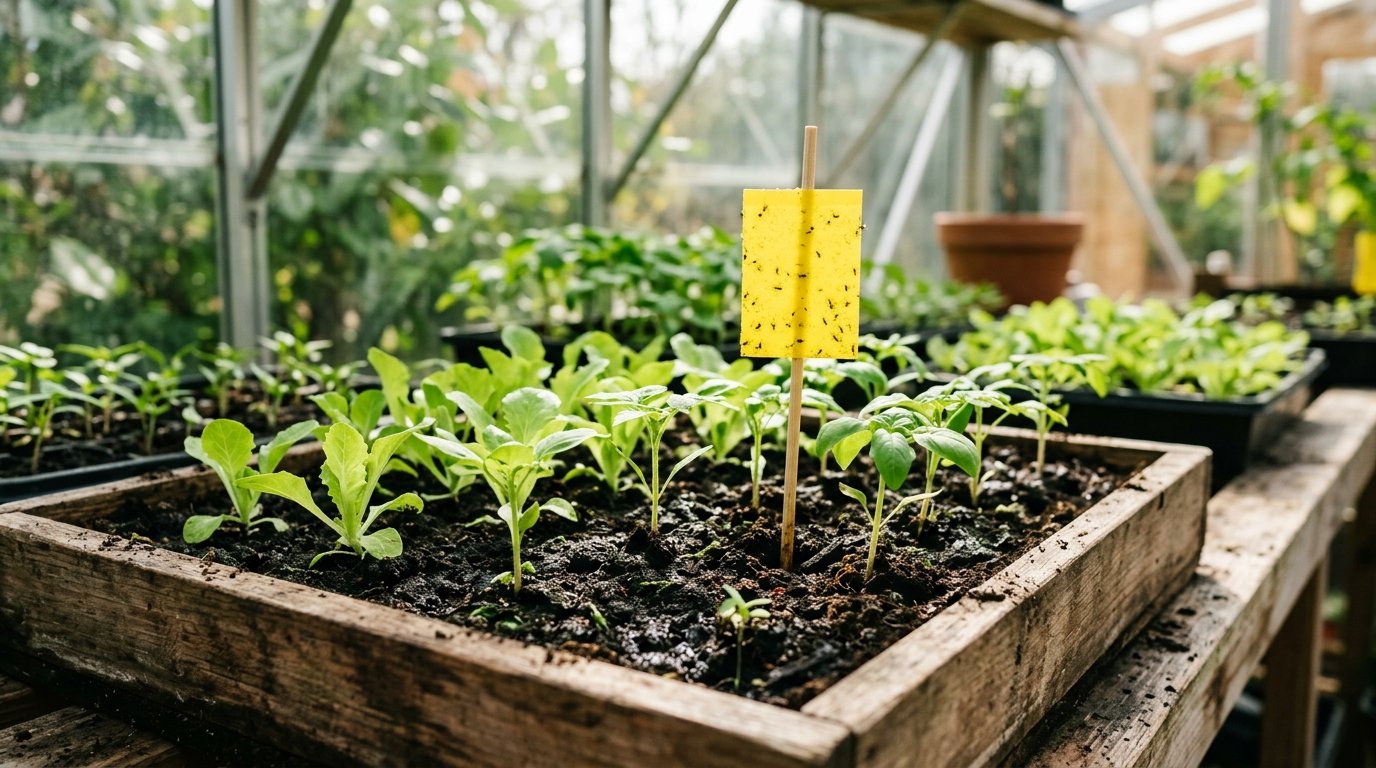
Both shore flies and fungus gnats are phototactically attracted to yellow spectrums. Hang sticky traps 2 inches above the soil line to trap adults.
Download the Free Organic Pest Prevention Checklist & Spray Chart
Get instant access to our printable organic dilution cheat sheets, companion planting matrix, and seasonal pest calendar used by certified organic growers.
Frequently Asked Questions
How do I stop algae from growing on my seed-starting soil?
Bottom-water your seedlings rather than watering from above, increase air circulation using a small oscillating fan, and top-dress seedling trays with a 1/4-inch layer of coarse horticultural perlite or vermiculite.
Will hydrogen peroxide kill shore fly larvae?
A 1:4 dilution of standard 3% hydrogen peroxide in water helps oxidize surface algae, depriving shore fly larvae of food, while aerating soil root zones safely.
Written by Jennifer Reynolds
Certified Master Gardener • Sustainable Agriculture Specialist
Jennifer has over 15 years of hands-on experience in organic horticulture, permaculture soil biology, and non-toxic integrated pest management (IPM). Every recipe and garden strategy published on Organic Gardening Advise is field-tested in real raised beds to verify safety, dilution accuracy, and effectiveness. Learn more on our About Page.
Leave a Reply