Disclosure: This post contains affiliate links. If you purchase through our links, we may earn an affiliate commission at no extra cost to you. As an Amazon Associate, we earn from qualifying purchases.
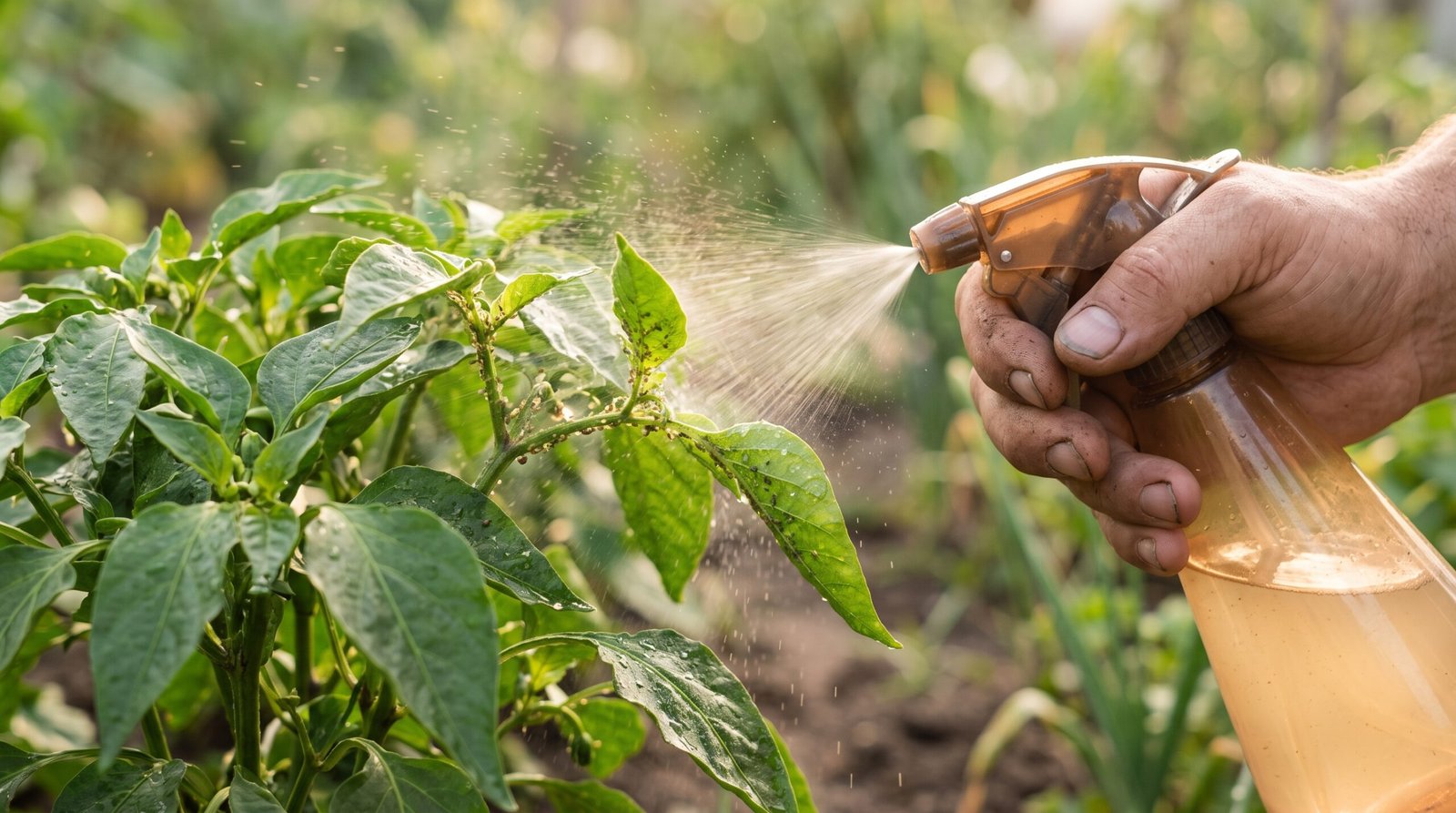
You walk out to your vegetable garden or prize rose bush in the morning, only to find curled leaves, yellow speckling, and a sticky residue coating your stems. You flip over a leaf and find a dense, writhing cluster of tiny green, black, or red bugs.
Aphids.
Most gardeners panic, run to the local garden center, and spray a broad-spectrum synthetic chemical pesticide.
Here is what happens next: The synthetic spray kills the aphids, but it also wipes out every ladybug, lacewing, and hoverfly within 50 feet. Two weeks later, a new generation of aphids invades—and with zero natural predators left to stop them, the secondary infestation is five times worse than the first.
To permanently eradicate aphids without harming your family, your pets, or beneficial pollinators, you must use targeted organic methods that work with biology, not against it. This guide is part of our comprehensive roadmap on organic garden pest control and connects to our foundational strategies for natural ant killers.
5 Critical Mistakes That Ruin Most Aphid Treatments
Before spraying anything in your garden, make sure you avoid these five common pitfalls that cause organic treatments to fail:
- The “Dawn Dish Soap” Myth: Dawn is a synthetic petroleum detergent containing industrial degreasers and sodium lauryl sulfate. When sprayed on plants, it dissolves the protective waxy cuticular layer of plant leaves, causing severe leaf scorch and moisture loss under the sun. Always use genuine vegetable-based potassium castile soap.
- The Midday Sunscald Trap: Spraying horticultural soaps or oils in temperatures above 85°F (29°C) or under direct midday sun magnifies UV radiation, baking your leaves. Always spray at dusk or early dawn.
- The Single-Spray Assumption: In warm weather, female aphids do not need to mate. They give birth to live, pregnant female clones at a rate of 5 to 12 nymphs per day through a process called parthenogenesis. If your spray eliminates 95% of the population, the surviving 5% will multiply back into a swarm within 72 hours without follow-up treatments.
- The Ant Bodyguard Connection: If you see ants walking up and down your plant stems, your aphid treatment will fail. Ants actively protect aphids from ladybugs and re-introduce them to new branches. You must sever the ant connection first using our guide on how to stop ants farming aphids in your garden.
- High-Nitrogen Fertilizer Overload: Excess synthetic nitrogen fertilizer forces plants to produce rapid, succulent, thin-walled leaf growth filled with free amino acids, turning your garden into an all-you-can-eat buffet for aphids.
The 3-5-7 Organic Treatment Protocol
Day 1: High-Pressure Water Blast & Evening Castile Spray
Early in the morning, take a garden hose equipped with an adjustable brass nozzle. Support the backside of infested branches with your hand and spray directly upward at the leaf undersides. Aphids have delicate feeding styluses inserted into plant veins; the sheer kinetic force of water snaps their feeding needles, knocking them to the ground where predatory ground beetles consume them.
At sunset, apply an organic contact spray using a pure castile soap solution mixed in UV-protective amber glass:
- 1 Quart of lukewarm water
- 1 Teaspoon of pure peppermint castile soap
Recommended Equipment: UV-Protective Amber Glass Spray Bottles
Essential oils and natural soap solutions degrade rapidly when exposed to sunlight in clear plastic containers. These heavy-duty amber glass bottles shield your sprays from UV breakdown and feature adjustable mist nozzles designed for under-leaf coverage.
Check Amber Glass Bottles on Amazon →Day 3: Cold-Pressed Neem Oil Emulsion
Castile soap kills on contact, but cold-pressed neem oil provides residual hormonal protection. Its active compound (Azadirachtin) prevents juvenile nymphs from molting and stops adult aphids from feeding.
Follow our exact dilution and temperature guidelines in our guide on how to mix neem oil for plants without burning leaves.
Day 5: Survivor Inspection & Yellow Sticky Traps
Inspect leaf undersides using a magnifying glass. Spot-treat any remaining clusters with a quick burst of your castile spray. Hang yellow sticky cards 6 inches above the crop canopy to intercept winged adult migrants seeking new plants.
Day 7: Biological Reinforcement & Soil Perimeter Defense
With 99% of the population neutralized, introduce beneficial predators to police the garden for the remainder of the season:
- Green Lacewing Larvae: Often called “aphid lions,” a single larva can consume over 600 aphids before pupating.
- The Ladybug Dusk Release: Mist foliage with light sugar water and release commercial ladybugs strictly at dusk so they stay on your plants overnight instead of flying away.
To prevent secondary crawling pests and ant scouts from re-establishing trails, dust a 2-inch band of certified food-grade diatomaceous earth around the base of your plants and raised bed perimeters.
Organic Soil Perimeter: Certified Food-Grade Diatomaceous Earth
100% natural, non-chemical pest barrier. Creates a lethal mechanical boundary against crawling pests, ants, and larvae while remaining completely safe for organic vegetable crops, pets, and children.
Check Food-Grade Diatomaceous Earth on Amazon →Companion Planting: Permanent Prevention
| Companion Plant | Botanical Role | Best Position |
|---|---|---|
| Sweet Alyssum | Attracts hoverflies and parasitic micro-wasps | Bordering tomato and pepper raised beds |
| French Marigolds | Emits alpha-terthienyl scent that repels aphid scouts | Interplanted between brassicas (kale, broccoli) |
| Nasturtiums | Trap Crop: Sacrificial decoys pull pests away from crops | Planted 5 feet away from vegetable beds |
| Spearmint / Peppermint | Strong menthol masks the scent of host vegetables | Grow in pots only to prevent invasive spreading |
Frequently Asked Questions
How do I know if aphids are dead after spraying soap?
Unlike beetles that drop to the ground, dead aphids often remain attached to leaves by their mouthparts. Check them 24 hours after spraying: live aphids are plump, shiny, and crawl when touched; dead aphids shrivel, turn brown or black, and flake off easily when brushed with a finger.
What if worker ants are guarding my aphids?
If you see ants farming aphids, pause foliar sprays and target the ant colony first. Deploy our rainproof borax ant killer bait recipe to eliminate the underground queen, and dust around the stems with diatomaceous earth for ants.
Written by Jennifer Reynolds
Certified Master Gardener • Sustainable Agriculture Specialist
Jennifer has over 15 years of hands-on experience in organic horticulture, permaculture soil biology, and non-toxic integrated pest management (IPM). Every recipe and garden strategy published on Organic Gardening Advise is field-tested in real raised beds to verify safety, dilution accuracy, and effectiveness. Learn more on our About Page.
Leave a Reply