Disclosure: This post contains affiliate links. If you purchase through our links, we may earn an affiliate commission at no extra cost to you. As an Amazon Associate, we earn from qualifying purchases.
Every summer, gardeners across the country walk outside to discover hundreds or even thousands of large, winged insects swarming over lawns, flower beds, and patio pavers. The sudden emergence is alarming—leaving most homeowners asking two urgent questions: Are these flying ants or destructive termites? and How do I get rid of them without poisoning my garden?
The good news is that flying ants are not a mysterious new super-species. They are simply fertile reproductive males and virgin queens leaving their underground nests during an annual biological event known as a nuptial flight. Once mated, the males die and the new queens drop their wings to burrow into soil.
This guide connects directly to our master directory on natural ant killers and complements our specific protocols for identifying carpenter ants naturally. Below is how to accurately identify them, tell them apart from termites, and stop the swarm using organic methods.
Download the Free Organic Pest Prevention Checklist & Spray Chart
Get instant access to our printable organic dilution cheat sheets, companion planting matrix, and seasonal pest calendar used by certified organic growers.
Check Your Email!
Almost there. Click the confirmation link we just sent you to finish signing up. If you don’t see it, check your spam or promotions folder.
Flying Ants vs. Flying Termites: The 3-Point Inspection Test
Before taking any action, you must determine whether you are dealing with winged ants (alates) or subterranean termites. While winged ants in the garden are a nuisance, winged termites near your foundation pose a structural risk to your home.
Physical Feature
Flying Ant (Alate)
Winged Termite (Swarm)
Waistline
Narrow, pinched “wasp-like” waist (petiole)
Broad, uniform, straight rectangular waist
Antennae
Elbowed (distinct 90-degree bent joint)
Straight, bead-like antennae without bends
Wings
Forewings are substantially longer than hindwings; transparent/brownish
Four wings of equal shape and length; milky translucent
Sunlight Reaction
Swarm actively in bright, warm afternoon sunshine
Avoid bright light; swarm during evening or after warm rain
If your specimens have a pinched waist and bent antennae, you have garden flying ants. Here is how to stop them naturally.
Step 1: Knock Down Active Aerial Swarms with Castile Contact Spray
Because flying ants have delicate wings and rely on spiracles along their exoskeleton to breathe, an organic potassium fatty acid soap spray will ground them and eliminate active airborne groups in minutes without leaving toxic residues on your soil.
Recommended Organic Soap: Pure Liquid Castile Soap
Contains pure plant oils that dissolve the protective waxy cuticle of flying insects on contact while remaining completely safe around children, pets, and organic vegetables.
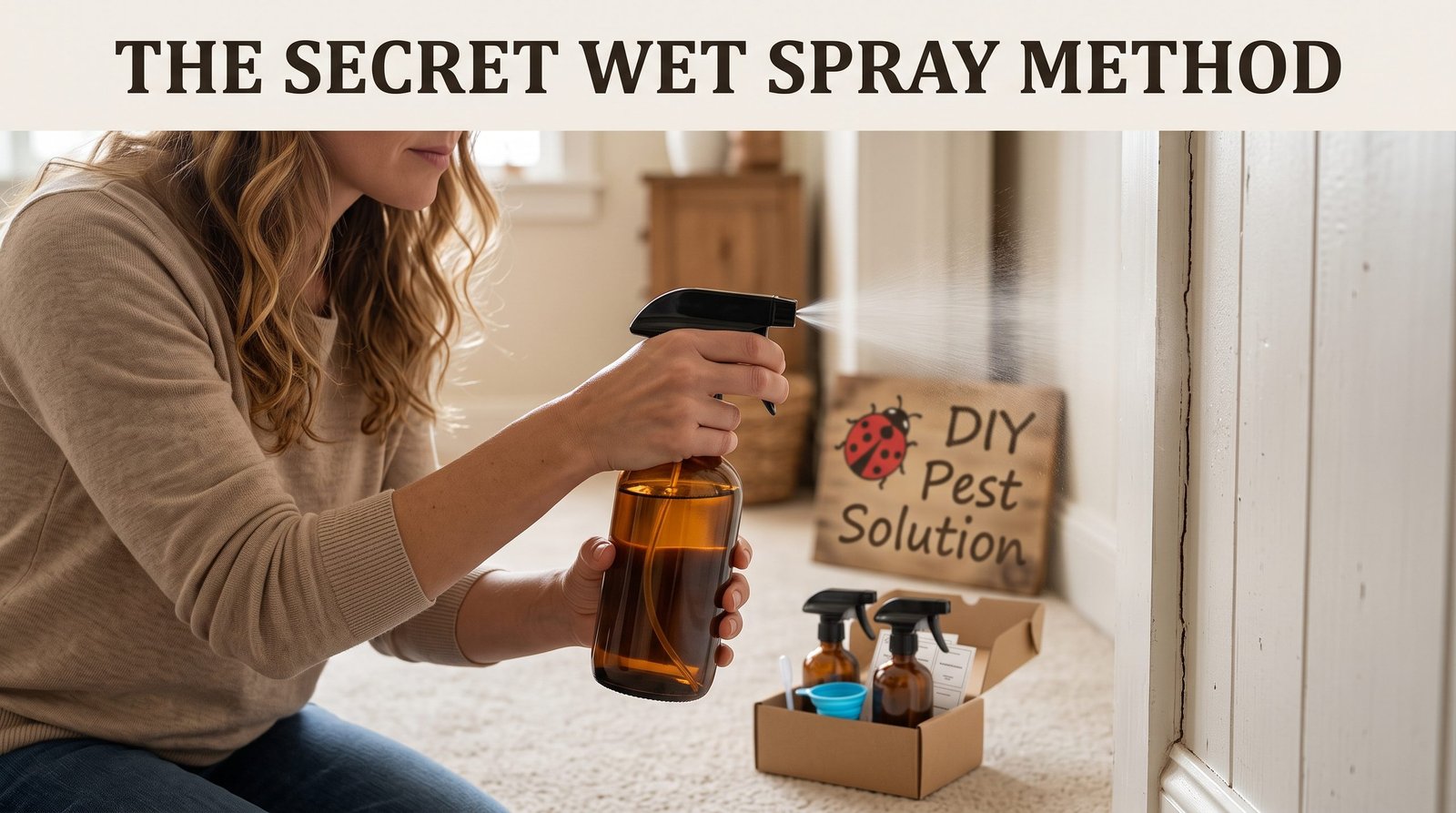
Mix thoroughly in an amber glass spray bottle and set the nozzle to a fine mist. Spray directly into localized swarms clustering on bushes, fence posts, or siding. The soap coats their wings and suffocates them on contact.
Step 2: Destroy the Underground Nest (The Source)
Killing swarmers in the air solves the immediate visual nuisance, but the mother colony underground will continue to produce thousands of worker ants. Watch where the flying ants are emerging from—usually between walkway pavers, lawn patches, or along raised bed borders.
Option A: The Boiling Water Mound Flush
If the nest entrance is located in gravel, sidewalk cracks, or patio pavers (away from plant roots), pour 1 to 2 gallons of rolling boiling water directly down the exit hole. The extreme heat collapses the tunnels and instantly kills the queen.
Option B: Diatomaceous Earth Perimeter Barrier
When queens land after mating, they immediately shed their wings and crawl across soil to find a crack to lay their first brood. Applying a dry perimeter of food-grade diatomaceous earth prevents these newly mated queens from founding new colonies in your vegetable garden.
Made from fossilized aquatic organisms. The microscopic silica particles lacerate insect exoskeletons, dehydrating crawling queens and worker ants within 24 to 48 hours without chemicals.
Most common garden flying ants (such as pavement ants or black garden ants) do not have stingers and cannot bite through human skin. However, if the swarm consists of winged fire ants (common in southern states) or carpenter ants, they can pinch or deliver an alkaline venom sting if trapped inside clothing. Always wear gloves when working near an active swarm.
How Long Does “Flying Ant Day” Last?
The vast majority of nuptial flights last only 24 to 48 hours. Once humidity drops or breezes pick up, the swarming frenzy ceases. If ants continue to swarm from the same location for more than 4 consecutive days, the colony is mature and requires active baiting with our slow-acting borax ant killer formula or non-toxic baking soda ant killer recipe.
Jennifer has over 15 years of hands-on experience in organic horticulture, permaculture soil biology, and non-toxic integrated pest management (IPM). Every recipe and garden strategy published on Organic Gardening Advise is field-tested in real raised beds to verify safety, dilution accuracy, and effectiveness. Learn more on our About Page.

Leave a Reply