Disclosure: This post contains affiliate links. If you purchase through our links, we may earn an affiliate commission at no extra cost to you. As an Amazon Associate, we earn from qualifying purchases.
Few household pest problems are more maddening than tiny, airborne flies swarming around your kitchen, bathroom, and indoor houseplants. Because they are all roughly 1/8 inch in length and appear seemingly out of nowhere, many homeowners treat them as a single pest. They set out apple cider vinegar bowls, only to find the flies completely ignoring the trap, or they spray houseplant soil while flies continue pouring out of the bathroom shower.
In reality, tiny indoor flies belong to three completely distinct insect families: Fruit Flies (Drosophilidae), Drain Flies (Psychodidae), and Fungus Gnats (Sciaridae). Each species breeds in a totally different biological environment. Applying a fruit fly solution to a drain fly problem guarantees total failure. In this comprehensive diagnostic field guide—part of our integrated pest series in Organic Pest Management and our Indoor Gnat Eradication Blueprint—we provide the identification matrix and organic treatments needed to eliminate all three.
Diagnostic Comparison Matrix: Fruit Flies vs. Drain Flies vs. Fungus Gnats
| Diagnostic Feature | Fruit Fly (Drosophila) | Drain Fly (Psychodidae) | Fungus Gnat (Sciaridae) |
|---|---|---|---|
| Body Shape & Look | Tan/brown with bulbous red or dark eyes | Fuzzy, moth-like, broad hairy wings held flat | Slender, black/gray, long mosquito-like legs |
| Flight Style | Hovering, agile, drawn to air currents | Weak, erratic, hopping short distances | Clumsy, weak, fluttering near soil line |
| Breeding Medium | Fermenting fruits, beer, vinegar, trash | Gelatinous bacterial sludge inside drains | Moist, decaying potting soil & fungus |
| Primary Location | Kitchen counters, fruit bowls, garbage | Bathroom sinks, shower drains, disposals | Potted houseplants, seedling trays |
| Best Organic Trap | Apple cider vinegar + dish soap bowl | Boiling water flush + enzymatic drain cleaner | Yellow sticky traps + Bti biological soil tea |
1. Fruit Flies: The Fermentation Feeders
Fruit flies are attracted strictly by the volatile organic chemical compounds produced during yeast fermentation—principally ethanol and acetic acid. If your flies are hovering over ripe bananas, tomatoes on the windowsill, or open wine bottles, you are dealing with fruit flies.
The Ultimate DIY Fruit Fly Trap: Mix 1/2 cup of organic apple cider vinegar with 1 teaspoon of granulated sugar and 3 drops of pure liquid castile soap in a small ramekin. Cover tightly with plastic wrap and poke 4 to 6 small toothpick holes in the top. The flies enter through the holes, but the soap eliminates surface tension, causing them to drown instantly.
2. Drain Flies: The Plumbing Slime Dwellers
Drain flies (also known as moth flies or sewer gnats) have distinct heart-shaped, velvety wings covered in fine hairs. They breed exclusively inside the anaerobic, gelatinous biofilm that coats the interior of drain pipes, P-traps, garbage disposals, and shower overflow channels.
The Non-Toxic Drain Eradication Protocol: Pour 1/2 cup of baking soda down the affected drain, followed immediately by 1 cup of distilled white vinegar. Allow the fizzing reaction to loosen biological sludge for 20 minutes, then flush with 1 gallon of boiling water. Repeat nightly for 5 consecutive days to completely scour the bacterial breeding ground.
3. Fungus Gnats: The Potting Soil Invaders
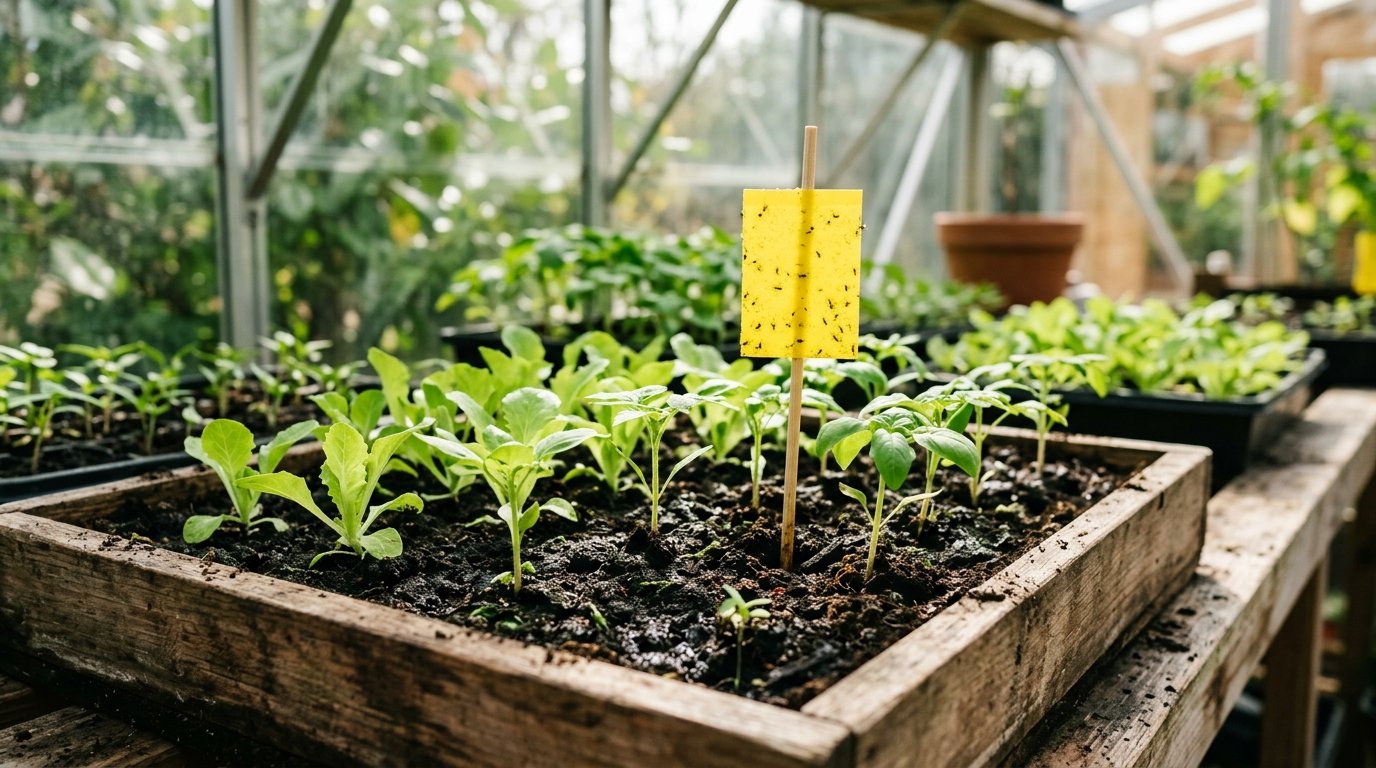
Fungus gnats look like miniature mosquitoes with long, delicate legs and segmented antennae. They ignore fruit bowls and drain traps entirely, congregating around damp potting soil in indoor houseplants. Treat them with Bacillus thuringiensis israelensis (Bti) soil drenches and yellow sticky stakes, detailed in our Garden Gnat Master Guide.
Dual-Sided Yellow Sticky Insect Traps
High-efficiency non-toxic sticky traps designed to capture both adult fungus gnats and fruit flies without chemical sprays.
Summit Mosquito Bits Pure Bti Granules
The premier biological solution for eliminating gnat larvae in indoor container soil without harming pets or beneficial biology.
Dr. Bronner’s Pure Liquid Castile Soap
Use as an organic surfactant in homemade vinegar traps and for wiping down kitchen surfaces to strip insect pheromone trails.
Download the Free Organic Pest Prevention Checklist & Spray Chart
Get instant access to our printable organic dilution cheat sheets, companion planting matrix, and seasonal pest calendar used by certified organic growers.
Frequently Asked Questions
How do I test if flies are coming from my drain?
Place a strip of clear packing tape upside-down over half of the drain opening before going to bed. If drain flies are breeding inside, newly emerging adults will be trapped against the sticky adhesive by morning.
Will bleach eliminate drain flies?
No. Bleach passes quickly over the drain pipe without penetrating the thick gelatinous biofilm where larvae thrive. Boiling water and mechanical brush scrubbing are far more effective.
Written by Jennifer Reynolds
Certified Master Gardener • Sustainable Agriculture Specialist
Jennifer has over 15 years of hands-on experience in organic horticulture, permaculture soil biology, and non-toxic integrated pest management (IPM). Every recipe and garden strategy published on Organic Gardening Advise is field-tested in real raised beds and container gardens to verify safety, dilution accuracy, and effectiveness. Learn more on our About Page.
Leave a Reply