
Disclosure: This post contains affiliate links. If you purchase through our links, we may earn an affiliate commission at no extra cost to you. As an Amazon Associate, we earn from qualifying purchases.
On crisp, sunny afternoons in late autumn, thousands of shield-shaped insects gather on the warm, south-facing siding of homes, brick foundations, and window screens. These are brown marmorated stink bugs (Halyomorpha halys) and boxelder bugs (Boisea trivittata). As temperatures drop toward freezing at nightfall, these agricultural pests begin squeezing through microscopic gaps around window frames, soffit vents, and attic eaves seeking warm, sheltered voids to spend the winter in diapause.
Once inside your living room or bedroom, their clumsy flight around light fixtures and distinctive pungent odor when disturbed can drive any homeowner to distraction. Crushing them only releases an airborne cocktail of trans-2-octenal and trans-2-decenal compounds that signals more bugs to join them. In this seasonal defense manual—part of our integrated pest series in Organic Pest Management and our pet-safe perimeter guide in Pet-Safe Indoor Pest Eradication—we share proven physical exclusion and organic botanical repellents to keep them outside where they belong.
Stink Bug vs. Boxelder Bug Comparison Matrix
| Species | Visual Identification | Primary Outdoor Diet | Winter Behavior Indoors |
|---|---|---|---|
| Brown Marmorated Stink Bug | Shield-shaped, mottled brown, white bands on antennae | Fruit trees, tomatoes, peppers, corn | Hides in attic insulation, curtain folds, crawl spaces |
| Boxelder Bug | Narrow oval, black body with striking red/orange diagonal lines | Female boxelder trees, maple seeds, ash trees | Aggregates in window frames, door weatherstripping |
| Western Conifer Seed Bug | Elongated brown body with leaf-like expanded hind legs | Pine cones, Douglas fir, conifer seeds | Attracted to warm interior lights; harmless to food |
Pillar #1: Physical Exclusion (The Only 100% Solution)
No chemical pesticide spray can prevent stink bugs from entering if your home has structural openings. Stink bugs can flatten their bodies to squeeze through gaps as narrow as 1/8 inch. Inspect exterior siding and seal the following primary entry points with high-grade silicone-acrylic caulk:
- Around window and door frames where trim meets exterior siding.
- Utility entry points (air conditioning refrigerant lines, gas pipes, exterior electrical boxes).
- Install wire mesh (1/4-inch or finer) behind attic ridge vents, gable louvers, and crawl space openings.
- Replace worn-out rubber weatherstripping and door sweeps along exterior garage and basement doors.
Pillar #2: Botanical Essential Oil Exterior Repellent Spray
Stink bugs and boxelder bugs navigate using acute chemosensory receptors on their antennae. University entomological studies demonstrate that concentrated essential oils—particularly clove bud, peppermint, and rosemary—overwhelm their olfactory systems, causing them to immediately vacate sprayed surfaces.
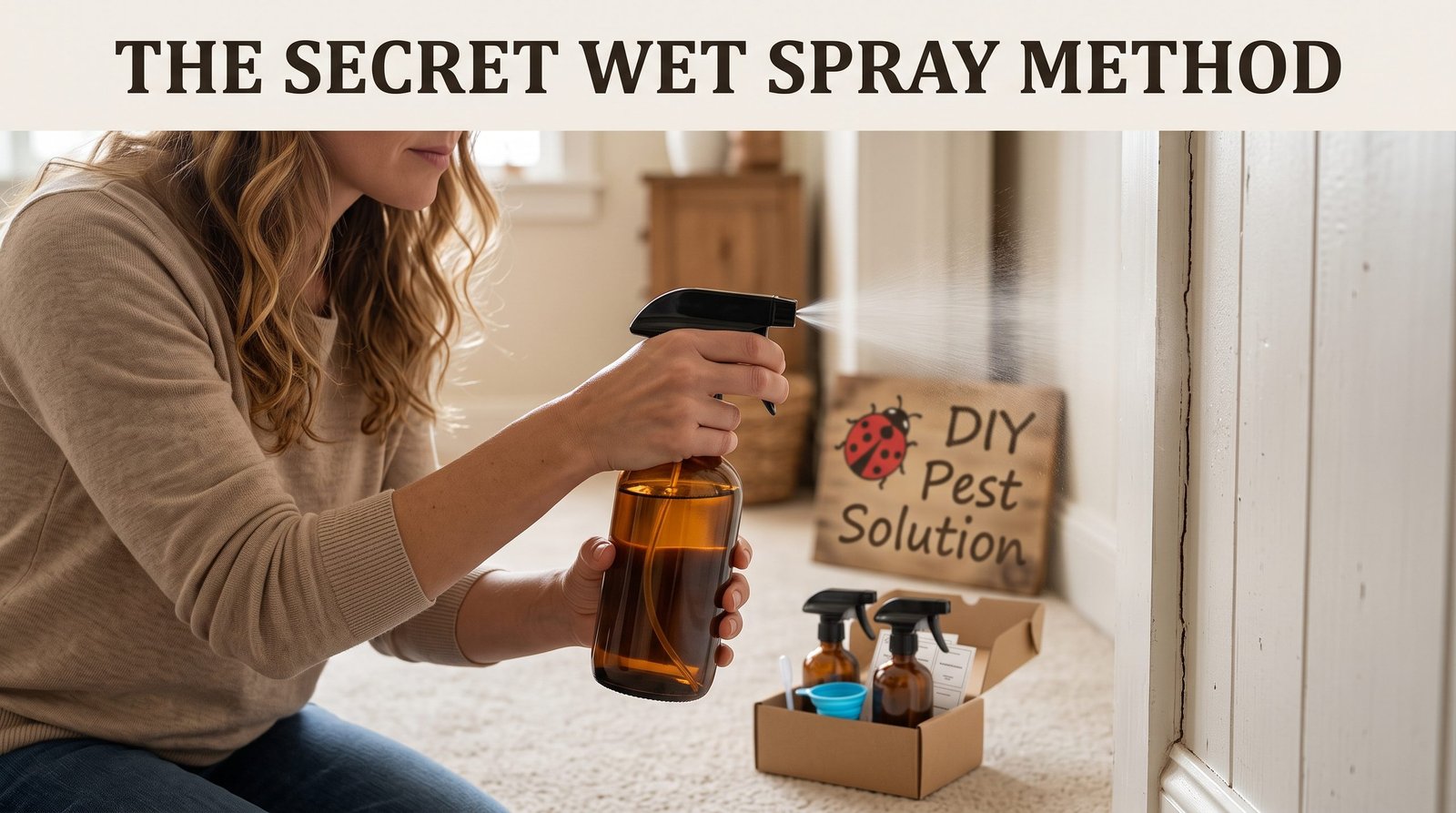
Combine 1 quart of warm water, 1 teaspoon of Dr. Bronner’s liquid castile soap, 20 drops of pure rosemary essential oil, and 20 drops of pure peppermint oil in a pressure sprayer. Spray heavily around exterior window frames, door thresholds, and south-facing brick walls every 7 to 10 days during peak fall migration.
Food-Grade Diatomaceous Earth with Precision Duster
Puff a barrier of amorphous silica into attic eaves, unfinished crawlspaces, and behind baseboards to desiccate hiding bugs on contact.
Pure Organic Rosemary & Peppermint Essential Oils
Potent aromatic botanical oils that create a powerful scent barrier around exterior doors and windows to repel swarming bugs.
Dr. Bronner’s Pure Liquid Castile Soap
Natural plant-based soap that acts as an emulsifier in DIY repellent sprays and safely eliminates bugs via contact suffocation.
Pillar #3: The Non-Toxic Soapy Water Light Trap
If stink bugs have already entered your home, never use a standard vacuum cleaner—the heat from the motor causes the insects to release their foul odor inside the vacuum bag, permeating your living room for weeks. Instead, construct a DIY light trap:
Fill a shallow baking dish or roasting pan with 2 inches of warm water and 2 tablespoons of castile soap. Place the pan in a dark room and direct a small desk lamp to shine downward onto the water surface. Stink bugs flying toward the light reflection land in the water. The soap breaks surface tension, causing them to sink and drown silently without emitting odor.
Download the Free Organic Pest Prevention Checklist & Spray Chart
Get instant access to our printable organic dilution cheat sheets, companion planting matrix, and seasonal pest calendar used by certified organic growers.
Frequently Asked Questions
Do stink bugs or boxelder bugs bite or cause structural damage?
No. Neither pest bites humans or pets, nor do they consume wood, fabric, or stored food. Their sole crime is being an overwhelming physical nuisance indoors during winter.
Will stink bugs reproduce inside my house during winter?
No. Stink bugs enter a state of dormancy called diapause in winter. They do not mate or lay eggs indoors; they are simply waiting for spring temperatures to return so they can fly back outdoors to gardens and orchards.
Written by Jennifer Reynolds
Certified Master Gardener • Sustainable Agriculture Specialist
Jennifer has over 15 years of hands-on experience in organic horticulture, permaculture soil biology, and non-toxic integrated pest management (IPM). Every recipe and garden strategy published on Organic Gardening Advise is field-tested in real raised beds and container gardens to verify safety, dilution accuracy, and effectiveness. Learn more on our About Page.
Leave a Reply