Disclosure: This post contains affiliate links. If you purchase through our links, we may earn an affiliate commission at no extra cost to you. As an Amazon Associate, we earn from qualifying purchases.
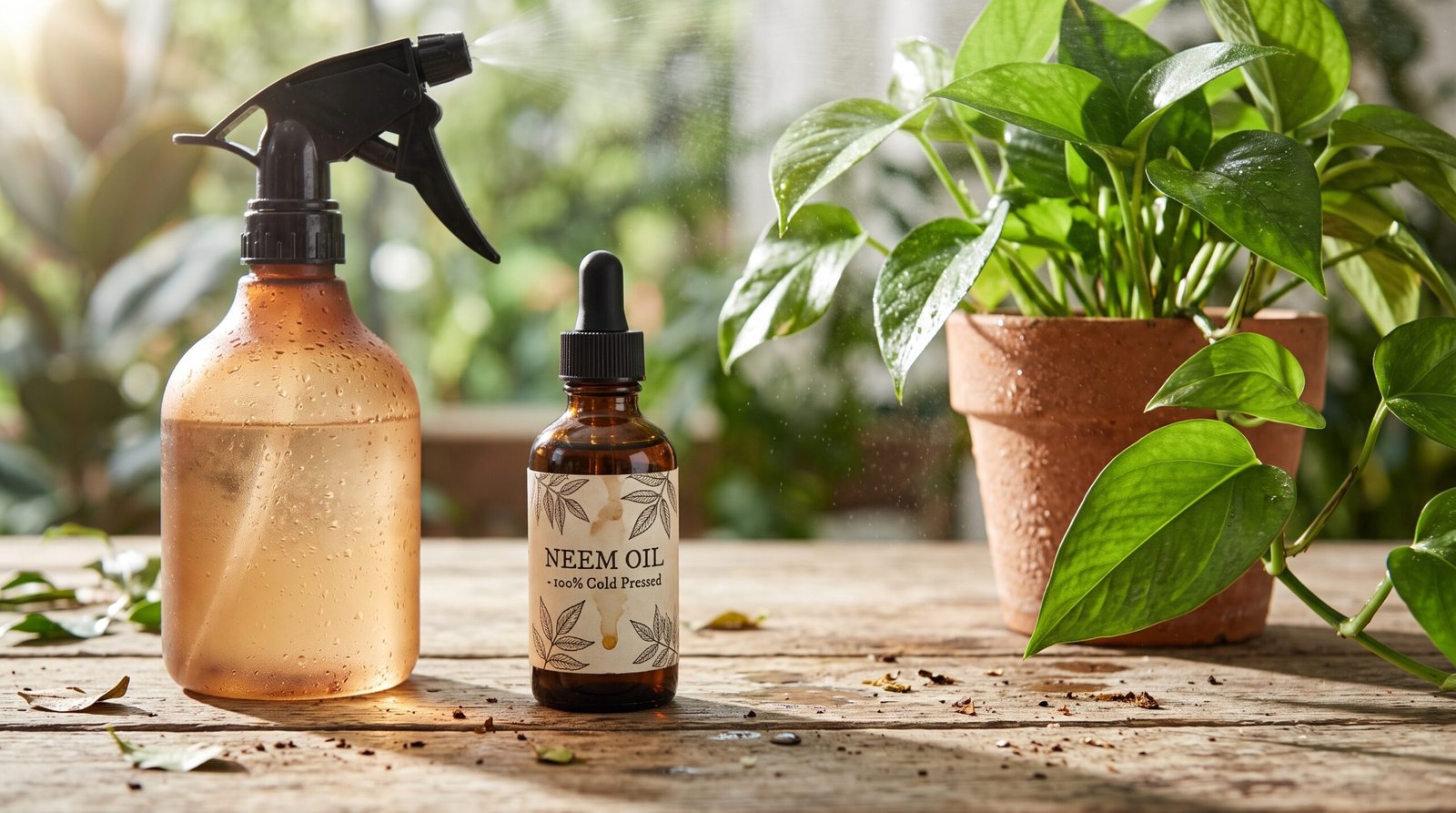
Neem oil is one of the most versatile tools in organic gardening. When mixed properly, it acts as an all-in-one organic insecticide, miticide, and fungicide that controls over 200 species of chewing and sucking insects without harming earthworms or leaving toxic synthetic residues on harvestable food crops.
Yet, hundreds of gardeners mix their first batch, spray their vegetable garden, and wake up to a disaster:
- The sprayer nozzle clogged immediately with thick brown sludge.
- The leaves turned brown, crispy, and scorched in the sun.
- The pests (aphids, spider mites, thrips) continued multiplying as if nothing happened.
Why does this happen?
Because mixing raw botanical oil with water requires an understanding of emulsification, active compound stability, and temperature thresholds.
This guide is part of our comprehensive system on organic garden pest control. Below is the master recipe, the exact dilution ratios for hand sprayers and pump tanks, and the critical rules to protect your plants from foliar burn.
🌱 Recommended Organic Ingredients
- Pure Neem Oil: 100% Cold Pressed Raw Neem Oil (High Azadirachtin)
- Organic Emulsifier: Dr. Bronner’s Pure Liquid Castile Soap
5 Critical Mistakes That Cause DIY Neem Oil Sprays to Fail
Before measuring a single drop of oil, make sure you avoid the five most common errors that compromise your spray:
- Buying “Clarified Extract” by Mistake: Many commercial sprays in garden centers are labeled “Clarified Hydrophobic Extract of Neem Oil”. This is a processed byproduct where the primary insect growth-regulating compound—Azadirachtin—has been stripped out. Always choose 100% Pure Raw Cold-Pressed Unrefined Neem Oil. Neem Oil on Amazon
- The 8-Hour Degradation Window: Once raw neem oil is mixed with water and liquid soap, a chemical reaction called alkaline hydrolysis begins immediately. Within 8 to 12 hours, the active compounds break down and lose over 90% of their pest-fighting potency. Never store pre-diluted spray; mix fresh for each use.
- The Cold Water Solidification Trap: Pure unrefined neem oil has a melting point between 55°F and 60°F (13°C to 15°C). In early spring or cool autumn mornings, raw neem solidifies into a butter-like paste. Pouring cold tap water over it causes it to congeal into greasy clumps that instantly jam spray nozzles.
- The 30-Day Sulfur Reaction: If you have applied sulfur powder or copper fungicides to your plants within the last 30 days, do not spray neem oil. Combining oil and elemental sulfur causes severe chemical leaf scorch and premature leaf drop.
- Midday Heat Scorch: Oil creates a magnifying effect for solar ultraviolet rays. Spraying neem oil in temperatures above 85°F (29°C) under direct midday sun will bake tender leaves. Always apply at dusk or early dawn.
The Master Neem Oil Dilution Ratios
Maintaining a 0.5% concentration ensures strong insect control without coating leaf stomata so heavily that the plant cannot breathe.
| Container Size | Raw Cold-Pressed Neem Oil | Pure Liquid Castile Soap |
|---|---|---|
| 1-Quart Hand Sprayer (32 oz / 1 Liter) | 1 to 1.5 Teaspoons | 1/2 Teaspoon |
| 1-Gallon Pump Sprayer (128 oz / 3.8 Liters) | 2 Tablespoons (1 Fluid Ounce) | 1 to 1.5 Teaspoons |
Note: Water and oil do not naturally mix. Liquid soap acts as an emulsifier, binding the oil molecules to water so they spray evenly. Never use synthetic petroleum dish detergents like Dawn, which strip protective plant wax. Use natural vegetable castile soap.
Recommended Sprayer: Heavy-Duty Amber Glass Spray Bottles
The ideal 32 oz size for single-session neem oil batches. Heavy-duty amber glass shields light-sensitive botanical formulas from UV breakdown, while the adjustable nozzle produces the fine mist needed to coat leaf undersides.Check Amber Glass Bottles on Amazon →
Step-by-Step Mixing Instructions
Follow this exact sequence to produce a smooth, milky micro-emulsion that never clogs your nozzle:
- Warm the Neem Bottle: If your pure neem oil is thick or cloudy, place the sealed bottle in a bowl of warm water for 5 to 10 minutes until it flows freely like warm honey.
- Fill with Lukewarm Water: Fill your 32 oz spray bottle with lukewarm water (around 75°F to 80°F). Leave 2 inches of headspace at the top for shaking.
- Add Castile Soap FIRST: Add 1/2 teaspoon of pure castile soap into the water. Swirl gently until the soap dissolves. The soap must be in the water before the oil is introduced.
- Add the Raw Neem Oil: Measure 1 to 1.5 teaspoons of liquefied neem oil and pour it into the soapy water.
- Shake Vigorously for 30 Seconds: Fasten the spray nozzle tightly and shake. The liquid should turn into a cloudy, uniform, milky white solution. If golden oil droplets float on the surface, add 3 more drops of castile soap and shake again.
How to Apply Neem Oil for Maximum Effectiveness
1. Perform a 24-Hour Spot Test
Different plant varieties have varying leaf sensitivities. Before treating an entire vegetable bed or rose garden, spray a single lower leaf. Inspect it 24 hours later. If you see no browning, curling, or spotting, the mixture is safe for the whole plant.
2. Target the Undersides of Leaves
Over 90% of garden pests shelter, feed, and lay eggs on the undersides of leaves. Standing above your plants and spraying the top canopy does very little. Hold stems gently upward and spray the undersides until the liquid begins to drip off.
3. Maintain the 7-to-10 Day Spray Schedule
Neem oil does not kill pests via instant chemical shock. It disrupts hormonal development, stops feeding instincts, and prevents nymphs from molting into adults. To break the reproduction cycle of pests like aphids and spider mites, spray once every 7 to 10 days for 3 consecutive weeks.
When Neem Oil Needs Backup: Ants & Soil Pests
While neem oil protects foliage from above, it does not solve crawling ground infestations:
The Ant Bodyguard Problem
If you see worker ants patrolling your plant stems, neem oil alone will not eliminate your pest problem. Ants actively farm sap-sucking insects and defend them against organic treatments. Break the ant highway first using the steps in our guide on how to stop ants farming aphids in your garden.
Crawling Ground Pest Defense
For beetles, cutworms, and ants traveling across garden soil, create a dry physical barrier around plant stems using certified food-grade diatomaceous earth.
- Food-grade DE pierces the protective waxy exoskeleton of crawling insects on contact.
- 100% mechanical, non-chemical, and completely safe for organic food crops.
- Read our guide on applying diatomaceous earth for garden insects.
Ground Perimeter Defense: Certified Food-Grade Diatomaceous Earth
While neem oil protects leaf canopy from airborne pests, pure food-grade DE shields plant stalks and roots from crawling soil insects. Certified safe for organic gardens, children, and pets.Check Food-Grade Diatomaceous Earth on Amazon →
Frequently Asked Questions
Can I spray neem oil on flowering vegetable plants?
Yes, but follow two golden rules: never spray directly onto open blossoms, and only spray at dusk or early dawn. While dry neem residue does not harm foraging honeybees, wet oil droplets can physically smother beneficial pollinators. Spraying at dusk gives the foliage 8 hours to dry before bees arrive at sunrise.
How do I clean my spray bottle after using neem oil?
Because botanical oils oxidize and solidify over time, flush your spray bottle immediately after each use. Add warm water and 1/2 teaspoon of castile soap, shake, and pump the soapy solution through the nozzle for 30 seconds to clean the internal valves.
Can I mix neem oil with baking soda for powdery mildew?
Yes. Neem oil and potassium or sodium bicarbonate can be combined for stubborn fungal blights. Mix 1 teaspoon of neem oil, 1/2 teaspoon castile soap, and 1 teaspoon of baking soda per quart of warm water. Always spot-test first, as bicarbonate sprays can be sensitive on thin-leaved vegetables.
Written by Jennifer Reynolds
Certified Master Gardener • Sustainable Agriculture Specialist
Jennifer has over 15 years of hands-on experience in organic horticulture, permaculture soil biology, and non-toxic integrated pest management (IPM). Every recipe and garden strategy published on Organic Gardening Advise is field-tested in real raised beds to verify safety, dilution accuracy, and effectiveness. Learn more on our About Page.
Leave a Reply