Disclosure: This post contains affiliate links. If you purchase through our links, we may earn an affiliate commission at no extra cost to you. As an Amazon Associate, we earn from qualifying purchases.
Organic gardeners looking to protect their crops without synthetic chemical sprays frequently encounter two famous white mineral powders: Diatomaceous Earth (DE) and Kaolin Clay (Surround WP). Because both products look remarkably similar in powder form and are certified organic (OMRI-listed), many gardeners assume they work interchangeably.
In reality, their biological mechanisms, application methods, and target pest spectra are completely different. Using the wrong mineral in the wrong environment can waste money and leave your plants unprotected. In this side-by-side comparative analysis—part of our complete series in Organic Garden Pest Control and our Master Ant Eradication Blueprint—we explore how each mineral functions.
Quick Comparison Matrix: DE vs. Kaolin Clay
| Feature | Food-Grade Diatomaceous Earth | Surround WP Kaolin Clay |
|---|---|---|
| Mode of Action | Mechanical laceration & fatal desiccation | Tactile feeding disruption & optical camouflage |
| Primary Application | Dry dusting along soil, baseboards, bed edges | Liquid foliar spray coating entire leaf canopy |
| Target Pests | Ants, slugs, earwigs, fleas, roaches | Flea beetles, Japanese beetles, stink bugs, leafhoppers |
| Rain Resistance | Deactivates when wet (reactivates when dry) | Dries into rain-resistant film (lasts 2–3 weeks) |
| Heat & Sun Protection | None | Reduces plant canopy temp & prevents sunscald |
| Pet & Wildlife Safety | 100% Safe (See our Pet-Safe Guide) | 100% Non-toxic mineral |
When to Choose Diatomaceous Earth (DE)
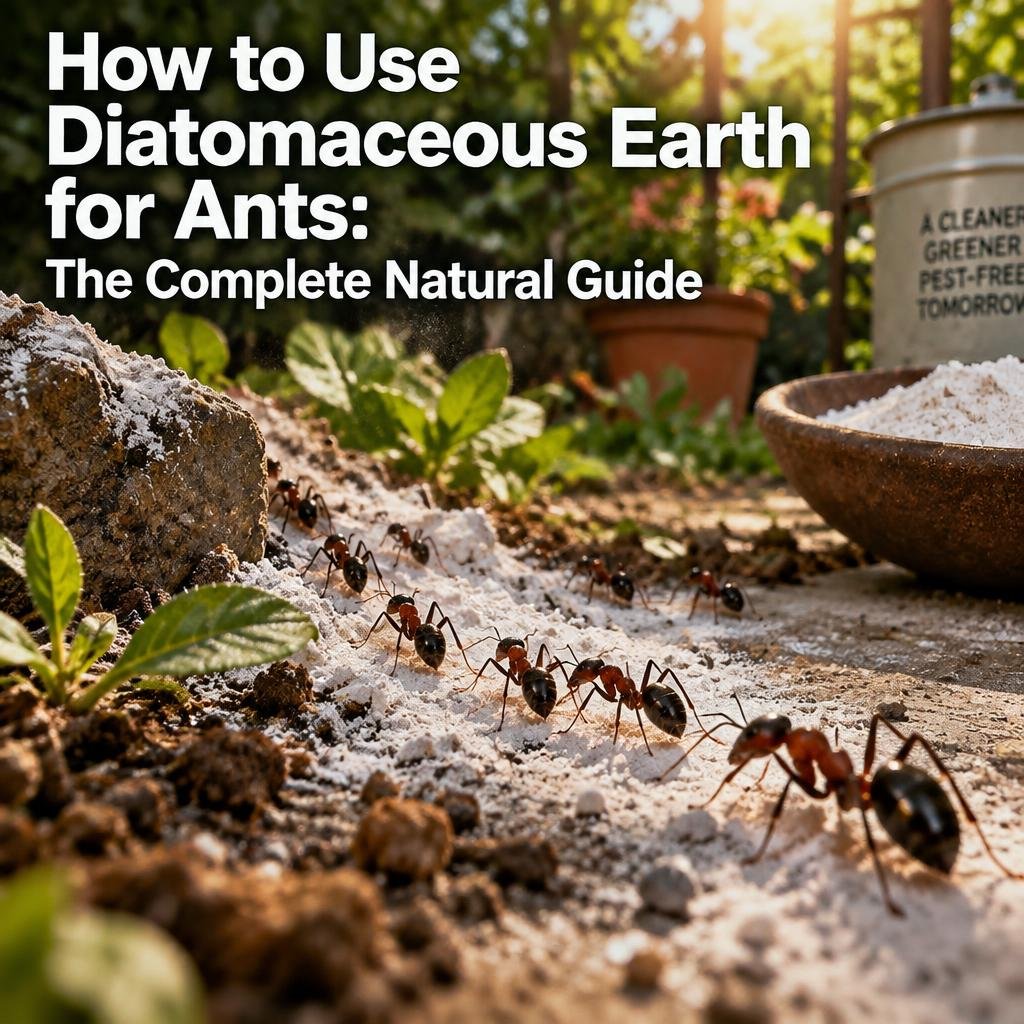
Choose Food-Grade Diatomaceous Earth when dealing with crawling ground pests that traverse soil, gravel, or foundation baseboards. Because DE consists of microscopic fossilized silica shards that slice through an insect’s epicuticular wax, it is unbeatable against:
- Foraging ant trails and fire ant mound perimeters (detailed in our Fire Ant Mound Guide).
- Nocturnal garden earwigs and slugs (explored in our Organic Slug Control Guide).
- Indoor pet-safe pest defense along baseboards and feeding stations.
Food-Grade Diatomaceous Earth with Precision Duster
For crawling soil pests, always choose certified food-grade amorphous silica paired with a directional rubber bulb duster.
When to Choose Kaolin Clay (Surround WP)
Choose Surround WP Kaolin Clay when dealing with flying, hopping, and chewing foliage pests on vegetables and fruit trees. Unlike DE, kaolin clay is engineered specifically to be mixed with water and sprayed through a standard garden sprayer without clogging nozzles.
Surround WP Kaolin Clay Crop Protectant
To form a durable, sun-protective mineral shield across fruit trees, tomatoes, eggplants, and brassicas, spray OMRI-listed Surround WP.
The Verdict: Can You Use Both Together?
Yes! Advanced organic market gardeners use an integrated dual-barrier strategy: spray Kaolin Clay on the foliage to block flying beetles and caterpillars, while dusting Diatomaceous Earth in a 2-inch band around the raised bed perimeter to stop crawling ants and slugs.
Download the Free Organic Pest Prevention Checklist & Spray Chart
Get instant access to our printable organic dilution cheat sheets, companion planting matrix, and seasonal pest calendar used by certified organic growers.
Frequently Asked Questions
Can I spray Diatomaceous Earth as a liquid?
While DE can be sprayed as a slurry (4 tbsp per quart of water), it offers zero insecticidal activity while wet. It only kills insects after the water completely evaporates. Kaolin clay is far superior for foliar spray applications.
Does Kaolin Clay wash off vegetables easily before eating?
Yes. A simple soak and rinse in cool water completely removes the white clay residue from harvested tomatoes, apples, and peppers.
Written by Jennifer Reynolds
Certified Master Gardener • Sustainable Agriculture Specialist
Jennifer has over 15 years of hands-on experience in organic horticulture, permaculture soil biology, and non-toxic integrated pest management (IPM). Every recipe and garden strategy published on Organic Gardening Advise is field-tested in real raised beds to verify safety, dilution accuracy, and effectiveness. Learn more on our About Page.
Leave a Reply