Disclosure: This post contains affiliate links. If you purchase through our links, we may earn an affiliate commission at no extra cost to you. As an Amazon Associate, we earn from qualifying purchases.
There are few sights more disheartening for an organic gardener than walking out to your vegetable patch at sunrise only to discover your prize heirloom hostas, tender butterhead lettuces, and ripening strawberries riddled with irregular, jagged holes—coated in a telltale, shimmering film of dried mucus. Slugs are the ultimate nocturnal thieves of the garden world. While aphids and beetles work in plain sight, slugs feed exclusively under the cover of night or during rainstorms, retreating beneath mulch, stones, and soil crevices before the first ray of daylight exposes them to predators.
For decades, conventional agriculture relied on synthetic chemical baits containing metaldehyde. While deadly to mollusks, metaldehyde is notoriously dangerous to dogs, cats, wildlife, and beneficial soil microbes. If a curious dog or barn cat ingests even a few pellets, severe neurologic distress or fatal poisoning can occur within hours. Furthermore, commercial poison pellets break down into toxic residues that can leach into vegetable garden soil.
Fortunately, you do not need toxic chemicals to protect your harvest. In this comprehensive field guide—part of our master framework in The Complete Guide to Organic Garden Pest Control—we reveal exactly how to eliminate slugs and snails naturally using proven physical, biological, and OMRI-listed organic controls that keep your soil, pets, and children 100% safe.
How to Identify Slug Damage (vs. Caterpillars and Cutworms)
Before applying controls, it is vital to verify that slugs or snails are indeed the culprits behind your plant damage. Because nocturnal pests feed when you are asleep, gardeners frequently confuse slug feeding with damage from cabbage loopers, hornworms, or cutworms.
- The Slime Trail Signature: Slugs secrete a thick, hygroscopic mucus that helps them glide across rough soil without drying out. As this mucus dries under morning sunlight, it leaves a distinctive silvery, iridescent sheen on foliage, stone borders, and container rims. Caterpillars and beetles never produce slime.
- Ragged, Irregular Feeding Holes: Unlike leafcutter bees that slice smooth circular discs or caterpillars that leave cleanly scalloped margins, slugs feed with a microscopic, tooth-lined chitinous ribbon known as a radula. They scrape away tender plant tissue, leaving ragged, irregularly shaped holes in the middle of leaves and rasping through the outer skins of tomatoes and squash.
- Seedling Severing: Slugs possess voracious appetites for emerging cotyledons and tender young shoots. If your newly sprouted beans, brassicas, or peppers disappear entirely overnight leaving only a stubby base, slugs or snails are almost always the cause.
- Absence of Frass: Large caterpillars leave dry, dark green or black cylindrical droppings (frass) on the leaves below their feeding sites. Slugs rarely leave noticeable dry pellets on leaves; instead, you will find watery mucus droppings near the base of the plant or hidden under adjacent mulch.
The Biology of Slugs: Why Moisture Dictates Everything
Understanding slug physiology is your greatest strategic advantage in organic gardening. A slug is essentially a soft-bodied, shell-less gastropod mollusk whose body consists of over 80% water. Lacking the protective calcium carbonate shell of a garden snail, a slug must constantly conserve moisture to survive.
During warm, sunny afternoons, an exposed slug can lose up to 15% of its body weight in moisture within an hour, leading to fatal desiccation. Consequently, slugs spend daylight hours burrowed under damp bark mulch, beneath rotting logs, tucked inside raised bed corners, or hiding underneath low-lying clay pot saucers. When relative humidity spikes after dusk or following a thunderstorm, they emerge in armies to feed.
Because their movement and survival rely completely on ambient moisture and surface friction, every organic control strategy works by exploiting one of three vulnerabilities: cellular toxicity via mineral ingestion, electrical/electrochemical surface aversion, or localized physical desiccation.
Top 5 Natural Methods for Organic Slug Control
Below are the five most reliable, tested natural methods for stopping slugs in organic vegetable beds, ornamental borders, and container gardens.
1. Iron Phosphate Pellets (The OMRI-Listed Gold Standard)
If you have an active slug infestation wiping out entire rows of leafy greens, the fastest, most humane, and 100% pet-safe eradication method is iron phosphate (sold under the brand name Sluggo). Unlike hazardous metaldehyde baits, iron phosphate is an organic compound naturally present in agricultural soils.
How it works: Iron phosphate pellets are formulated with grain-based attractants (wheat flour and yeast) that lure slugs away from your crops. When a slug or snail ingests the pellet, the iron phosphate disrupts calcium metabolism inside the mollusk’s digestive system. Within 2 to 3 hours, the slug ceases feeding entirely. Instead of dying messily on your salad leaves, the slugs retreat deep into their subterranean burrows to die quietly over 3 to 6 days. Uneaten pellets gradually break down into natural iron and phosphate plant nutrients that nourish your garden soil!
Crucially, iron phosphate is non-toxic to dogs, cats, birds, earthworms, hedgehogs, and beneficial ground beetles. It can be applied right up to the day of harvest in edible vegetable plots.
Recommended Organic Slug Bait
For immediate, pet-safe slug eradication that will not harm soil biology, wildlife, or birds, we recommend OMRI-listed Sluggo Organic Slug and Snail Bait. A light scatter around plant perimeters stops feeding damage immediately.
2. Self-Adhesive Copper Foil Barrier Tape (Unbreakable Physical Protection)
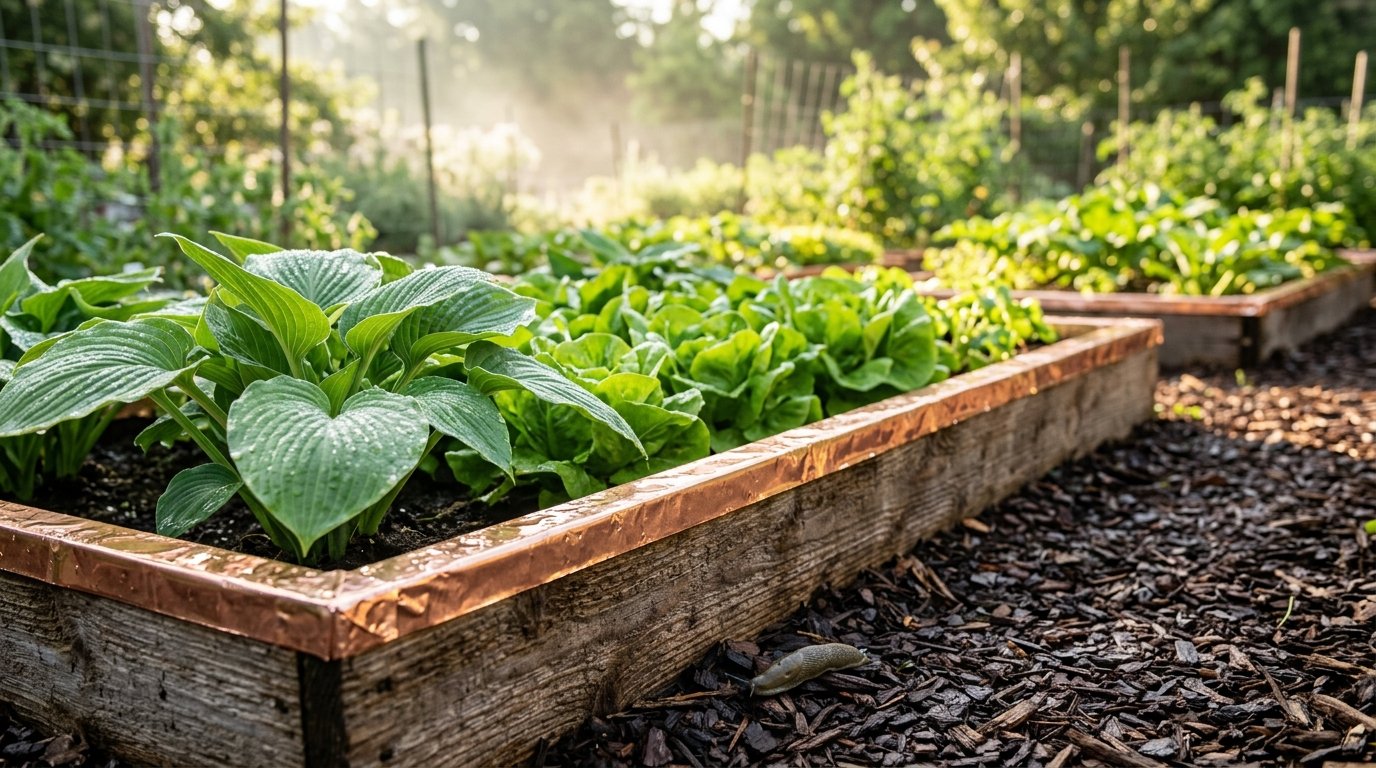
If you garden in raised wooden beds, cedar planters, or terra cotta pots—like those detailed in our guide to protecting raised garden beds naturally—copper foil tape provides a permanent, chemical-free perimeter defense that slugs simply cannot breach.
The Science of the Copper Shock: Why do slugs refuse to cross pure copper? When a slug’s acidic, water-rich slime interacts with copper metal, an electrochemical reaction takes place. This generates a tiny micro-volt electrical shock akin to a static discharge. While completely harmless to humans, pets, and children, this sensation is intensely unpleasant to the slug’s hyper-sensitive nerve endings. The mollusk immediately curls backward and retreats.
Installation Tip for Success: Wrap a continuous band of 1- to 2-inch wide copper tape around the outer perimeter of your raised bed or pot rim, 2 to 4 inches above the soil line. Ensure there are no hanging leaves or overhanging tomato branches touching the ground outside the barrier—slugs will eagerly use leaf bridges to bypass perimeter tape!
Recommended Copper Barrier Tape
To create an impervious perimeter around raised vegetable beds, cold frames, and patio planters, use high-tack Self-Adhesive Pure Copper Foil Tape. Weatherproof and long-lasting through multiple growing seasons.
3. The Beer Trap: Truth vs. Trap Pitfalls
The DIY beer trap is one of the oldest folklore remedies in home gardening. Slugs are powerfully drawn to the smell of fermenting yeast and carbohydrates. By sinking a tuna can, shallow saucer, or plastic cup into the garden bed so the rim sits level with the soil, slugs crawl in to drink the yeast liquid and drown.
The Common Mistake: Beer traps have an effective attraction radius of approximately 3 to 5 feet. If you place a beer trap directly inside your strawberry patch or lettuce row, you inadvertently lure slugs from across the garden straight to your most vulnerable plants. Always position beer traps 4 to 6 feet outside the perimeter of your crops as a distraction barrier, and empty them every 48 hours to prevent foul odors.
4. Food-Grade Diatomaceous Earth & Crushed Eggshell Barriers
Physical abrasive desiccants work by lacerating the slug’s outer membrane, forcing it to lose bodily fluids. As discussed in our detailed guide on how to use diatomaceous earth in gardens, food-grade DE consists of fossilized microscopic diatoms with razor-sharp silica edges.
The Catch with Slugs: Unlike ants, slugs secrete dense mucus that can temporarily buffer them against light dustings of dry powders. Moreover, heavy morning dew or rainfall instantly deactivates diatomaceous earth until it completely dries out. For maximum effectiveness against slugs, combine coarse crushed eggshells with dry DE along dry perimeter trenches, or apply DE inside covered cloches and greenhouses where moisture remains low.
5. Biological Predators: Inviting the Slug Hunters
A balanced organic garden relies heavily on biological counterweights. You can dramatically reduce slug populations by designing a landscape welcoming to natural mollusk predators:
- Toads and Frogs: A single adult toad can consume up to 100 slugs and insects each night! Install shallow terra cotta toad shelters and small saucer water stations in shady garden corners to encourage native amphibians to establish permanent residency.
- Ground Beetles (Carabidae): Both adult ground beetles and their larvae hunt and consume young slugs and slug eggs hidden within the top inch of garden soil. Avoid broad-spectrum insecticides to keep ground beetle colonies thriving.
- Beneficial Nematodes (Phasmarhabditis hermaphrodita): These microscopic roundworms live naturally in soil and seek out slugs. Upon penetrating a slug’s mantle, they release natural bacteria that eliminate the slug underground within 7 to 10 days. Nematodes are watered directly into moist soil in early spring and autumn.
- Domestic Runner Ducks: For larger homesteads and orchard gardens, Indian Runner ducks are famed as the world’s most enthusiastic slug predators. Unlike chickens, which often scratch up plant roots, runner ducks gently forage through vegetable beds without destroying foliage.
Why You Should NEVER Pour Table Salt on Garden Slugs
Pouring common table salt (sodium chloride) directly onto a slug causes instantaneous, violent osmotic shock that liquefies the mollusk in seconds. However, this is one of the worst things you can do to your garden.
Table salt dissolves into the surrounding soil, elevating sodium levels and ruining soil structure. Excess sodium destroys delicate plant root hairs, inhibits water uptake (inducing artificial drought stress), and creates alkaline soil toxicity that can stunt plant growth for years. Keep the table salt in your kitchen shaker—rely on organic iron phosphate instead.
The Irrigation Secret: Why Morning Watering Stops Slugs in Their Tracks
If you water your vegetable garden in the late afternoon or evening, you are rolling out the red carpet for slugs. Evening irrigation leaves wet foliage and saturated mulch during peak slug activity hours (10:00 PM to 4:00 AM). In wet environments, slugs can travel dozens of feet with near-zero friction loss.
The Fix: Shift your watering schedule to early morning (between 5:00 AM and 8:00 AM) using drip irrigation or soaker hoses. By saturating only the root zones and allowing the top layer of mulch to dry under the midday sun, you create a dry, inhospitable desert crust that prevents slugs from crossing your garden paths at night.
Organic Slug Control Comparison Matrix
| Control Method | Pet & Wildlife Safety | Speed of Action | Longevity / Maintenance | Best Use Case |
|---|---|---|---|---|
| Iron Phosphate (Sluggo) | 100% Safe (OMRI Listed) | 2–3 Hours (Stops feeding) | Up to 2 weeks (Rain resistant) | Heavy in-ground vegetable bed infestations |
| Copper Barrier Tape | 100% Safe (Non-chemical) | Instant barrier shock | Multiple growing seasons | Raised beds, cold frames & potted plants |
| Beer Traps | Safe for mammals | 12–24 Hours | Replace every 48 hours | Perimeter diversion traps outside garden beds |
| Diatomaceous Earth | Pet-safe (Food-grade only) | 24–48 Hours (Dry only) | Must reapply after rain/dew | Dry greenhouses & covered cloche tunnels |
| Beneficial Nematodes | 100% Organic & Safe | 7–10 Days (Underground) | 6–8 Weeks in damp soil | Early spring soil treatment across large plots |
| Metaldehyde (Chemical) | DANGEROUS (Toxic to pets) | Rapid | Degrades into soil toxins | Never recommended in organic gardens |
Action Plan: The 7-Day Complete Slug Eradication Protocol
- Day 1 – Daylight Sanitation & Habitat Removal: Rake back dense ground-cover mulch within 6 inches of vulnerable seedlings. Remove decaying boards, scrap firewood, and old pots from bed perimeters where slugs seek daytime shelter.
- Day 2 – The Night Flashlight Patrol: Head into your garden at 10:00 PM with a headlamp and a bucket of soapy water (prepared with our DIY castile soap formula). Hand-pick visible adult slugs off your plants and drop them into the soapy water. Hand-picking removes breeding adults instantly!
- Day 3 – Fortify Raised Beds with Copper: Clean the wooden perimeter edges of your raised beds or planters and install a continuous strip of self-adhesive copper tape around all four sides. Trim back touching weeds.
- Day 4 – Apply Targeted Organic Bait: Scatter Sluggo Iron Phosphate Bait at a rate of 1 teaspoon per square yard in a wide band around your crops. Focus around dense hostas, strawberries, and tender greens.
- Day 5 – Switch to Morning Drip Irrigation: Discontinue evening sprinkler runs. Water exclusively at sunrise, allowing surface mulch to dry completely before nightfall.
- Day 6 – Set Up Peripheral Beer Traps: Place 2 to 3 shallow beer saucers 5 feet outside the perimeter of your vegetable patch to catch any migratory stragglers moving in from neighboring lawns.
- Day 7 – Inspect & Maintain: Examine your plants for fresh slime trails or new feeding holes. You should see a 90%+ drop in damage within one week. Reapply bait pellets lightly after heavy continuous rains.
Frequently Asked Questions (FAQ)
Do used coffee grounds really repel slugs?
Used coffee grounds provide mild deterrent value because their coarse texture creates uncomfortable friction for a slug’s foot, and coffee contains residual caffeine (a natural mollusk repellent). However, coffee grounds break down quickly when wet and will not stop heavy infestations alone. Use coffee grounds as a soil amendment rather than a primary barrier.
Are slugs dangerous to dogs and cats if ingested?
Yes. Slugs and snails are common intermediate hosts for Angiostrongylus vasorum, known as lungworm. If a dog accidentally ingests a slug or drinks from a water dish containing slug slime, severe respiratory and cardiac complications can develop. Using non-toxic iron phosphate bait prevents slug proliferation without introducing synthetic poisons into pet-friendly yards.
Can slugs survive freezing winter temperatures?
Adult slugs burrow deep into garden soil (below the frost line) or lay clusters of translucent, jelly-like eggs beneath stones, mulch, and compost piles in late autumn. These eggs remain dormant all winter and hatch into thousands of hungry baby slugs as soon as spring soil temperatures warm above 45°F (7°C). Cultivating your soil lightly in late winter exposes these egg clusters to birds and frost, giving you a head start on spring pest control.
Free Garden Pest Prevention Checklist
Download our step-by-step garden pest prevention checklist to keep your raised beds, vegetables, and fruit plants healthy all season long:
Written by Jennifer Reynolds
Certified Master Gardener • Sustainable Agriculture Specialist
Jennifer has over 15 years of hands-on experience in organic horticulture, permaculture soil biology, and non-toxic integrated pest management (IPM). Every recipe and garden strategy published on Organic Gardening Advise is field-tested in real raised beds to verify safety, dilution accuracy, and effectiveness. Learn more on our About Page.
Leave a Reply