Disclosure: This post contains affiliate links. If you purchase through our links, we may earn an affiliate commission at no extra cost to you. As an Amazon Associate, we earn from qualifying purchases.
While baiting and mechanical barriers eradicate active colonies, the ultimate long-term organic goal is to create a living perimeter that discourages scouting ants from establishing nests in the first place. Nature has already engineered the solution through aromatic companion plants.
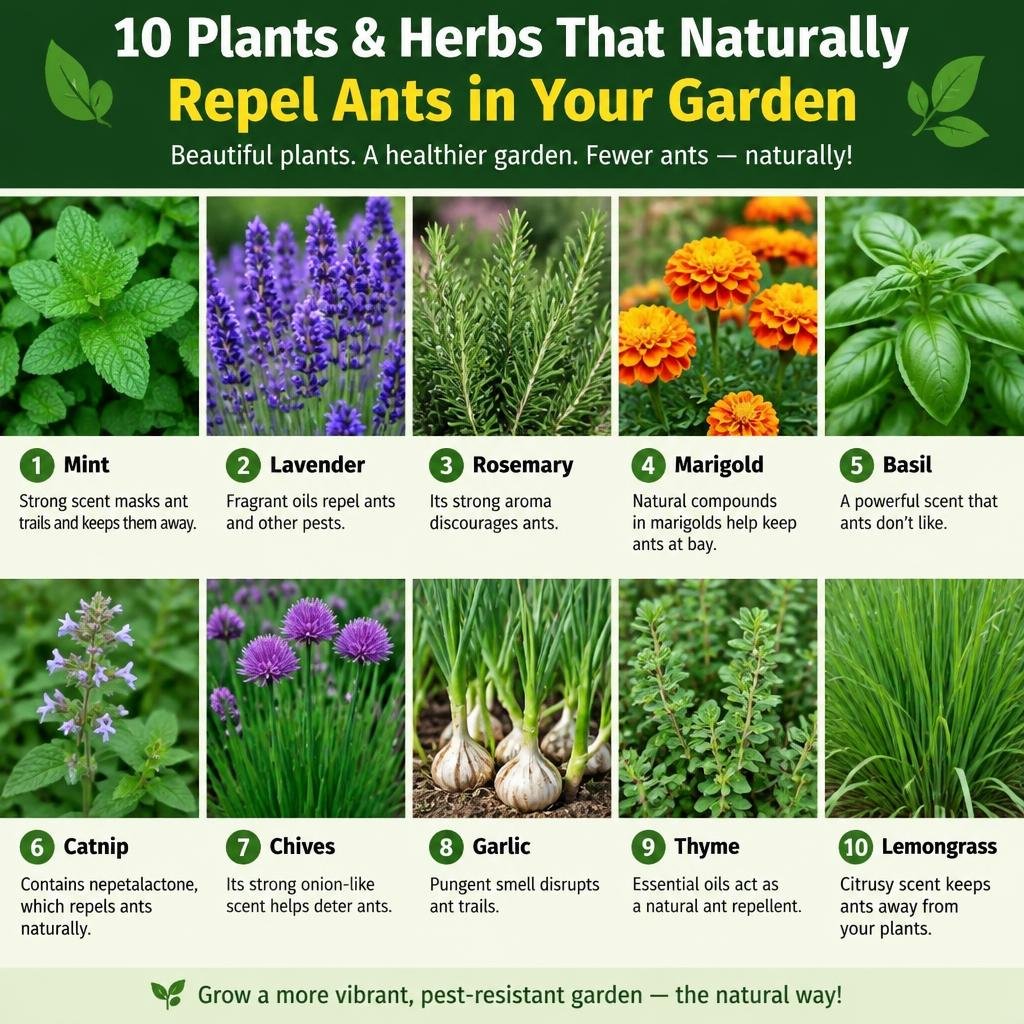
Ants navigate through a dense, invisible world of chemical pheromone trails using ultra-sensitive sensory receptors on their antennae. Certain botanical herbs and flowers produce concentrated volatile organic compounds—such as menthol, pyrethrins, thymol, and camphor—that overwhelm and scramble ant communication networks.
This guide connects directly to our master hub on natural ant killers and complements our methods for protecting ants in raised garden beds. Below are the 10 most effective insect-repelling plants to grow around your garden perimeter and outdoor living spaces.
Top 10 Ant-Repelling Companion Plants
1. Chrysanthemums (Nature’s Insecticide)
Chrysanthemums are the undisputed heavyweight of natural pest deterrence. Their flower heads contain pyrethrins, a natural compound that attacks the nervous system of crawling insects. Ants, roaches, ticks, and beetles naturally steer clear of planting beds rimmed with blooming mums.
Featured Botanical Defense: Live Chrysanthemum Plants
The natural source of organic pyrethrins. Beautiful autumn blooms that act as a potent living insect barrier around vegetable beds, foundation walls, and outdoor patios.
Check Chrysanthemum Plants on Amazon →2. Peppermint & Spearmint
Mints contain intense concentrations of menthol. To worker ants, menthol is an overpowering olfactory wall that makes following pheromone trails impossible. Container Warning: Mint roots spread aggressively; always grow mint in standalone pots bordering your garden rather than directly in the ground.
3. French Marigolds
Marigolds secrete alpha-terthienyl, an organic terpene that repels subterranean nematodes, aphid scouts, and foraging ants. Plant marigolds directly at the corners of your vegetable beds.
4. Lavender
Linalool, the essential aromatic compound that gives lavender its soothing scent for humans, is deeply offensive to ants, fleas, and moths. Plant along sunny walkway borders.
5. Rosemary
Resinous, woody rosemary shrubs emit camphor and pinene. Excellent for planting along perimeter fences and foundation walls where outdoor ants seek entry.
6. Garlic & Chives
Allium family members emit sulfur-based allicin aromas that confuse ants looking to farm aphids on nearby vegetables.
7. Tansy
An old-fashioned cottage garden perennial with button-like yellow flowers known by homesteaders for centuries as a formidable ant and fly deterrent.
8. Thyme
Creeping thyme makes an excellent living groundcover. Its high thymol content creates a fragrant carpet that ants refuse to tunnel through.
9. Catnip
Contains nepetalactone, an essential oil that laboratory studies show is 10 times more repellent to insects than DEET.
10. Sweet Alyssum (The Biological Dual-Action Hero)
While sweet alyssum produces a honey-scented groundcover that masks vegetable stems from crawling ants, it also attracts hoverflies and parasitic wasps—whose larvae devour the aphids that ants seek to protect!
Garden Bed Defense: Heavy-Duty Outdoor Raised Beds
Pair your companion flowers with smooth-sided metal raised garden beds. The sleek steel surface prevents crawling pests from scaling exterior walls while giving your repellent herbs dedicated root space.
Check Outdoor Raised Bed on Amazon →Strategic Garden Bed Layout
| Location | Recommended Repellent Plant | Target Pest Stopped |
|---|---|---|
| Raised Bed Outer Edges | French Marigolds & Chrysanthemums | Subterranean Ants & Root Nematodes |
| Corners in Pots | Peppermint / Spearmint | Scout Ants & Scent Trails |
| Bed Footpaths / Walkways | Creeping Thyme & Lavender | Ground Mounds & Ticks |
| Interplanted with Tomatoes | Sweet Alyssum & Basil | Aphid Herders & Hornworms |
Growing Zone Guide: Perennial vs. Annual Repellents
To ensure your botanical barrier survives year after year, match each plant species to your USDA Plant Hardiness Zone. Perennials establish extensive root systems that produce aromatic essential oils earlier each spring than seeds started from scratch.
| Plant Species | Life Cycle | USDA Hardiness Zones | Sunlight & Soil Needs |
|---|---|---|---|
| Chrysanthemums | Perennial | Zones 5–9 | Full sun (6+ hours); moist, rich, well-draining soil |
| Peppermint & Spearmint | Hardy Perennial | Zones 3–11 | Full sun to partial shade; containers only |
| English Lavender | Perennial Shrub | Zones 5–9 | Full sun; dry, sandy, low-fertility alkaline soil |
| French Marigolds | Warm Annual | Zones 2–11 (Annual) | Full sun; tolerates poor soil and summer heat |
| Creeping Thyme | Evergreen Perennial | Zones 4–9 | Full sun; shallow soil, rockeries, path flagstones |
| Rosemary | Perennial Shrub | Zones 7–10 (Potted indoors in 3–6) | Full sun; sharp drainage, drought tolerant once rooted |
| Sweet Alyssum | Cool Season Annual | Zones 5–9 (Self-seeds readily) | Full sun to afternoon shade; consistently moist soil |
3 Critical Rules to Make Botanical Deterrence Work
Many novice gardeners plant a single lavender seedling in the corner of a 20-foot bed and wonder why ants are still crawling up their peppers. For companion deterrence to function effectively, follow these three horticultural principles:
- Foliage Bruising Releases the Scents: The insect-repelling volatile terpenes remain sealed within glandular trichomes on leaf surfaces. Gently brush or trim the tips of mint, thyme, and rosemary when watering to release an aerosolized scent cloud that coats surrounding soil.
- Never Plant Mint Directly in Ground Soil: Peppermint and spearmint spread via underground runners (rhizomes) capable of choking out tomatoes, squash, and strawberries in a single season. Always sink bottomless plastic buckets or standalone ceramic pots at bed corners.
- Combine Flowers with Physical Barriers: Scent deterrence discourages casual scouts from selecting your beds for new nests. However, starving colonies will bypass aromatic plants if honeydew-secreting aphids are present. Always pair repellent borders with sticky trunk barriers or food-grade diatomaceous earth rings.
Frequently Asked Questions About Ant-Repelling Plants
Do essential oil sprays work as effectively as living plants?
Concentrated essential oils (such as peppermint or rosemary oil diluted in water with castile soap) produce an immediate, intense deterrent effect that outperforms living plants in the short term. However, volatile oils evaporate within 48 to 72 hours under direct sunlight. Living companion plants provide a continuous, self-replenishing supply of natural scent compounds all season long.
Will ant-repelling plants drive away earthworms or honeybees?
No. Earthworms operate entirely underground beneath the root zones and are unaffected by volatile atmospheric terpenes. Honeybees and native bumblebees are actually strongly attracted to the nectar-rich blossoms of lavender, thyme, catnip, and sweet alyssum. The aromatic compounds specifically target the chemosensory antennal receptors of crawling ants and aphids.
Can companion plants eradicate an ant nest already living in my bed?
No. Companion plants are strictly a preventative defense. Once a queen and thousands of workers establish deep subterranean tunnels inside your soil, they will simply tunnel beneath the repellent root systems. If your beds are already infested, execute our targeted guide on eliminating ants in raised garden beds before relying on companion flowers.
What If Ants Are Already on Your Plants?
Companion plants act as preventative repellent zones—they will not kill an active underground queen once her nest is established. If you see ants actively herding aphids on your foliage right now, follow our emergency 72-hour system on how to stop ants farming aphids in your garden.
Written by Jennifer Reynolds
Certified Master Gardener • Sustainable Agriculture Specialist
Jennifer has over 15 years of hands-on experience in organic horticulture, permaculture soil biology, and non-toxic integrated pest management (IPM). Every recipe and garden strategy published on Organic Gardening Advise is field-tested in real raised beds to verify safety, dilution accuracy, and effectiveness. Learn more on our About Page.
Leave a Reply